Empty it and identify the construction
Remove everything and open the closure fully. Look for loose soil, sand, or crumbs at the bottom and remove them first. A lightweight internal sack and a robust external bag can use different materials. The actual care instructions remain the starting point even when their closures look alike.
Inspect the inside and seams in good light. Detached seam tape, cracks, and a peeling coating differ from dirt. Record them instead of treating every dark or sticky area by rubbing harder. Cleaning should reveal condition rather than detach an already damaged layer further.
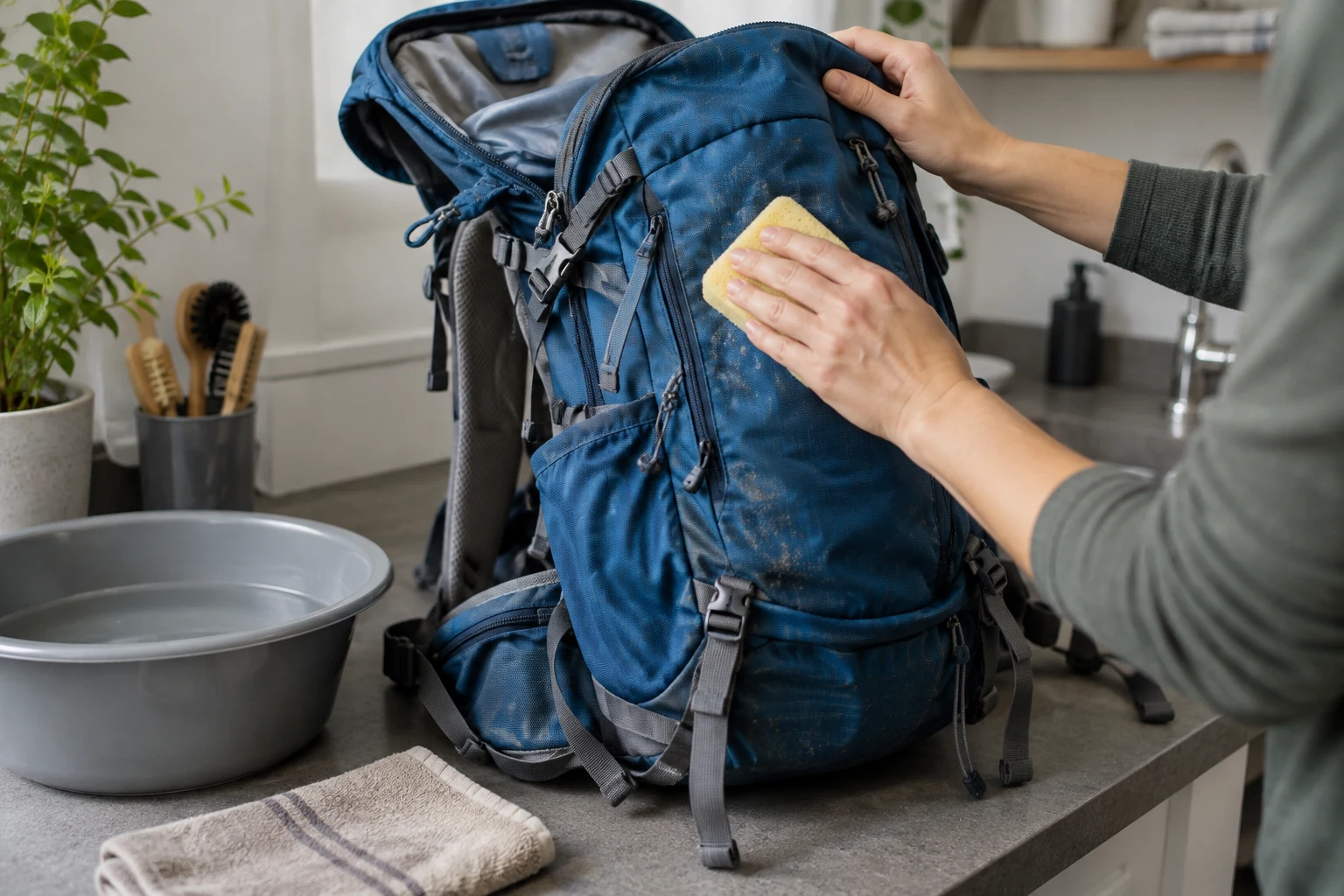
Clean gently
Sea to Summit describes hand cleaning its sacks with mild suitable soap, thorough rinsing, and air drying. Do not transfer that automatically to another construction. Use approved products rather than an aggressive household cleaner, and avoid hard brushes or sharp tools on taped seams.
Pay attention to the rolling edge, where sand can remain between layers. Open folds and remove residue carefully. Rinse the lower interior where cleaner collects. A clean edge supports correct closure but cannot compensate for a tear or damaged stiffening strip.
Avoid hidden moisture
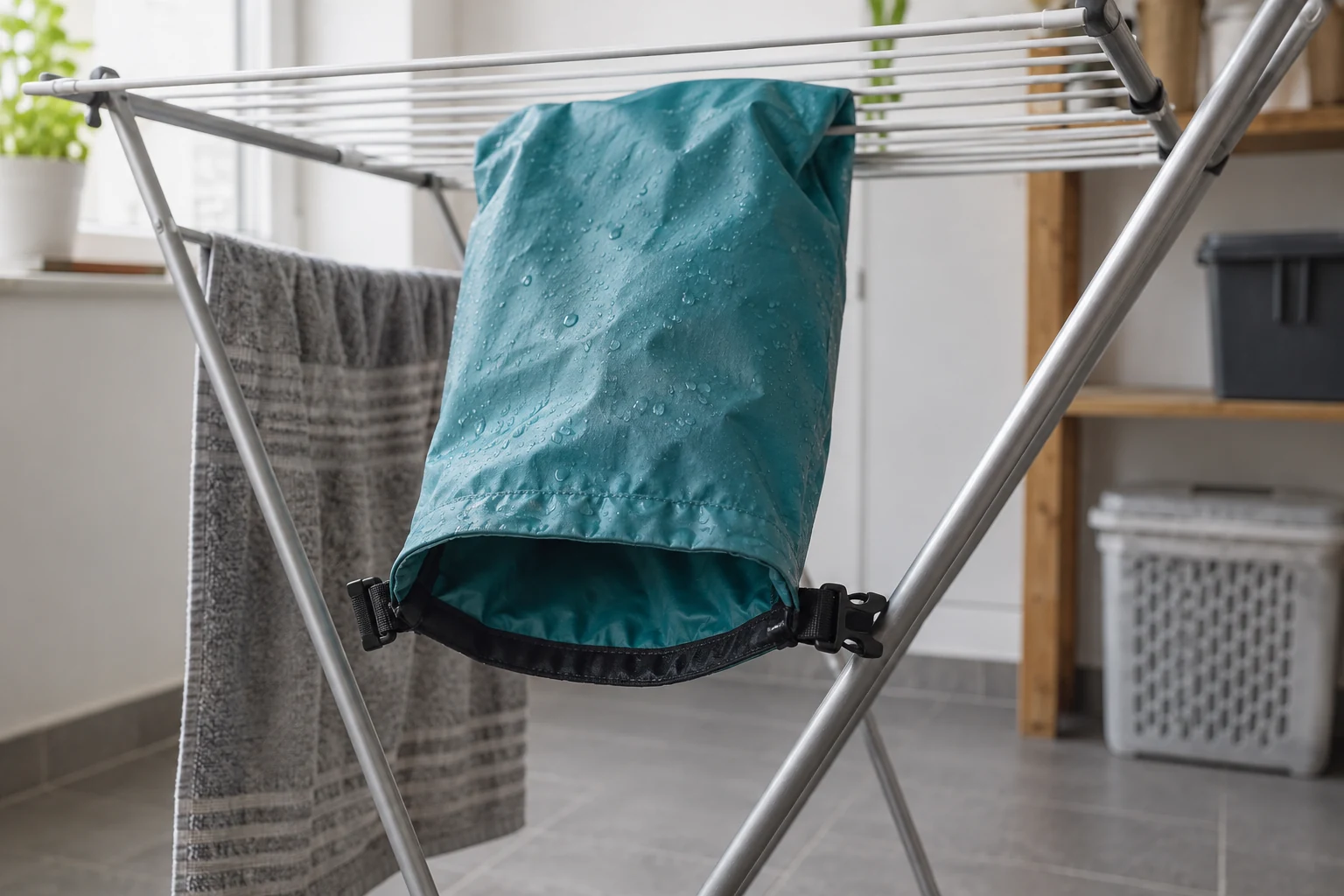
Stand or hang the bag open so air reaches the inside. Reverse it only if the construction permits; some stiff or bonded areas are not designed for turning fully inside out. Examine folds and the bottom before rolling it tightly again.
Strong heat is not a universal shortcut. Sea to Summit particularly cautions against unsuitable dryer heat around taped seams. Use the permitted air-drying method and allow time. Feeling the exterior briefly is insufficient when inner corners remain damp. Store only once the whole bag is dry.
Do not overinterpret a home check
Close the empty bag as instructed and examine the edge, buckle, and seams. This can reveal operating mistakes but does not prove every possible waterproof claim. Rain, splashes, and prolonged immersion are different conditions. Respect the model's declared use.
Sea to Summit distinguishes surface repellency from the actual waterproof coating or membrane. A surface treatment does not repair a damaged barrier. If the inner layer has detached, investigate repair or replacement. Do not return sensitive electronics merely because a spray makes droplets bead outside again.
Store it with a clear purpose
Keep the dry bag free of sharp contents and avoid needless prolonged stress on the roll edge. Retain a clear assignment to its use. A bag for temporarily damp clothing can have a different purpose from protection selected for sensitive dry belongings. Maintenance and understood limitations belong to that assignment.