Remove only removable parts
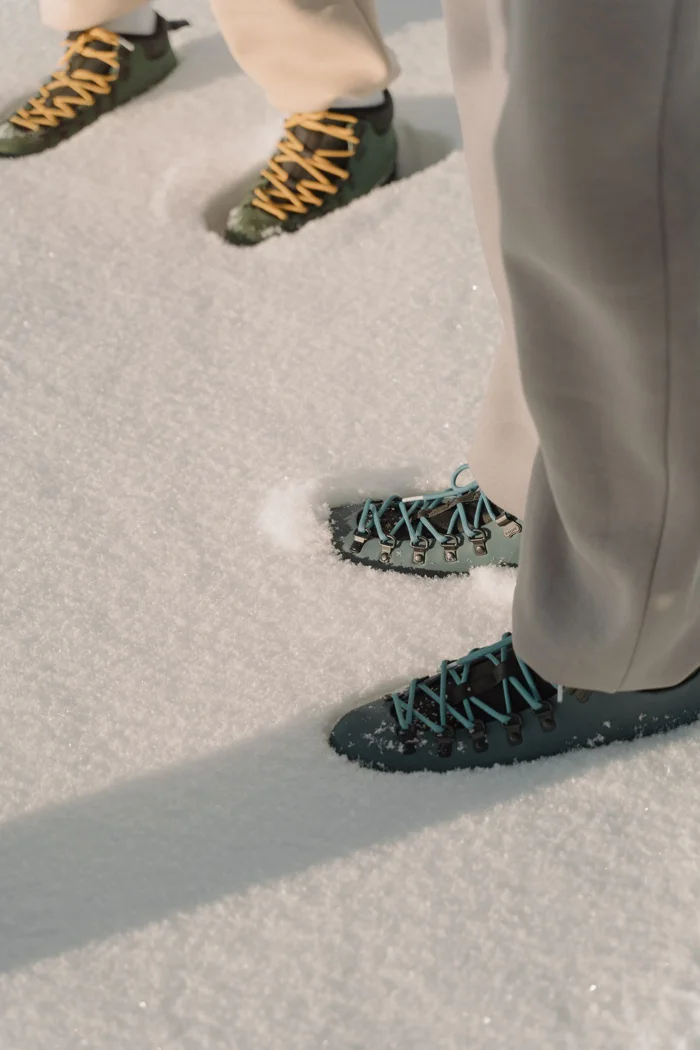
Loosen the lacing and remove laces fully where useful. Note their route through unusual eyelets or hooks. Take out only footbeds intended for removal. A fixed internal sole is not a cleaning insert to detach forcefully.
Identify footbed materials. Textile covering, leather, and different foams can have different care instructions. Hanwag, for example, distinguishes textile footbeds and leather surfaces. That does not approve one method for every other brand or individually fitted insert.
Clean and dry separately
Remove loose soil and small stones from accessible footwear areas. Clean laces and inserts as directed. Do not use aggressive treatment merely because a part has acquired odour. The material needs to tolerate the procedure, and an embossed logo is not a care label.
Dry parts with air access and retain left/right identification. Thick areas may stay damp after thin surfaces dry. Do not immediately refit them into closed footwear. A dry insert over a wet base is not a fully dried arrangement either.
Look where wear occurs
Inspect laces around eyelet contact and knotting areas. Fraying and damaged ends can change handling. Check whether a sharp or damaged eyelet caused the problem; otherwise, a replacement can wear at the same point.
Replacement laces need suitable length and thickness for the intended route. Inserts need appropriate shape, size, and product guidance. Do not cut or stack parts experimentally because they can substantially change internal space. Individually prescribed or fitted inserts belong with their relevant professional advice rather than a general equipment-care procedure.
Reassemble deliberately
Place the dry footbed flat and in the correct direction. Check the toe for folding and make sure no foreign object sits underneath. Thread clean laces properly and assess the normal arrangement. This routine establishes a clean understandable construction; it does not promise health benefits or automatically improved fit. Keep a replacement's reference if it works with your footwear, so the next purchase is based on an identified part rather than a vague resemblance.