Identify the surface
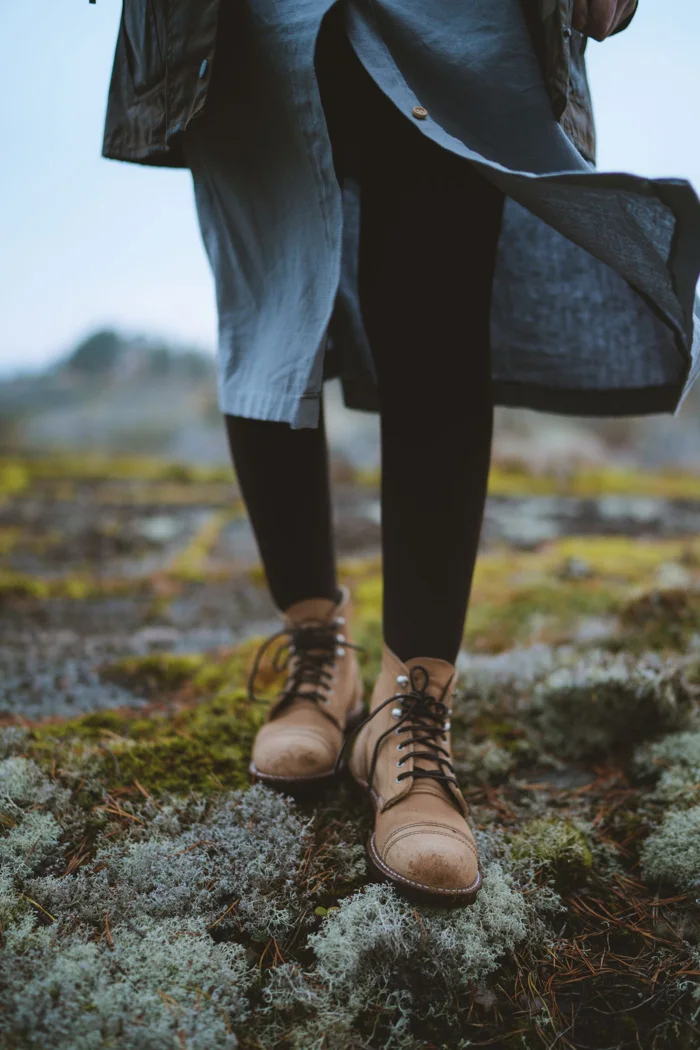
Smooth leather, nubuck, and suede can look different and change differently with care. Read the model's material description, including textile sections in mixed constructions. Do not choose a leather treatment merely because part of the shoe looks brown or rough.
An internal membrane is a separate layer. LOWA explains that a GORE-TEX lining does not replace external leather care. Continue treating the upper for its actual material. Equally, do not spread exterior wax indiscriminately onto lining or textile panels.
Prepare a soft brush, suitable cloth, and approved products. Remove laces and removable footbeds where allowed to expose tongue folds and hidden areas. Keep the footbeds associated with their shoes and avoid leaving wet laces bundled inside the collar.
Remove dirt before treatment
Brush loose earth gently. Clean permitted surfaces with water and a suitable product following the maker's procedure. LOWA and Hanwag describe specific routines; do not randomly combine steps from several instructions. A complete model procedure is more dependable than an assortment of unknown treatments.
Include the upper-to-sole junction, tongue folds, and eyelet areas. Dirt can remain there after broad side panels appear clean. A suitable soft tool may reach folds better than pressing hard with a rigid brush. Remove cleaning residue as directed.
Inspect condition at the same time. A deep crack, detached connection, or damaged eyelet is not an ordinary stain. More wax should not conceal it. Cleaning reveals the area; structural assessment and any repair remain separate tasks.
Drying and product sequence
Dry in a ventilated location away from direct heat. Follow the required moisture condition for the chosen treatment. Water-based and other products may have different instructions. A universal rule to apply everything to soaking wet or completely dry leather would be inappropriate.
Allow enough time between washing, treatment, and reuse. A shoe that quickly looks tidy is not necessarily ready. Read the chosen product's application and drying guidance rather than inventing one duration for different formulations.
Wax may change appearance
LOWA and Hanwag describe wax darkening and smoothing rough leather. Consider that before application. If retaining the original appearance matters, investigate the intended alternative and try an approved product on an inconspicuous area. Brushing afterward does not reliably reverse an altered colour.
Apply permitted wax sparingly and deliberately to suitable leather areas. More is not automatically better. Manufacturers caution against arbitrary pure oils or grease for their footwear. A household or saddle-care product is therefore not an automatic substitute for an identified walking-boot treatment.
Treat lining and footbed separately
Identify the lining material too. Leather lining differs from textile membrane construction. Clean accessible inner surfaces only as directed and let them dry fully. Treat the removed footbed according to its own guidance instead of automatically coating it with exterior leather care.
Before reassembly, check the toe interior and footbed underside. Refit the insert flat and thread clean laces correctly. A well-treated exterior is only part of preparation; a hidden damp interior can be missed during closed storage.
Store prepared footwear
Keep the boots dry and airy without crushing them beneath other luggage. A suitable former can support shape but should not forcefully stretch it. Record areas worth checking again. Care is a repeatable sequence of cleaning, drying, appropriate treatment, and inspection, rather than a guarantee that damaged footwear has regained its original condition. Retain the treatment name so the next application begins with known compatibility.