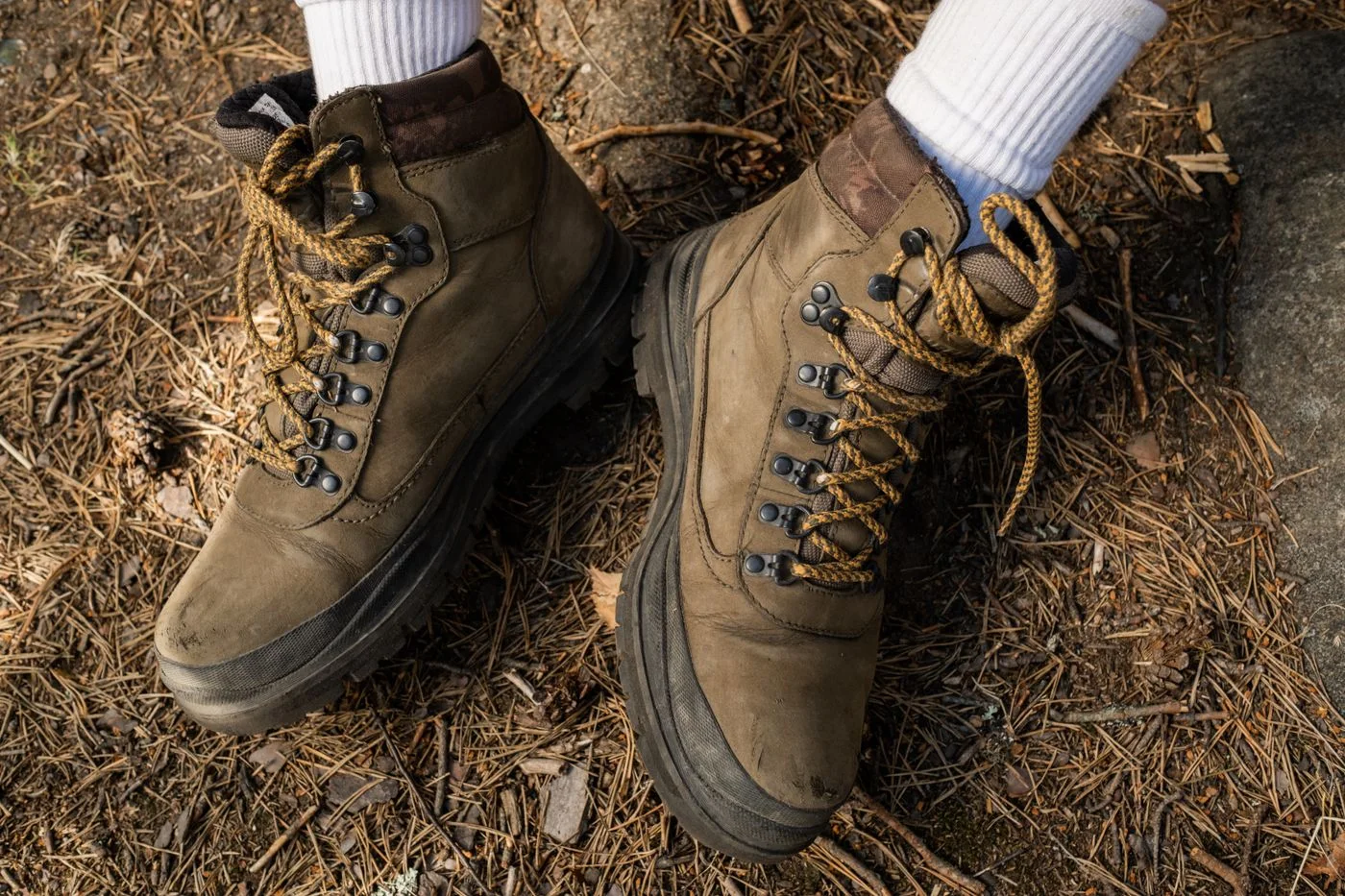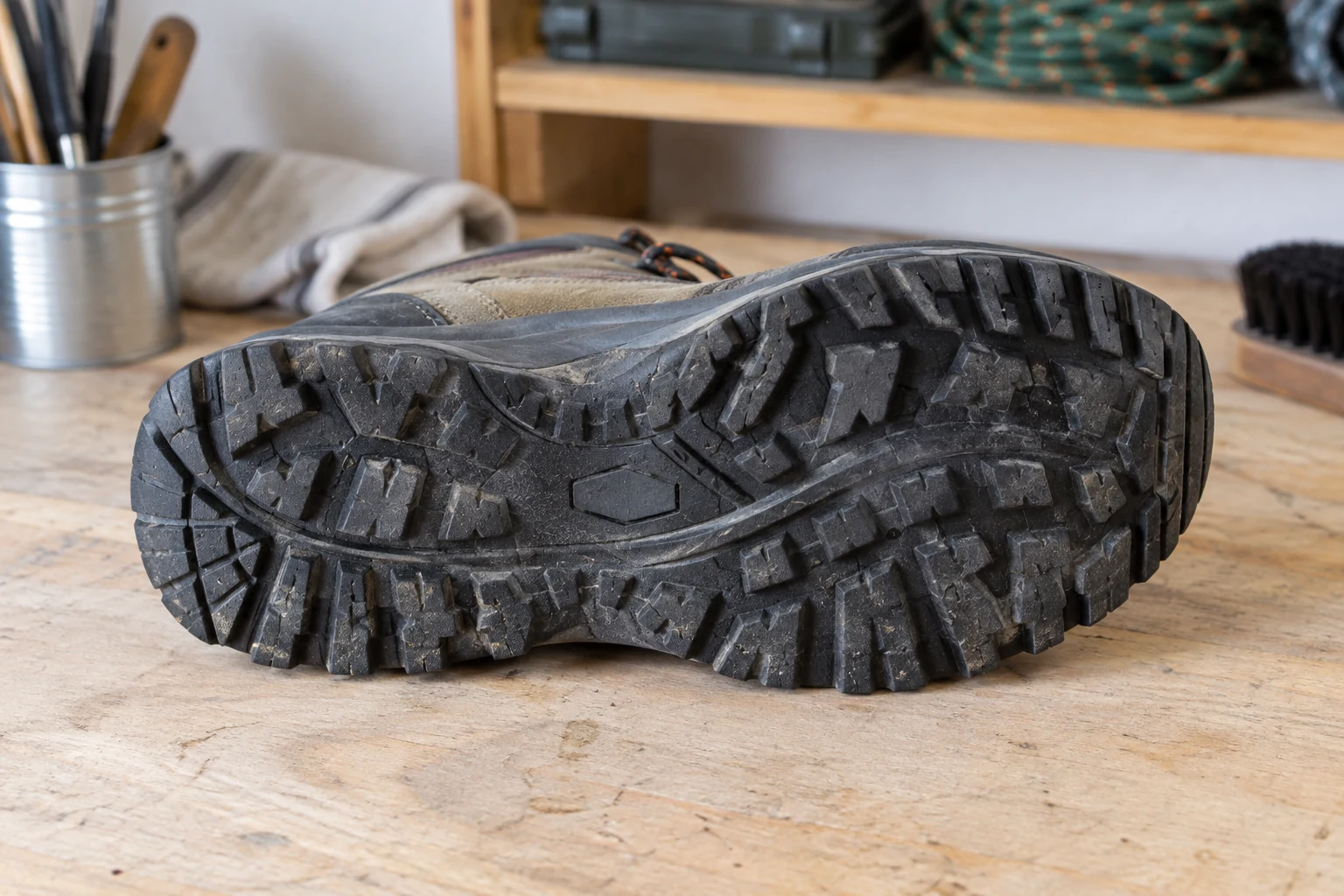
There appears to be enough space ahead of your toes while sitting. Walking downhill can change that impression. A fitting ramp in a shop helps you assess footwear more closely under controlled conditions. Ask which surface is intended for testing and how to use it securely. Improvising on an unstable edge does not produce a better buying decision.
Prepare the fitting first
Wear both shoes with your intended walking socks. Fasten them as you expect to walk and center the tongues. A nearly unlaced shoe moves differently from one that is properly adjusted. The exercise is not about seeing how far your foot can slide under arbitrary conditions; it is about checking whether the selected combination fits usefully.
Walk on level ground first. If obvious pressure or substantial slipping occurs there, address it before moving on. LOWA's fitting advice emphasizes standing and walking. The sloping section adds information rather than replacing the basic fitting.
Walk down slowly and observe
Use the ramp carefully and follow the shop's directions. Notice whether your toes contact the front, your heel moves excessively, or only uncomfortably tight lacing keeps the foot from sliding. Describe the observation precisely. “Contact at the front on the right with every step” is more useful than “it feels strange.”
Repeat after making one sensible change, such as repositioning the tongue or evening the lace tension. Do not simultaneously alter socks, size and lacing if you want to understand the difference. If contact remains, compare another size or model with the fitter.
Additional length is not always the complete answer. It may create room while changing the hold elsewhere. Toe space therefore belongs alongside the fit of the rest of the foot. A precise distance recommendation without considering the entire shape would be too crude for this comparison.
Understand what the short test can tell you
A shop ramp does not reproduce a complete hike. It adds evidence before a decision. Neither ignore that evidence nor treat it as a guarantee for descents of any duration.
Ask about the returns conditions and, where appropriate, repeat a clean indoor fitting at home. Choose a short, easily shortened route for the first outing. If a clear fit problem appears, change the plan rather than walking farther just to confirm it.