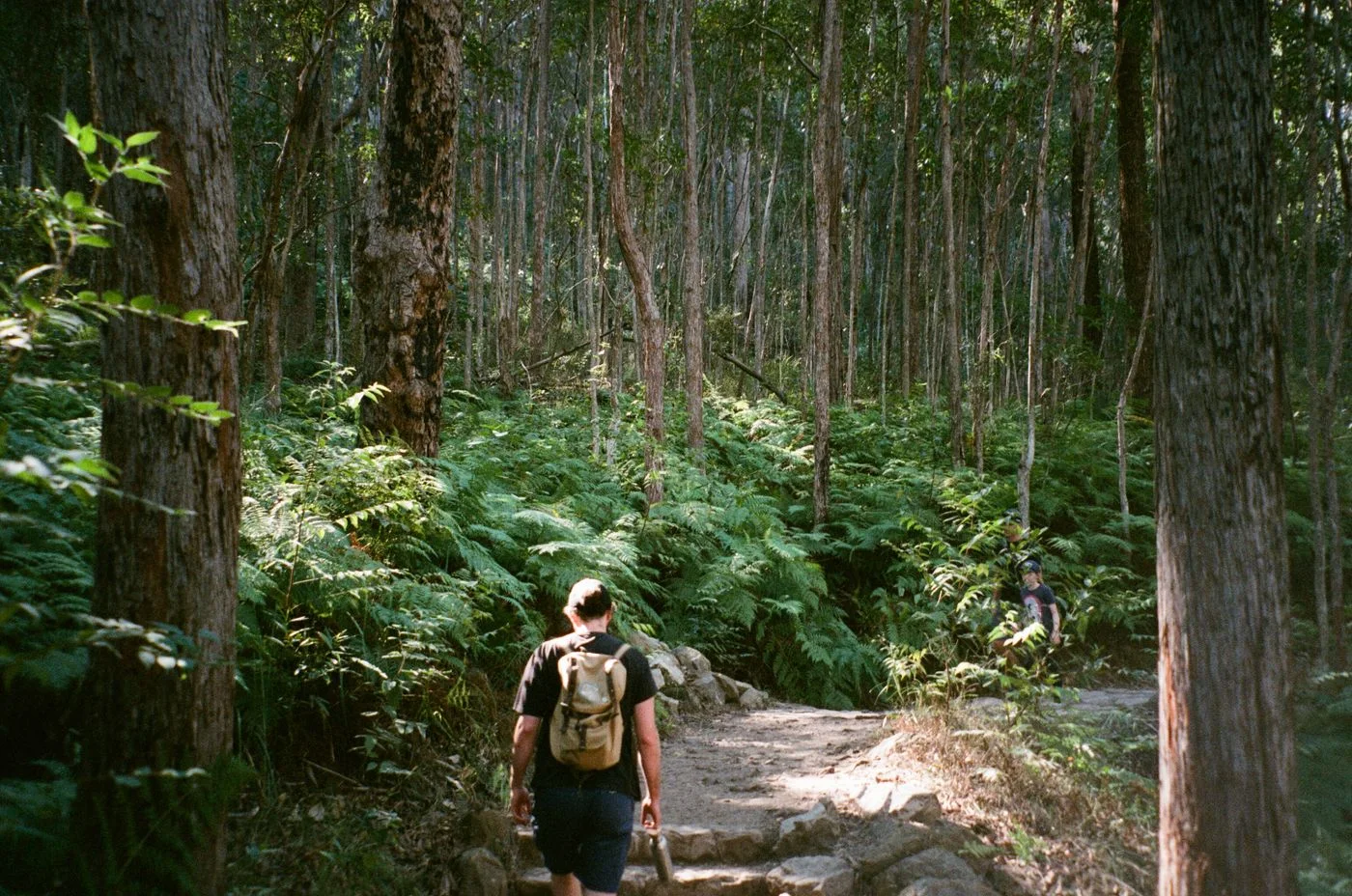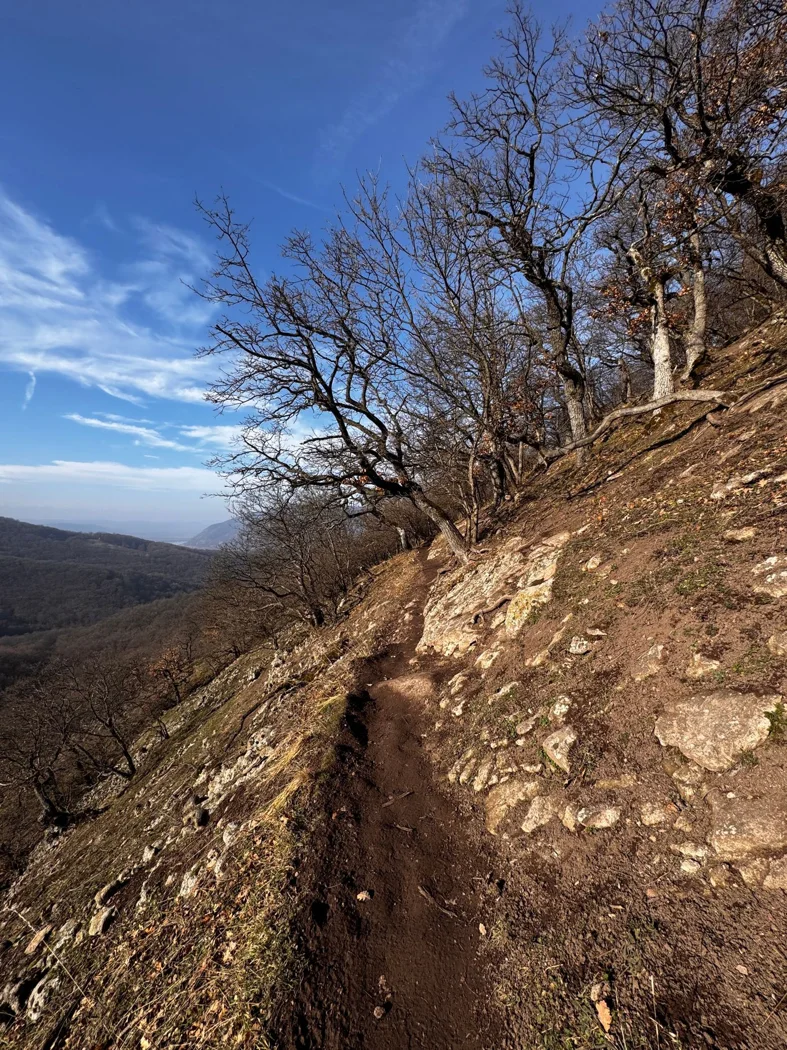
Twelve kilometres looks like a clear instruction on a route page. Whether it describes a relaxed outing or an overfilled day depends on what those kilometres contain. A broad, almost level track differs from a path that repeatedly drops into small valleys and climbs out again. Choose a day hike by reading the figures alongside a map and a description, rather than allowing distance to make the decision alone.
Use a familiar walk as your reference
Think of a walk whose demands you remember reasonably well. How long did the whole outing take, including stops? At the end, did you still feel interested in a small detour, or did arriving back feel timely? That experience is more useful than asking how many kilometres other people manage on a day off.
Compare the proposed route with that familiar outing in several respects: distance, total ascent, surface, and interruptions. If all of them increase together, the change is larger than the mileage suggests. For a first visit to an unfamiliar area, choose a route with one main new element, such as a little more climbing on otherwise broad, straightforward paths.
The purpose of the day matters too. Photography, looking around a village, and sitting down for lunch all need room. Those pauses are not mistakes in the walking estimate. They belong to the outing you actually want to have, and the route should leave space for them.
Read ascent along the route
The difference in height between the start and finish does not describe every climb. A loop can return to the same car park after going uphill several times. Find the figure for total ascent and examine the elevation profile. The German Alpine Club's planning guidance explicitly considers distance, ascent, descent, and terrain together.
Notice where the climbing occurs. A sustained section near the start produces a different day from several rises just before the finish. Reaching the highest viewpoint does not necessarily mean the demanding parts are over. Pay particular attention to the final third: does it require another climb out of a valley, or does the return remain fairly steady?
An elevation profile does not explain the surface. A gentle line may represent a root-covered path, while a pronounced climb may follow a surfaced lane. Read descriptions for steps, narrow sections, and rough gravel. When that information is missing, a better-documented alternative is often easier to assess than a route whose attractive photographs leave the walking conditions unclear.
Choose the whole day, not just the trail
Include travel and the distance from a station or bus stop to the advertised start. A short hike with a long journey can leave less room for pauses than a longer local loop. If a café opening or a final bus determines the schedule, check the operator's current information rather than relying on an old trip report.
Identify a reachable point where a shorter version can be chosen. Check that the alternative follows a continuous, suitable path; a thin line on a map is not enough. Decide which part of the walk is the real reason for going. If the woodland section matters most, the distant viewpoint does not automatically need to fit into the same outing.
It can help to compare two candidate routes on one page. Write down the journey, the main climb, the surface you expect, and the point where each can be shortened. The better fit often becomes apparent without ranking every scenic feature.
Choose the route whose demands suit this particular day. A longer option can remain for another visit. Afterwards, record the actual overall time and one useful observation about the ground. Your next choice then becomes better informed without turning every walk into a performance assessment.