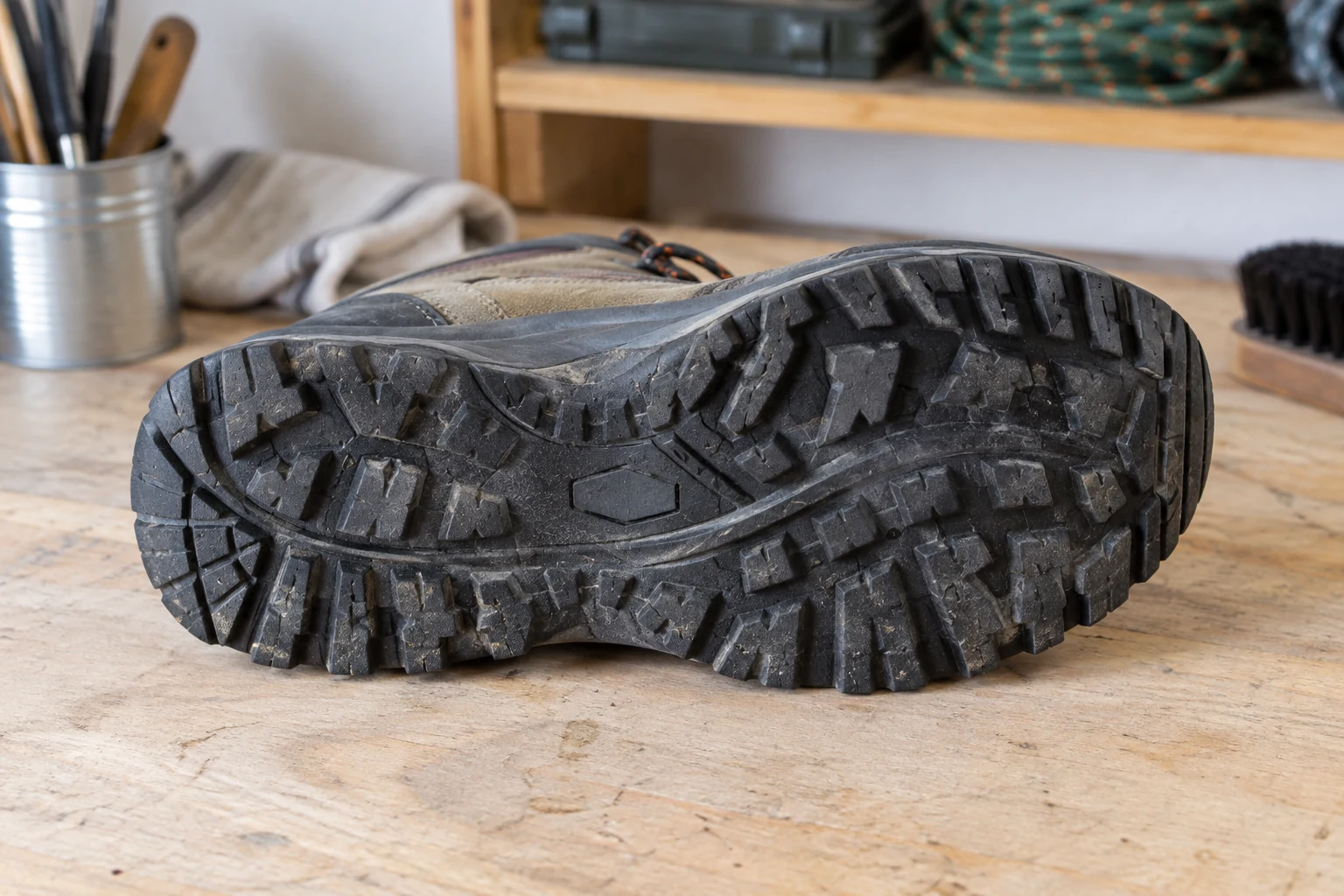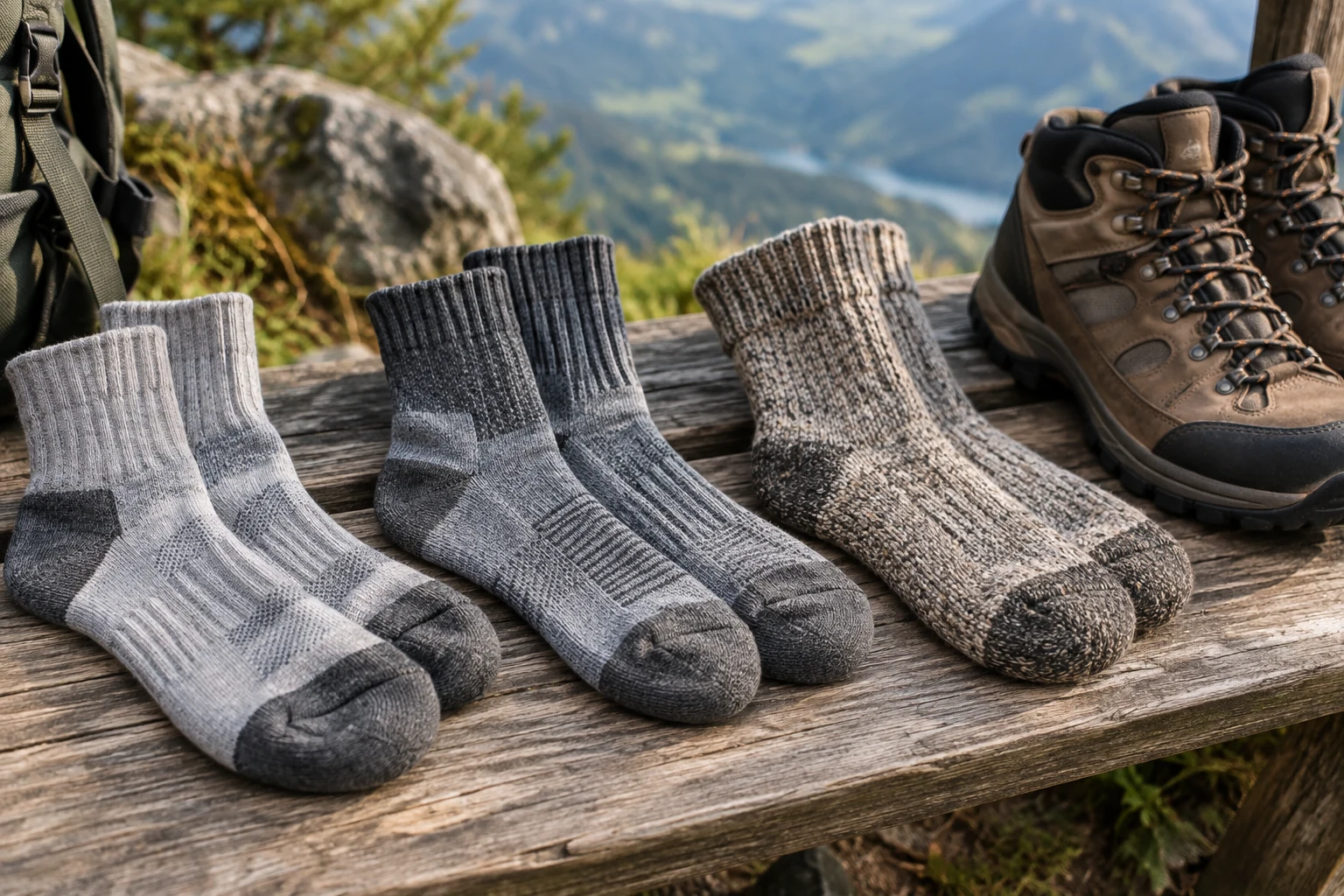
A particularly thick hiking sock is not automatically the right addition to every shoe. If footwear already fits closely, more padding changes the arrangement. Equally, a thin sock inside a roomy pair is not simply the same setup for warmer weather. Treat shoes and socks as a combined choice even when buying them separately.
Where is the padding placed?
Put two sock models beside each other and consider more than their overall thickness. Some use stronger padding in particular areas while remaining thinner elsewhere. Read the description and feel the fabric gently to understand the arrangement before assessing it inside a shoe.
Extra fabric beneath the toes can feel different from material above the foot. Asking only for a thinner sock is therefore imprecise. Identify where the existing shoe needs more or less space. HANWAG's sock advice also describes the relationship between thickness and available footwear volume.
Compare with the same insoles and basic lacing arrangement. Changing the insole and fastening at the same time makes the sock's effect difficult to judge. Begin with a known setup, then change one element deliberately.
Check sock height against the real collar
Pull the sock on smoothly and position the heel as intended. Its cuff needs to work with the chosen footwear. Walk and use a suitable step to check whether it slips downward or finishes awkwardly against the boot collar. A height description on the packaging does not replace movement.
Long trousers add another layer. Notice whether the trouser hem displaces the cuff or gathers excessive fabric around the ankle when sitting. A sock that feels pleasant alone may behave differently in the complete outfit. This short check can identify a straightforward reason for an unsettled fit.
Use the model's size chart. Choosing a larger sock does not reliably create comfort if it introduces folds. Equally, a smaller pair should not need such stretching that its intended heel position cannot be reached.
Do not solve every season with sock thickness
If you want several sock types for one footwear pair, assess each intended combination. Thicker socks need room above the foot and around the upper as well as at the forefoot. An unsuitable combination identifies a limit of the arrangement.
Material information helps, but does not replace examination of shape, care requirements and fiber blends. Two socks carrying merino in their names can have different compositions and knitting structures. Compare the actual specifications rather than expecting one fiber name to determine the entire wearing experience.
Buy one pair to learn about an unfamiliar model first. A short appropriate walk and its first care cycle according to the label provide more information about fit and handling. You can then decide whether several identical pairs deserve a place in your equipment.