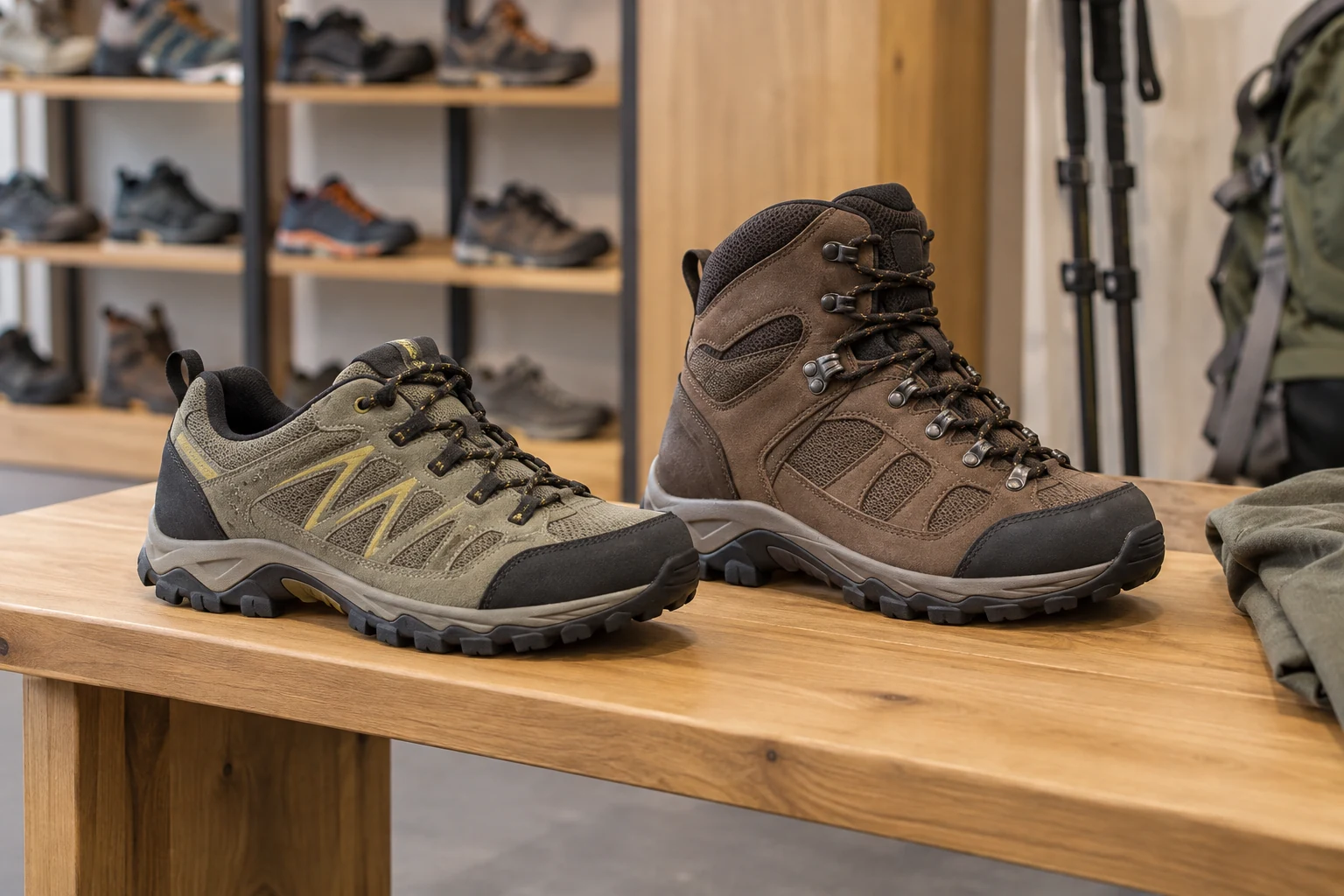
By the fifth candidate, it can be difficult to remember which shoe felt comfortable at the start. Limit the initial comparison to two plausible models. Both should suit the intended use, so you are not deciding simultaneously about footwear type, size, material and every feature. A small shortlist creates space for closer observations.
Arrive with a short description
Tell the retailer about your usual routes, duration and pack. Describe the existing pair too: what worked, and why are you replacing or supplementing it? A particular weakness provides a better starting point than searching for the best hiking shoe without further context.
Bring the intended socks and any insoles you already use. Establish whether the insoles suit the new construction. If bringing old footwear for comparison, make sure it is clean. Familiarity can help without replacing assessment of the new pair.
Ask for the exact model name. Similar names may identify variants with different linings or upper heights. Photographing the label prevents researching a different shoe at home from the one you tried.
Wear each as a complete pair first
Put on both shoes from one candidate and ask for a lacing demonstration if needed. Walk for several minutes, turn and use the designated fitting surfaces. LOWA recommends an extensive shop fitting. That time belongs to the buying decision rather than representing an unnecessary delay.
Then try the second candidate under the same conditions. One shoe on each foot may highlight differences but does not sufficiently assess both feet or walking in either complete pair. If you start that way, follow with a full fitting of each.
Avoid changing sock thickness accidentally between candidates. Extra room may simply reflect less fabric. Introduce particular insoles in a clear sequence too, so you know which combination was assessed.
Record three different kinds of observation
Separate fit, walking feel and handling. Fit includes whether the forefoot has enough side room. Walking feel concerns the motion of a step with that construction. Handling includes adjusting the tongue, laces and hooks. A good impression in one area does not automatically resolve a problem in another.
Write short specific notes for each model. “Left heel moves on every step” tells you more than “almost good.” “Upper hook difficult with these laces” can be discussed with the staff. “More comfortable than the first” soon loses meaning when the first impression fades.
Consider both feet separately and take a clear pressure point seriously. Hoping for later breaking-in should not conceal an obvious fitting mismatch. If both candidates are unsuitable, that is a valid result; you need not select a winner from two wrong pairs.
Assess equipment on the suitable candidate
Ask which remaining features matter for your routes. A waterproof variant, another sole construction or a repairable design may be a deliberate choice. The information needs to concern the exact product, rather than a broad brand promise.
Compare prices once the candidates are meaningfully comparable. A cheaper unsuitable pair does not do the job. Equally, suitable footwear does not need an extra feature you have no use for. Selection becomes easier when each feature answers a particular question.
Avoid rushing the final step
Put the strongest candidate on again. See whether the initial observations recur and clarify returns or exchanges before paying. Keep model and size details.
If uncertainty remains, name it. Another comparison visit may help more than a decision made at closing time. The aim is not a perfect spreadsheet winner, but a pair whose suitability you can explain for your own walking.