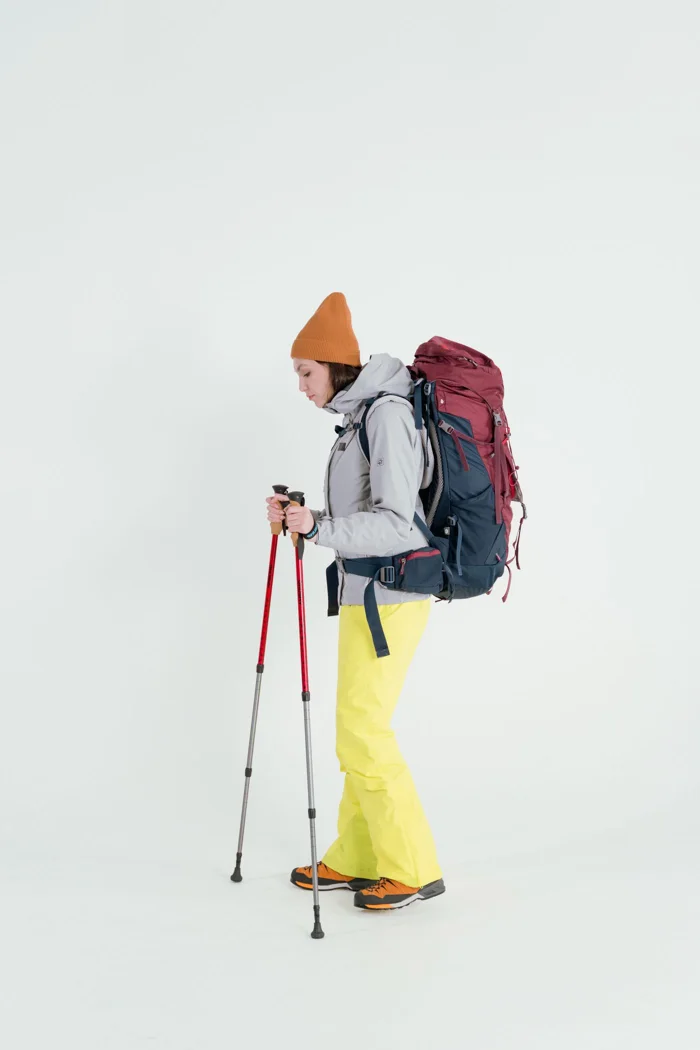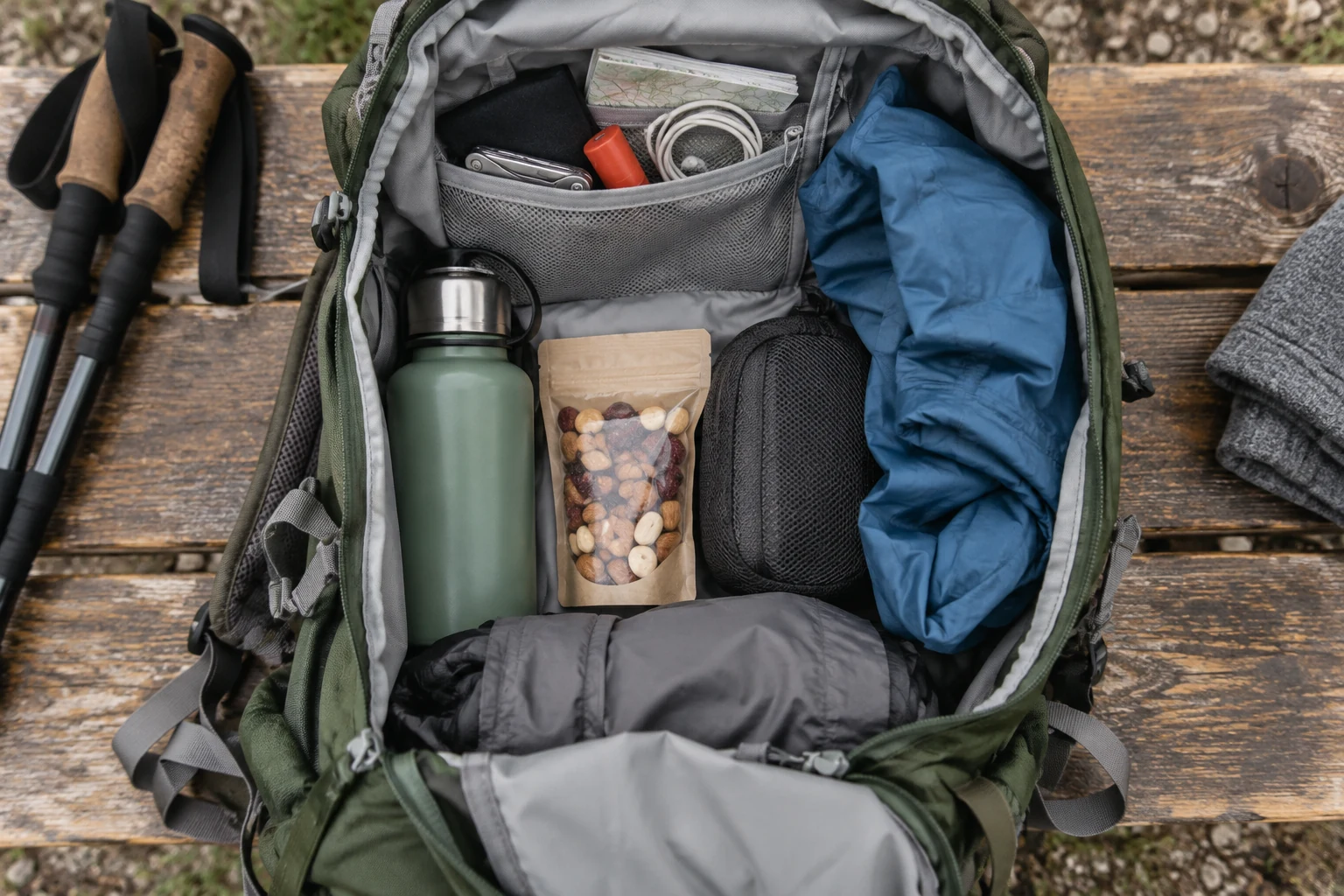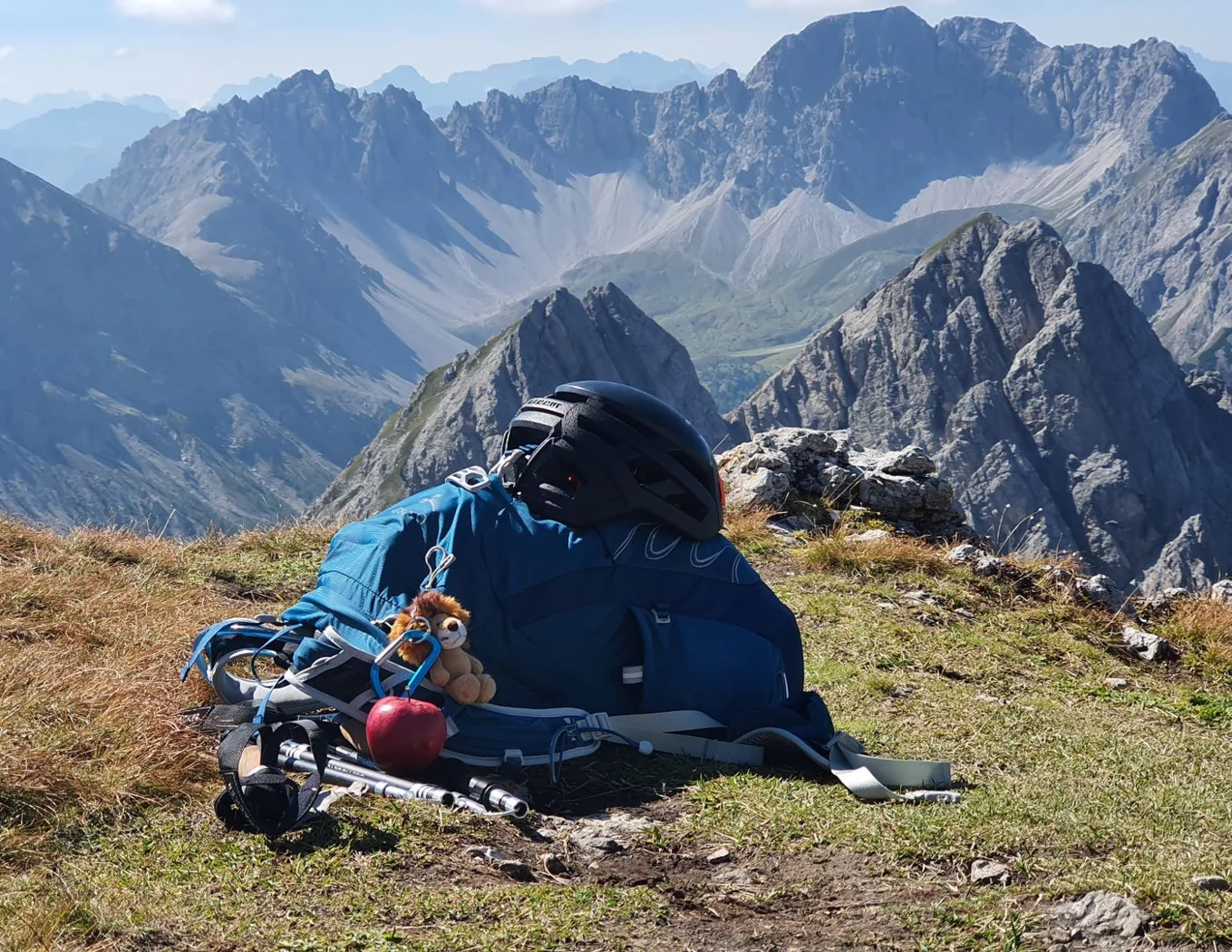
A daypack needs to accommodate what you actually intend to carry. A short walk with a thin jacket has different demands from a long autumn outing with extra clothing, a lunch box, and an insulated flask. Lay out your usual equipment first. Notice whether soft layers or rigid objects account for most of the bulk.
The German Alpine Club describes a pack of up to about 30 litres as a common scale for a one-day hike. That is an orientation, not a compulsory size. A smaller bag may work, while shared equipment can require more room. Your actual collection of items is more informative than a universal day-hiking number.
Volume and usable space differ
Two packs with the same stated capacity can hold equipment differently. A curved backpanel can reduce the straight space available for a lunch box. Numerous small compartments divide the total into areas that cannot accommodate a bulky jacket. Examine the opening and the loaded shape as well as the capacity label.
Use the same items when comparing two models. Your rain layer should fit without pulling the zip tight. A roll closure needs enough unused neck to close according to its instructions. A pack that only shuts after unusually careful folding leaves little flexibility when you repack outdoors.
Leave a reasoned amount of spare room
Extra space can be useful when you remove a clothing layer or take responsibility for a shared item. That does not mean carrying a large, half-empty sack. A modest margin above your normal load is often enough. Compression straps only help if they actually stabilize the contents rather than simply squeeze an exterior pocket.
Consider retrieval too. If reaching a bottle requires removing half the main compartment, additional volume may not solve the problem. A suitable pocket or a different packing order can be more effective. Include the pack's own weight and rigid structure in your comparison if you frequently carry it with very little inside.
Finish the comparison with a load
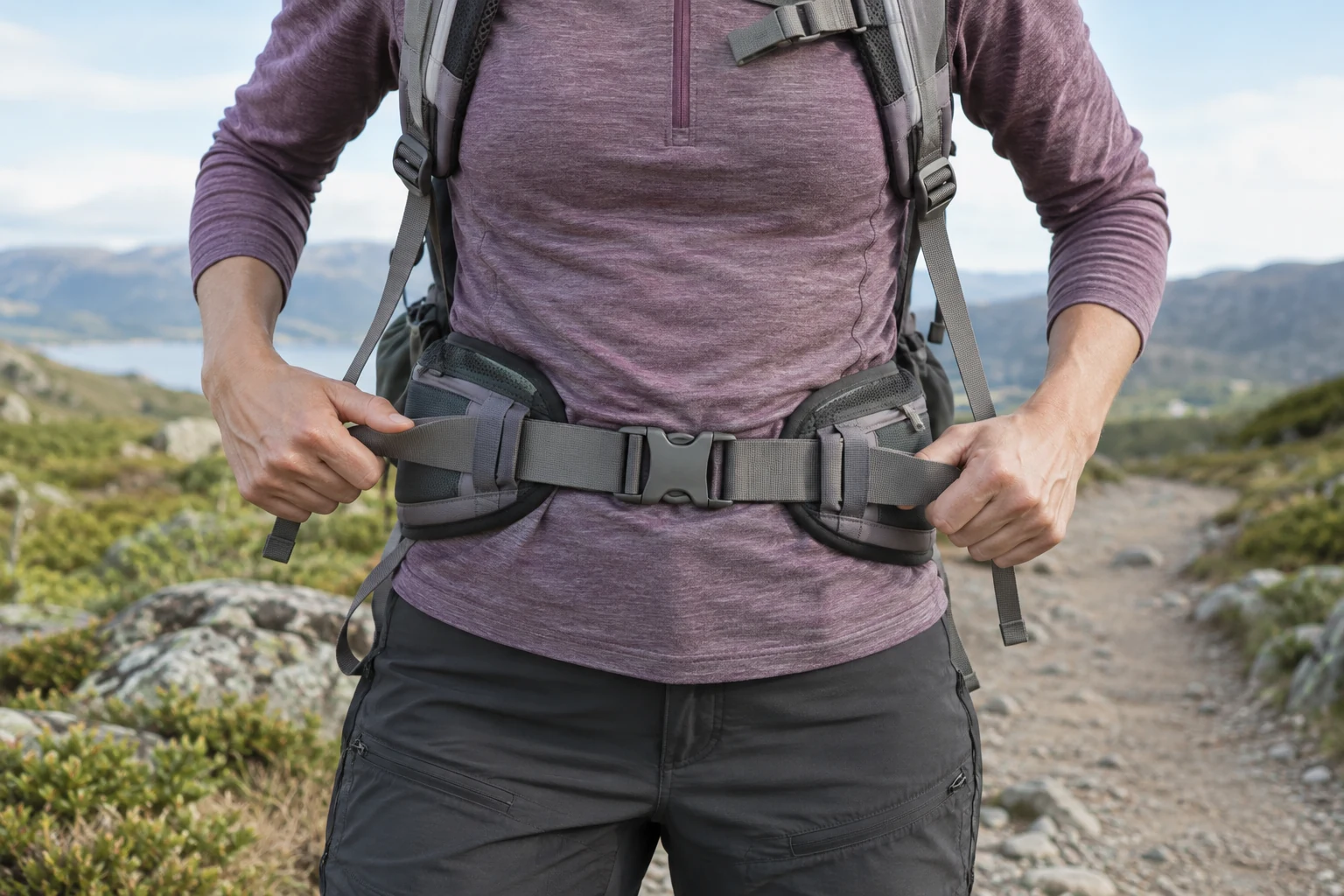
Only the intended contents show whether the size works with your body and routine. Capacity and back length are separate measurements. Close the pack properly, put it on, and walk for a few minutes. The useful choice accommodates your kit, leaves its closure functioning normally, and has a carrying shape that works with that load.