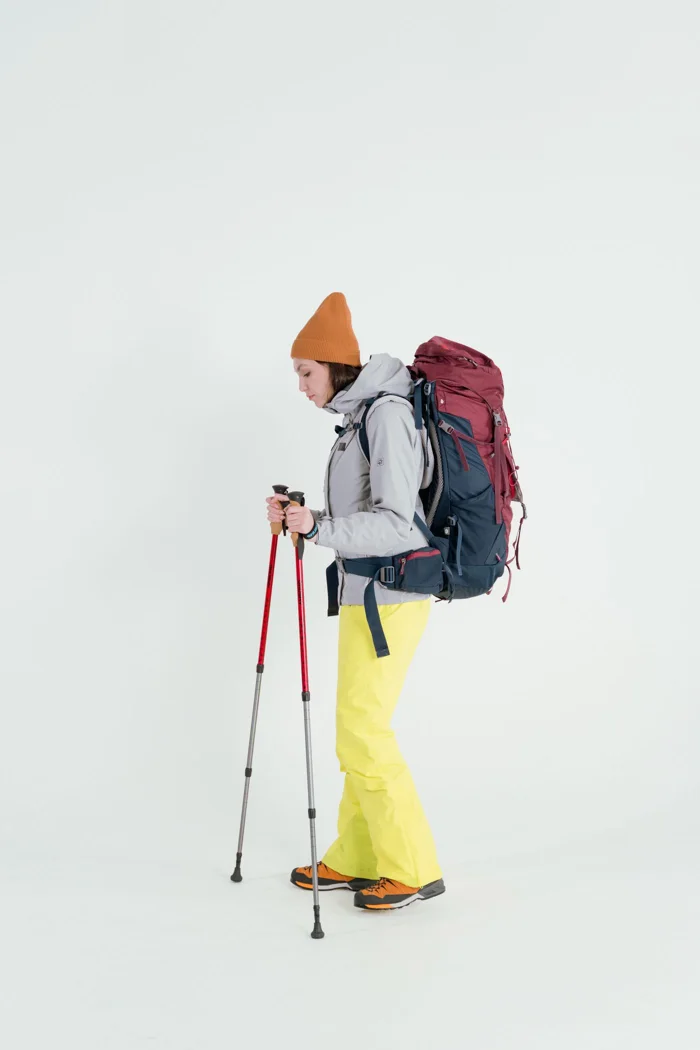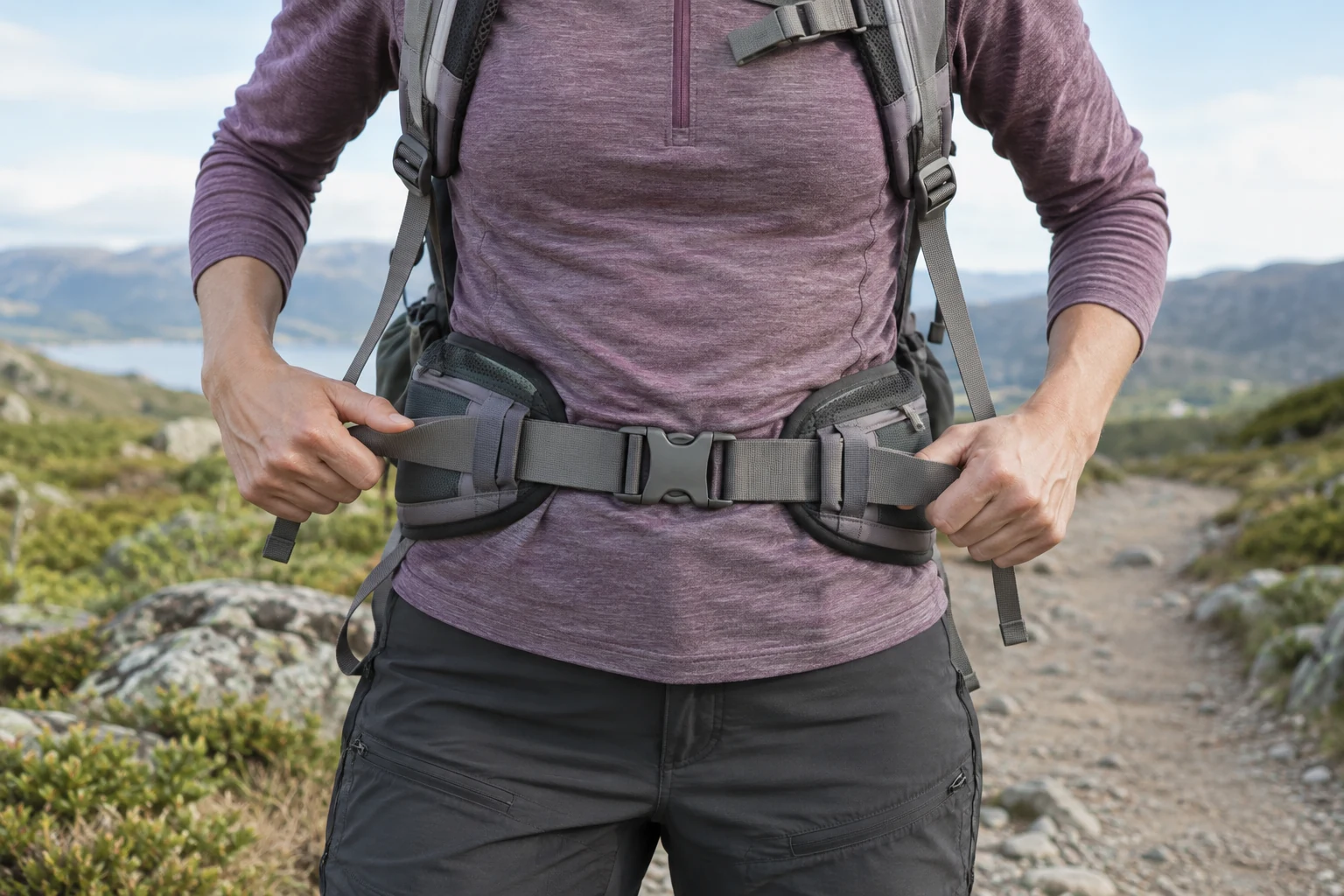
A broad padded hipbelt and a narrow webbing strap may share a name while doing different work. With a suitable suspension, the padded belt helps carry the load at the pelvis. A thin strap often primarily limits movement. Do not keep tightening it in the expectation that it must behave like a substantial load-bearing belt.
Start with a loaded pack and loosened straps. On many models, the middle of the hipbelt padding is positioned around the top of the hipbones. Follow the actual model's instructions. Bring the shoulder straps into contact afterward. This order avoids fixing an unsuitable initial position in place with additional straps.
Shoulder contact rather than maximum tension
Tighten the shoulder straps until they contact and guide the pack appropriately. Small, even changes are easier to assess than a strong pull on one side. Examine the padding position and the balance of the contents. Unequal strap tension can disguise an unevenly packed load without resolving it.
If load-lifter straps are present, adjust them in small increments as directed. They are not a replacement for the correct torso length. Some small daypacks have none, so their absence alone says little about suitability for a light load. Assess the construction you actually have.
The sternum strap holds the harness together
Set its height before fastening and shortening it. The sternum strap should help retain a useful shoulder-strap position, not become as short as possible. Check unrestricted breathing and whether tightening pulls the shoulder straps into an unsuitable route. It cannot correct the wrong shoulder-padding shape or an oversized hipbelt.
Walk for several minutes, changing one strap at a time. If a change produces no clear benefit, return to the previous setting. Different clothing can require minor readjustment. That differs from continually retightening a system simply to keep the pack in position.
A useful final check
Open and close the buckles before considering the adjustment finished. Manage long strap ends and check that the padding has not already reached the end of its usable coverage. If a belt is completely tightened and still unsuitable, another size may be needed. More tension cannot resolve every fitting problem, and there is no universal percentage of load that every daypack must transfer to the hips.