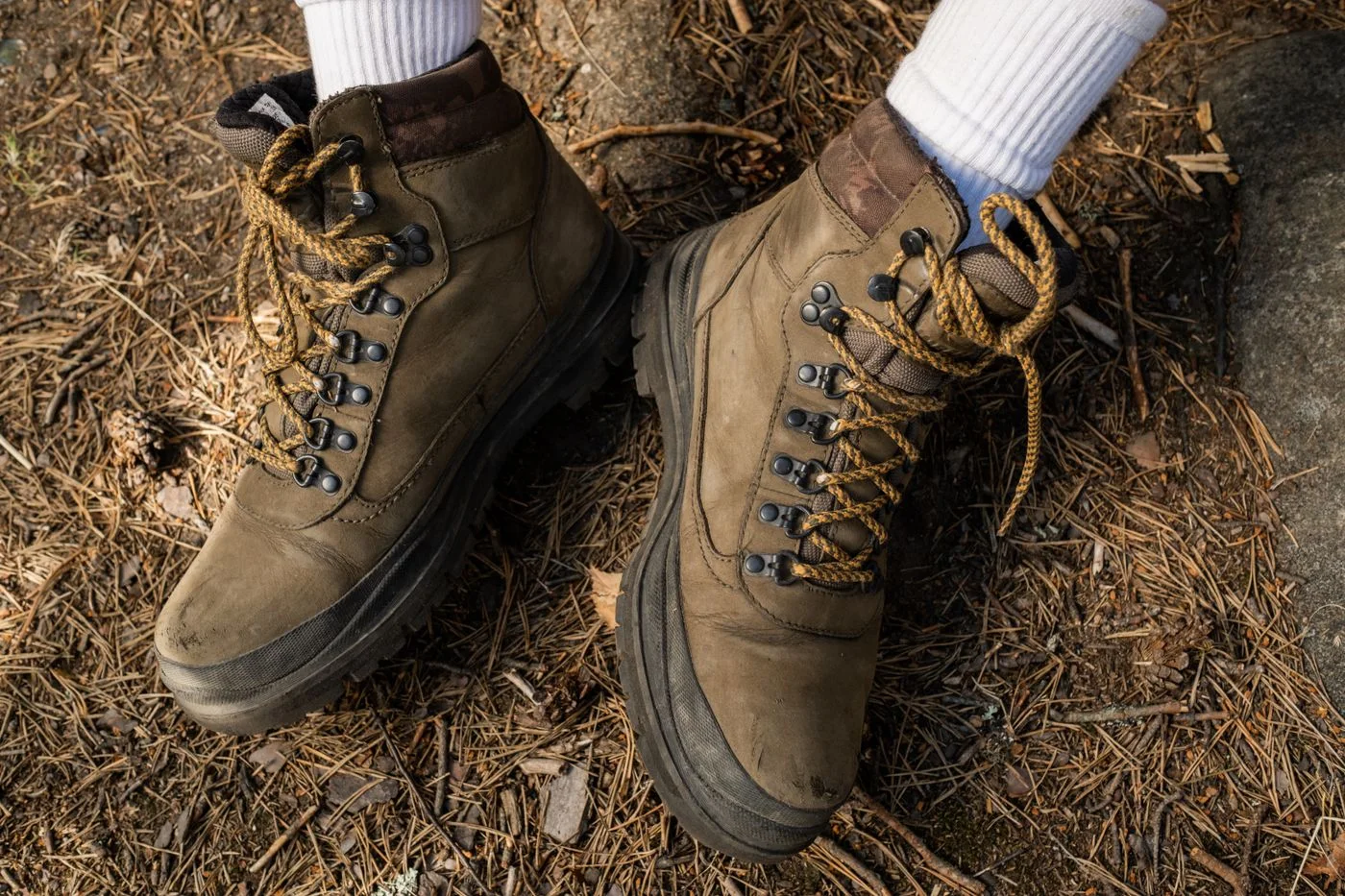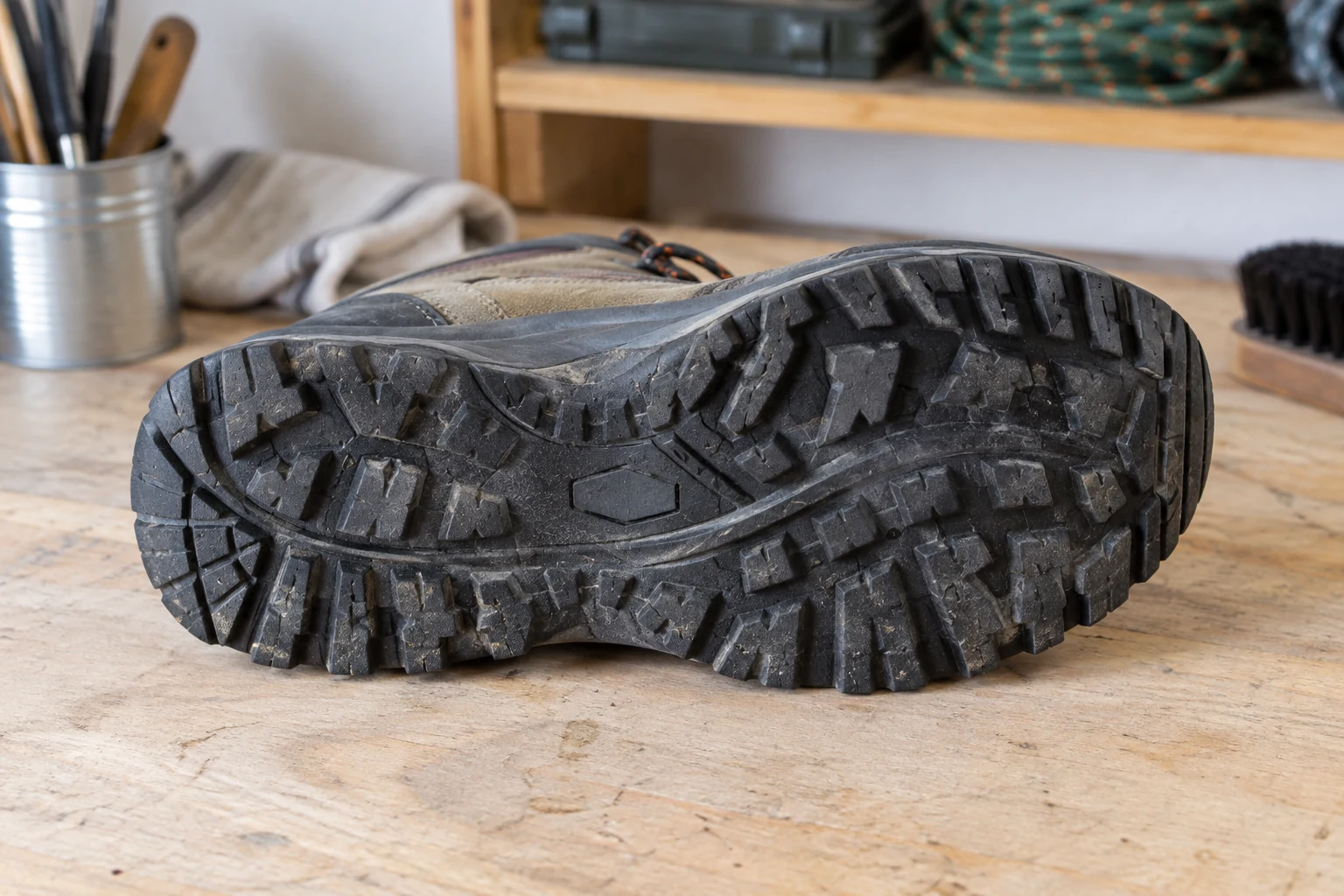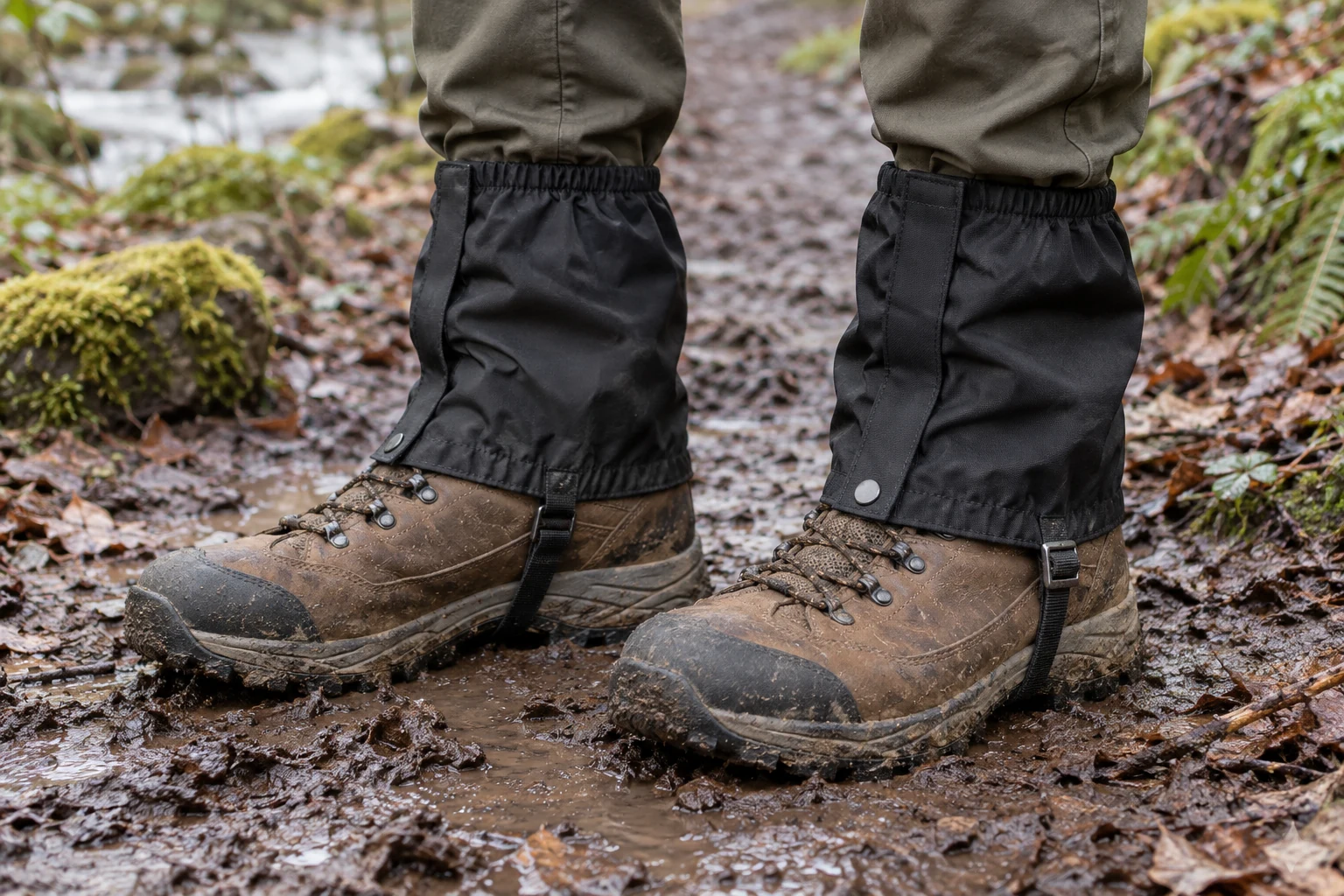
After a woodland circuit, dirt covers the trouser hems and little stones have entered the shoes. Short gaiters may complement some footwear combinations. They do not replace appropriate shoes or a route you can manage. Establish the contact you want to reduce first: loose debris at the opening, damp vegetation or splashes around the hem.
Separate product purpose from material
Some short gaiters are designed primarily as barriers against loose stones. Salomon describes relevant trail models this way. That does not establish waterproofness. Read the specific product's material, construction and intended use. Shape alone cannot answer the moisture-protection question.
“Short” also does not tell you whether the gaiter fits your footwear. A bulky boot and a lightweight low shoe require different shapes. Check the size information and try the gaiter with your real pair, rather than only over a thin everyday sock.
Check attachments calmly
Depending on the model, there may be an underfoot strap, a connection to the lacing or a designated rear attachment. Follow the instructions and examine each connection separately. A design requiring a matching component on the shoe is not automatically compatible with every pair.
With an underfoot strap, its position against the sole matters. Do not pull it across an arbitrary unsuitable area. Ask a retailer to demonstrate any unclear arrangement. Also make sure the strap is not already damaged before using the combination outdoors.
Close the upper area to suit the leg or trouser hem. Walk, sit and move your foot on a suitable step. A gaiter that looks tidy only when standing has not been fully assessed. It should neither slip significantly nor restrict the required movement uncomfortably.
Look again during the walk
After the first short section, stop somewhere appropriate and check that every connection remains correctly positioned. This is especially useful with an unfamiliar combination. A released attachment can prevent the gaiter staying where intended.
Mud on the exterior is not automatically a failure: that contact may be exactly why you chose the gaiter. Instead, notice whether dirt enters the area intended to be covered. A specific observation helps you decide whether to change the fit, size or product type.
Bring the wet covering home separately
Open dirty gaiters so that contamination remains outside as far as possible. Keep them separate from dry clothing and clean them at home according to the instructions. Inspect straps, closures and seams then too.
If your usual paths rarely call for short gaiters, leave them behind when conditions allow. Their role should come from an actual gap in your equipment. An additional item helps only when it fits correctly and serves a clear purpose.