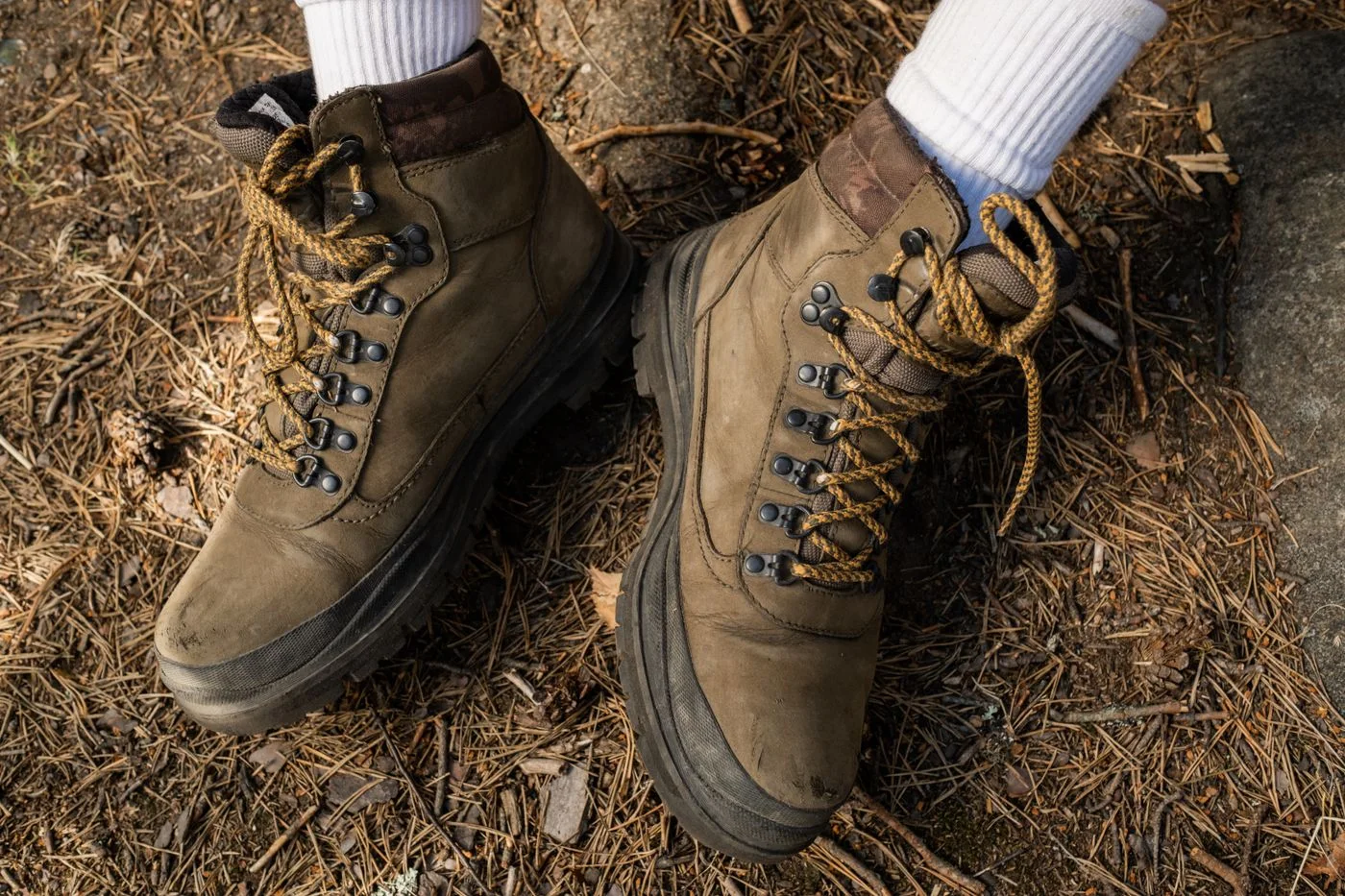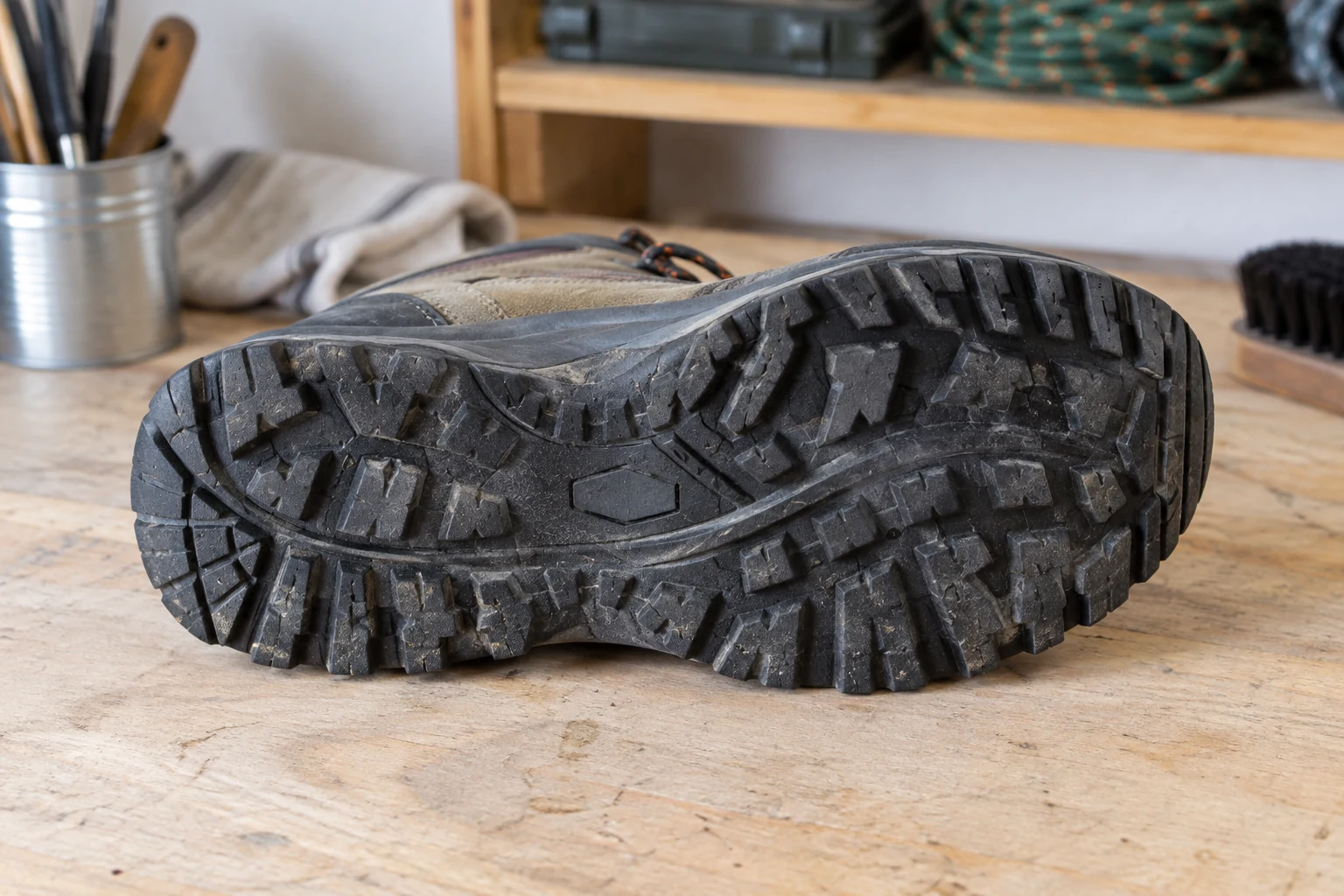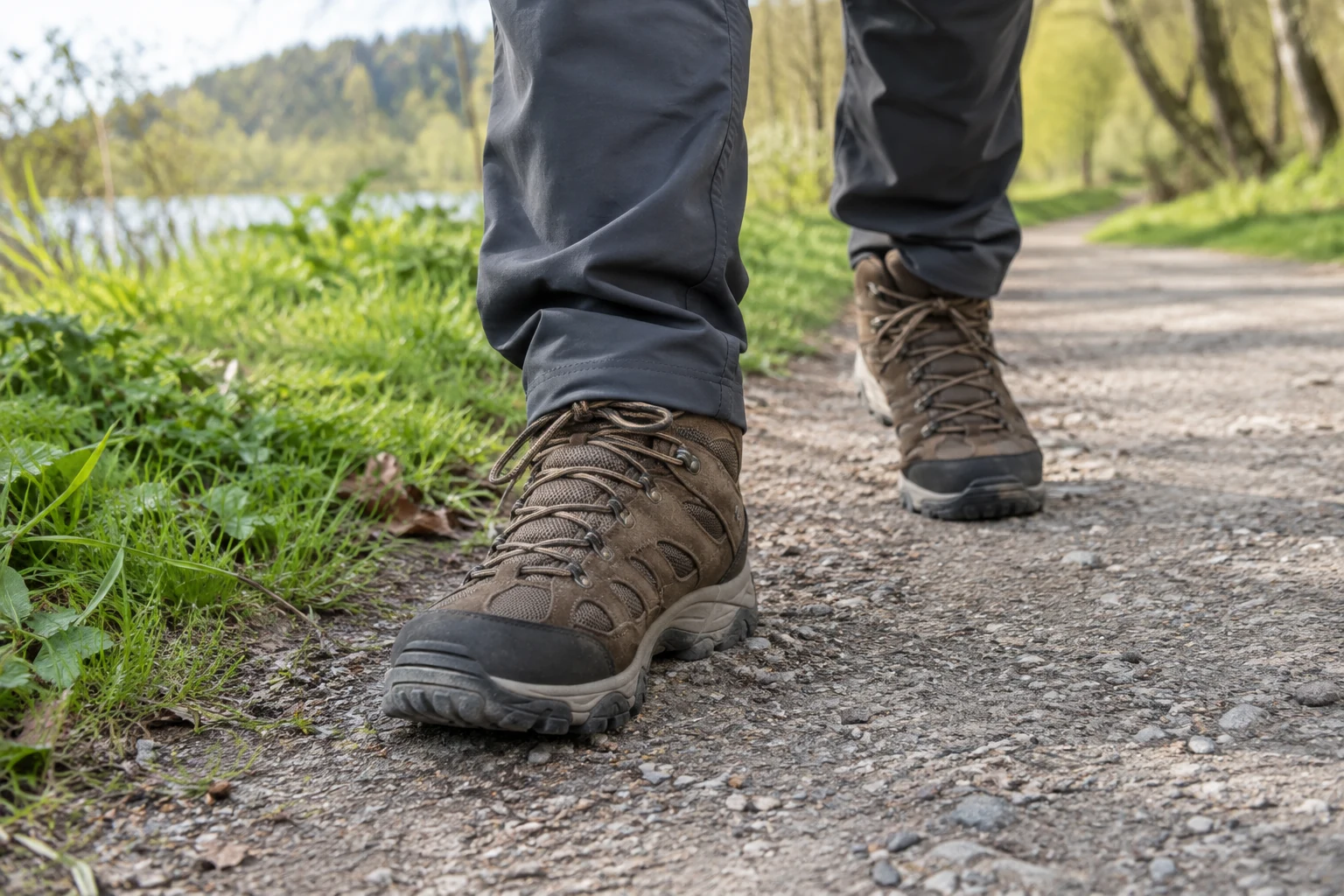
The new pair is bought and the next long route already chosen. An intermediate step still helps: a short walk somewhere familiar. LOWA recommends trying new boots at home first and then on short outings, increasing the duration afterwards. Use that stage to learn about the combination rather than trying to walk an obviously unsuitable fit into submission.
Before the first outdoor outing
Clarify the returns conditions while the footwear remains clean. Repeat a calm indoor fitting with your intended socks. Check the laces and tongue position and compare both feet. Tightness already evident in your living room does not become a better buying decision once you step outside.
Choose a first route you can shorten without a difficult turnaround. A nearby park path is more useful than a route whose return begins only after a long climb. There is no required distance; the aim is a manageable first experience.
Change only a few things at a time
Wear the planned socks and avoid introducing an untested extra insole into the same outing. Start at your usual pace. If you adjust the lacing, stop and remember how it felt beforehand. One controlled change reveals more than several new measures at once.
Notice specific details: does the tongue drift sideways, does the heel remain steady, or is a hook difficult to release? A short walk may reveal handling questions barely apparent in a brief fitting. If clear pressure or rubbing develops, end the attempt and investigate rather than extending the walk out of obligation.
Choose the next outing deliberately
Inspect footwear and socks after taking them off. Reposition a drifting tongue or incorrectly arranged cuff before the next attempt. When the underlying shape is unsuitable, fitting advice is more useful than an expanding collection of workarounds.
After an uneventful short outing, gradually increase duration and introduce another appropriate surface. This sequence makes observations easier to understand. Familiarity develops through suitable use and time; “breaking in” should not become a reason to ignore clear problems.