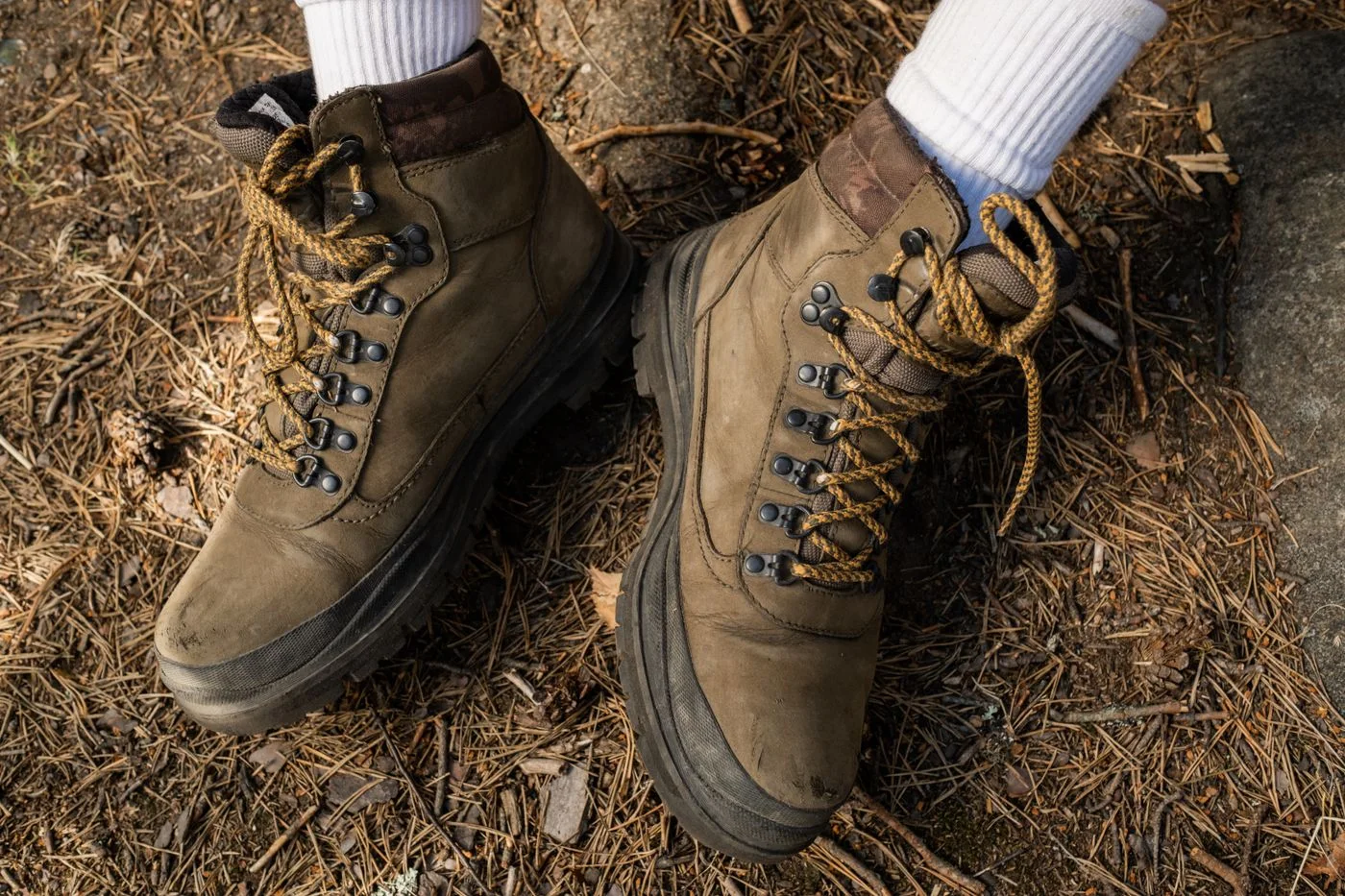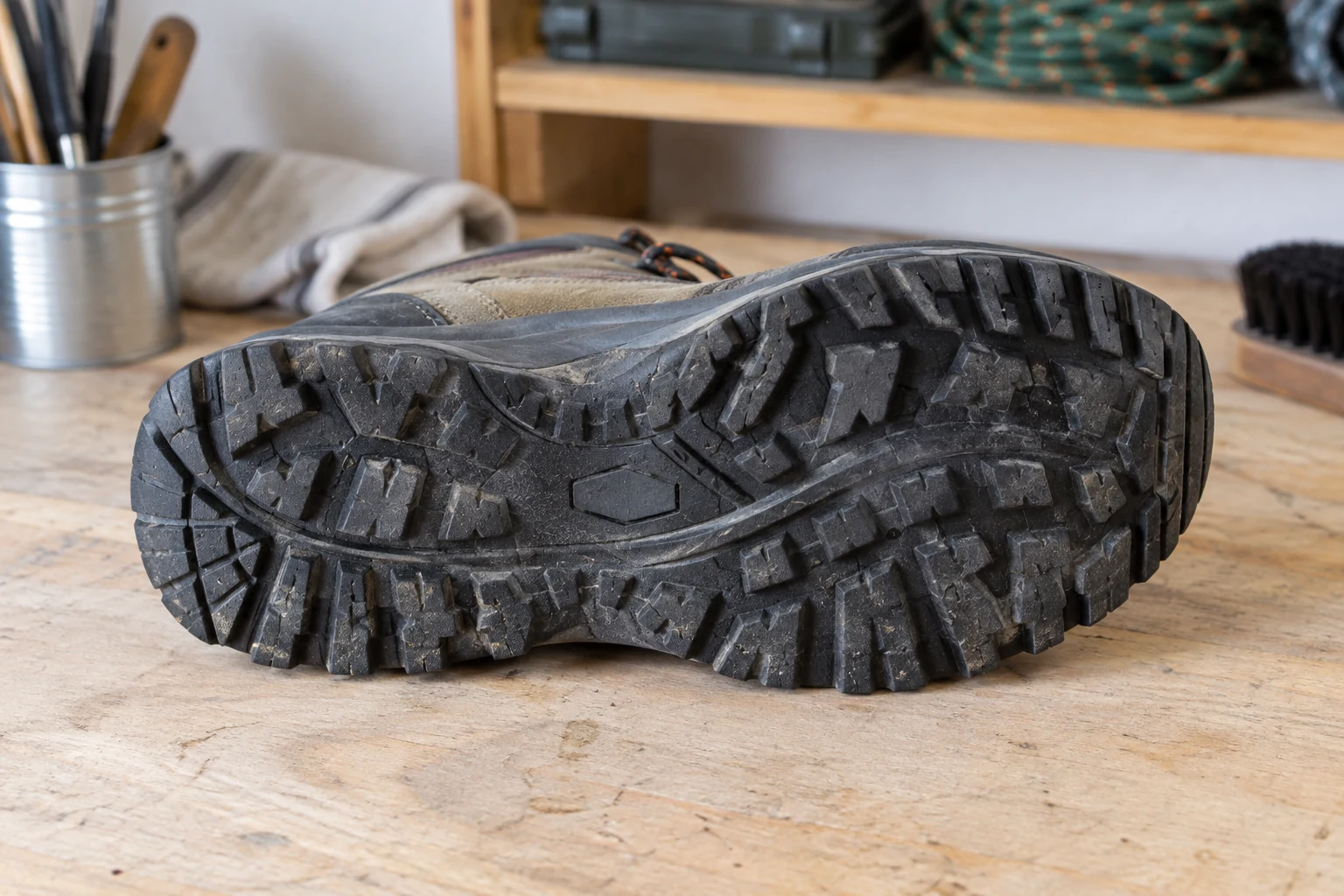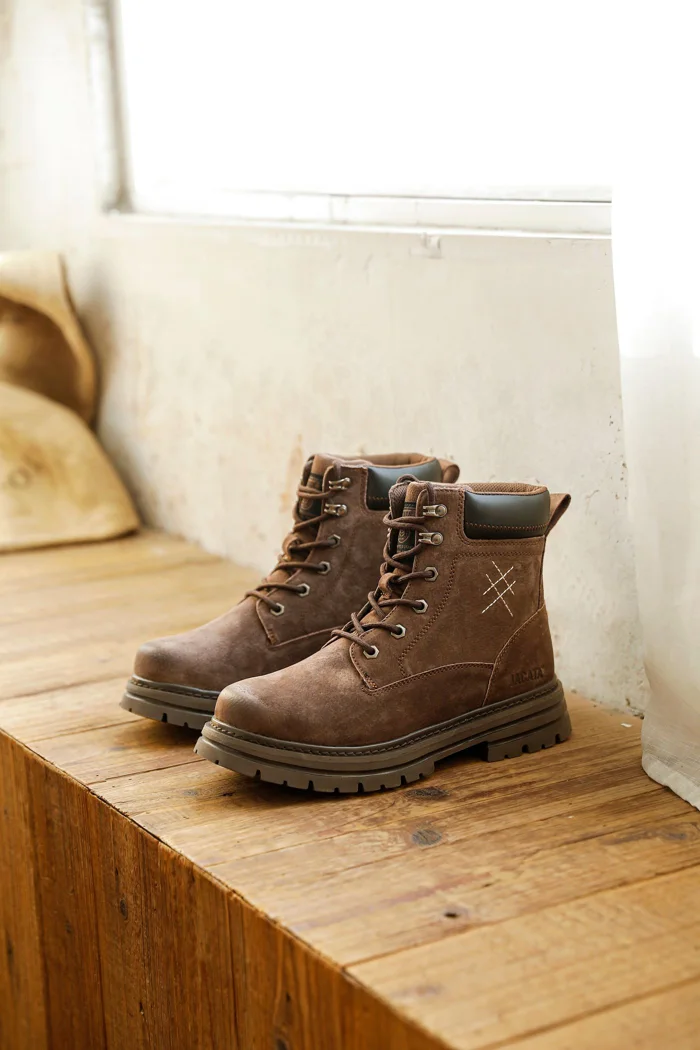
“Too tight” can describe several different things in walking footwear. Does the forefoot press against the side, is there too little room above the instep, or do your toes meet the front? These observations do not necessarily lead to the same solution. Take time to identify the location of the problem. That makes the fitting conversation more specific and the next comparison more useful.
Width is not simply a larger size
The size label provides a starting point for length. The way footwear surrounds your foot also depends on its shape. HANWAG explains that its Wide last combines more forefoot space with a regular heel section. A model described as wide therefore need not become uniformly broader everywhere.
Ask where the additional width is provided: around the forefoot, in the toe area, or throughout the shoe? Terms from different makers are not necessarily equivalent. Compare footwear by trying it on rather than relying on a label containing the word “Wide.”
If a larger size relieves side pressure but becomes noticeably loose at the heel, that suggests a shape question. Avoid searching indefinitely for a compromise between two unsuitable lengths. Another last may be the more useful next comparison.
Observe the room above your foot
A shoe can provide enough width while pressing from above. Conversely, excessive room above the instep may require the lacing to close nearly as far as possible. Notice how close the two sides come together and compare that with the actual walking feel.
Another sock thickness changes the combination. Try it deliberately without simultaneously changing shoe size. If the pair is intended for both thin and thicker socks, both planned arrangements need to work reasonably. A comfortable first fitting does not automatically validate the second.
Extra insoles are not arbitrary stackable packing material. They change the position of your foot within the shoe. If you intend to use a particular insole, bring it to the fitting and check its suitability for the model. Keep track of the original arrangement so you know what has changed.
Turn observations into a decision
After each candidate, remember no more than two points, such as “tight beside the ball of the foot, heel steady” or “forefoot fits, instep cannot be closed usefully.” These descriptions prevent the comparison ending with only a vague comfortable or uncomfortable judgment. They also help you resume the process after a break.
Walk in each pair rather than assessing only an unloaded foot. Consider left and right separately too. Different responses between the two feet belong in the fitting discussion. You do not need to invent a technical explanation before treating the difference seriously.
Decide once length, side room and hold make sense together. Gaining one feature is insufficient: more width without adequate hold, or tighter lacing with pressure still present, does not yet establish an appropriate fit.