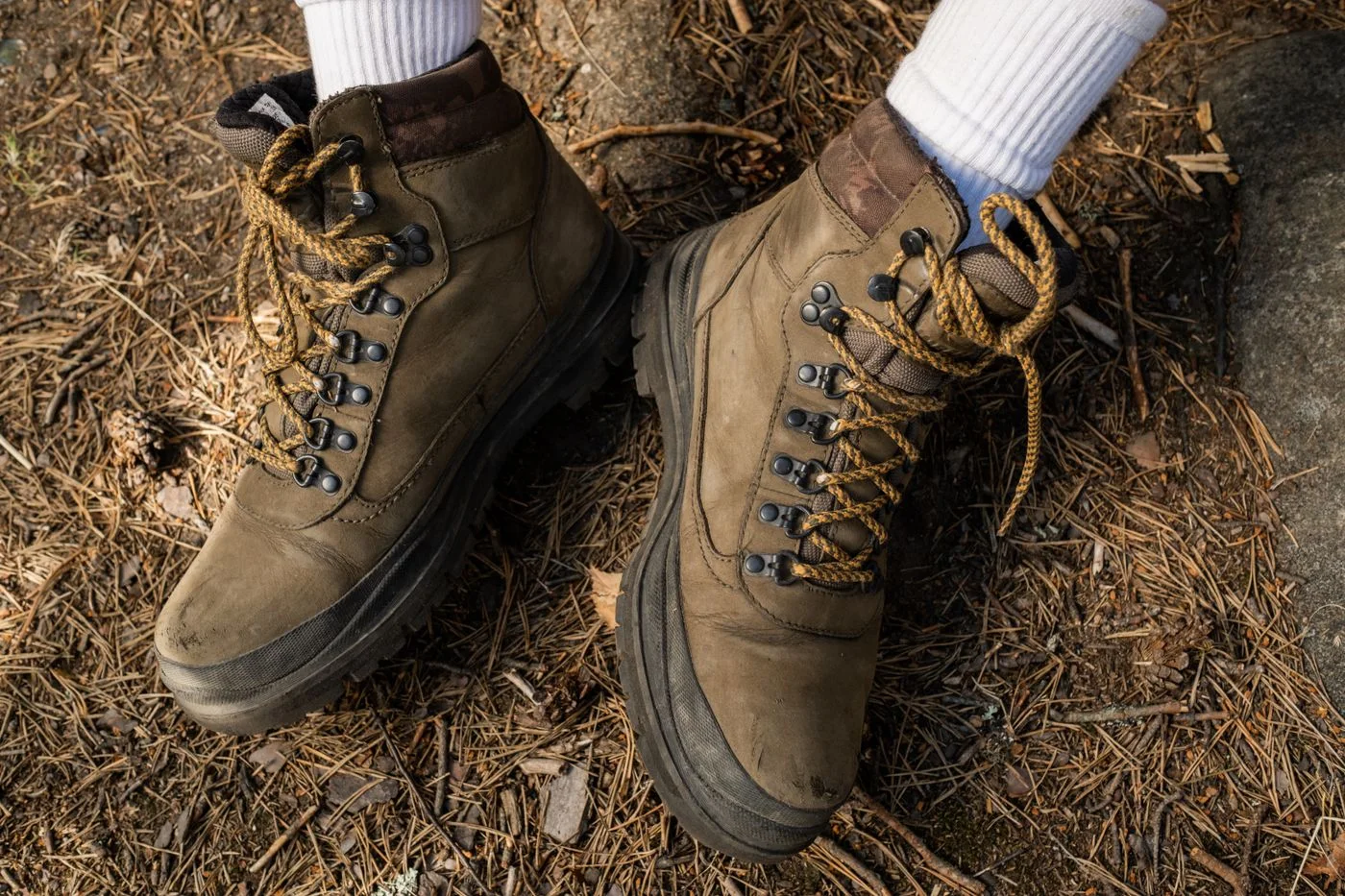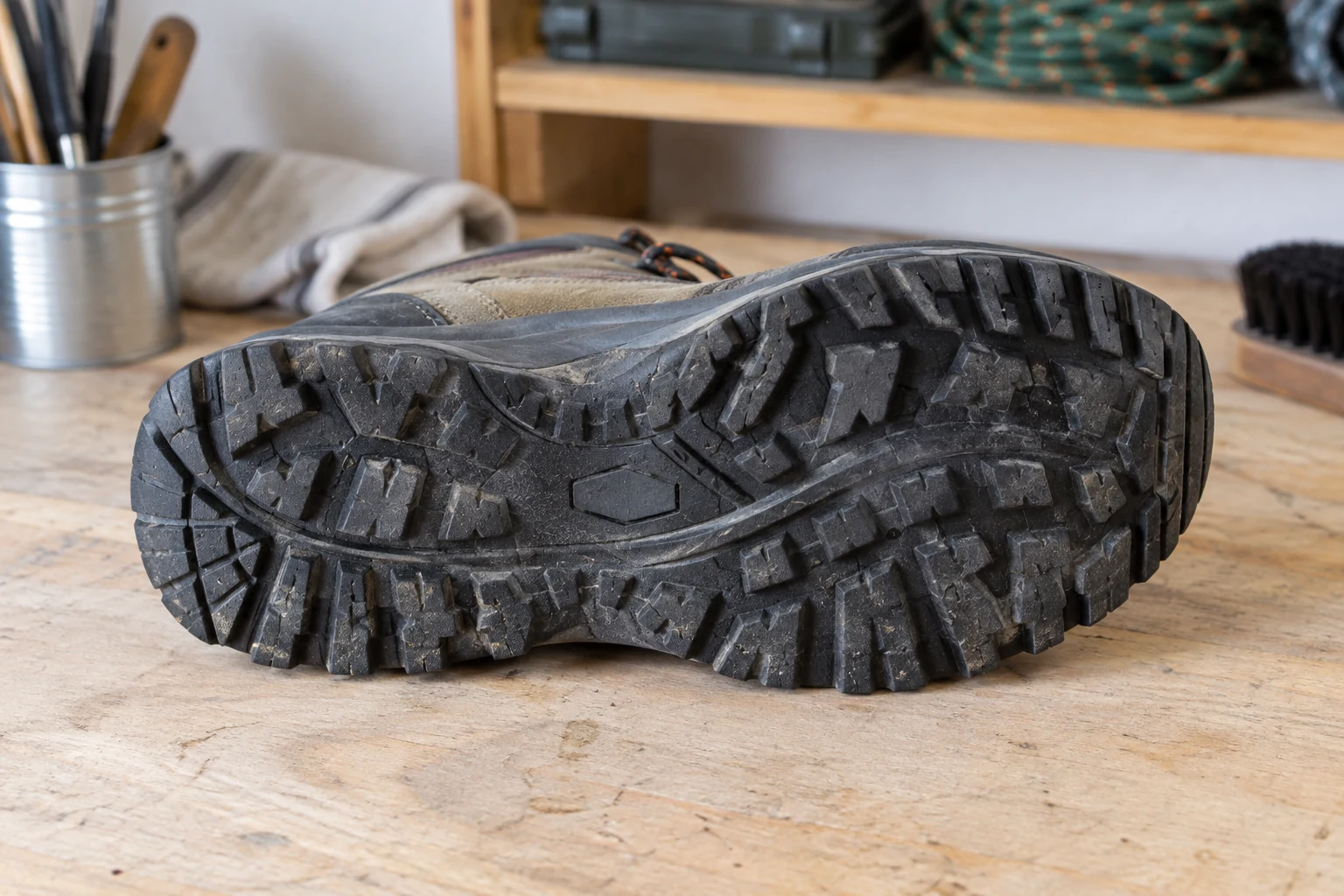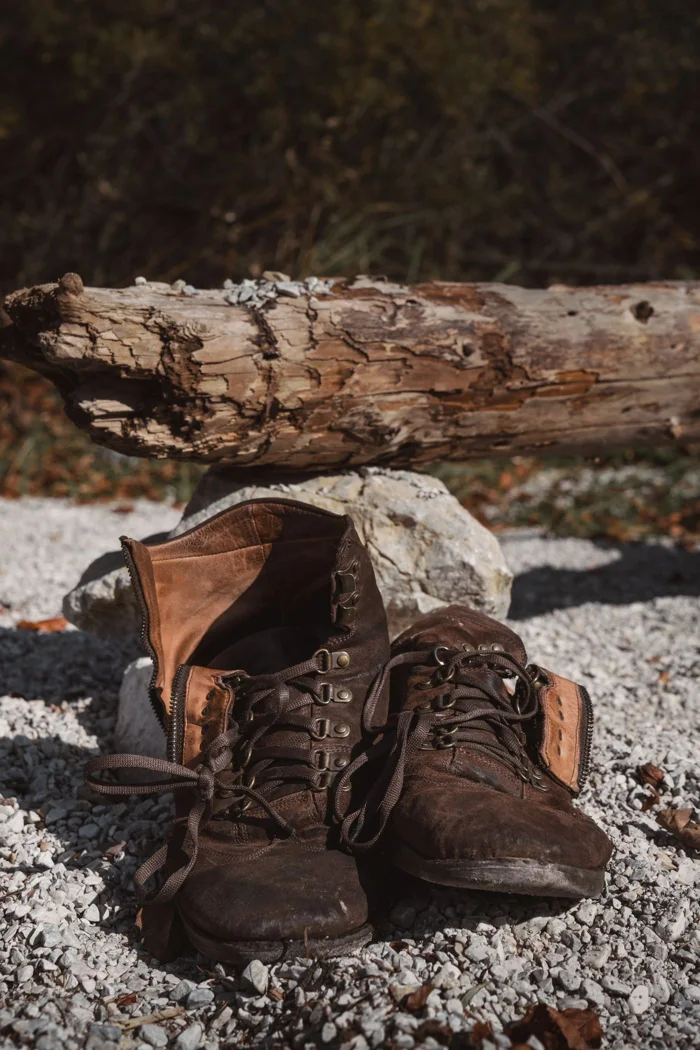
A riverside circuit may be mostly surfaced yet include short stretches of loose gravel. How those sections are distributed matters when choosing shoes. Ten minutes of gravel between long level paths presents a different task from a continuously uneven track. Before shopping, record what your usual walks actually put beneath your feet.
Gravel paths are not all alike
A firmly compacted path with a few loose stones differs from a deep layer of coarse material. A route description might call both gravel. Look for photographs or current local descriptions if you do not know the route. Do not replace an unclear description with an assumption that every gravel path is equally easy.
For the fitting discussion, summarize the distribution: mostly paved, regular loose stretches and few rocky steps. Add the intended duration and your pack. This helps identify footwear for the real use. The broad term hiking shoe cannot establish the construction you need by itself.
Compare the walking motion in complete pairs
HANWAG associates its more flexible footwear categories with surfaces including asphalt and maintained gravel paths. That classification belongs to the manufacturer's system and does not replace a fitting. Choose two models intended for your routes and walk in each complete pair. Notice whether the step feels fluid on level ground or whether you seem to work against a construction that is unnecessarily rigid for you.
Compare more than the first three steps. Turn a corner, pause and start again, using the same socks throughout. If one shoe feels substantially better, identify why: the rolling motion, space around the forefoot, or a softer contact area? This makes the decision easier to understand.
Bending an outsole with your hands is not a complete walking assessment. Some constructions are deliberately firm. Ask about the intended application rather than assuming that maximum flexibility means maximum quality.
Include the short difficult sections
An easy majority should not obscure a more demanding section. Find out whether an alternative exists and whether the section suits you in the expected conditions. Footwear selection should not be used to explain away an unsuitable route.
If you own several pairs already, begin by assigning their roles. A lighter shoe may cover the firm circuit while another pair remains for rougher paths. A third purchase needs its own purpose. This avoids unnecessary comparisons between models you do not require for the same route.
After a new walk, make a short note about the surfaces. Actual route observations gradually provide a better basis for selection than broad product terms such as all-round or comfort.