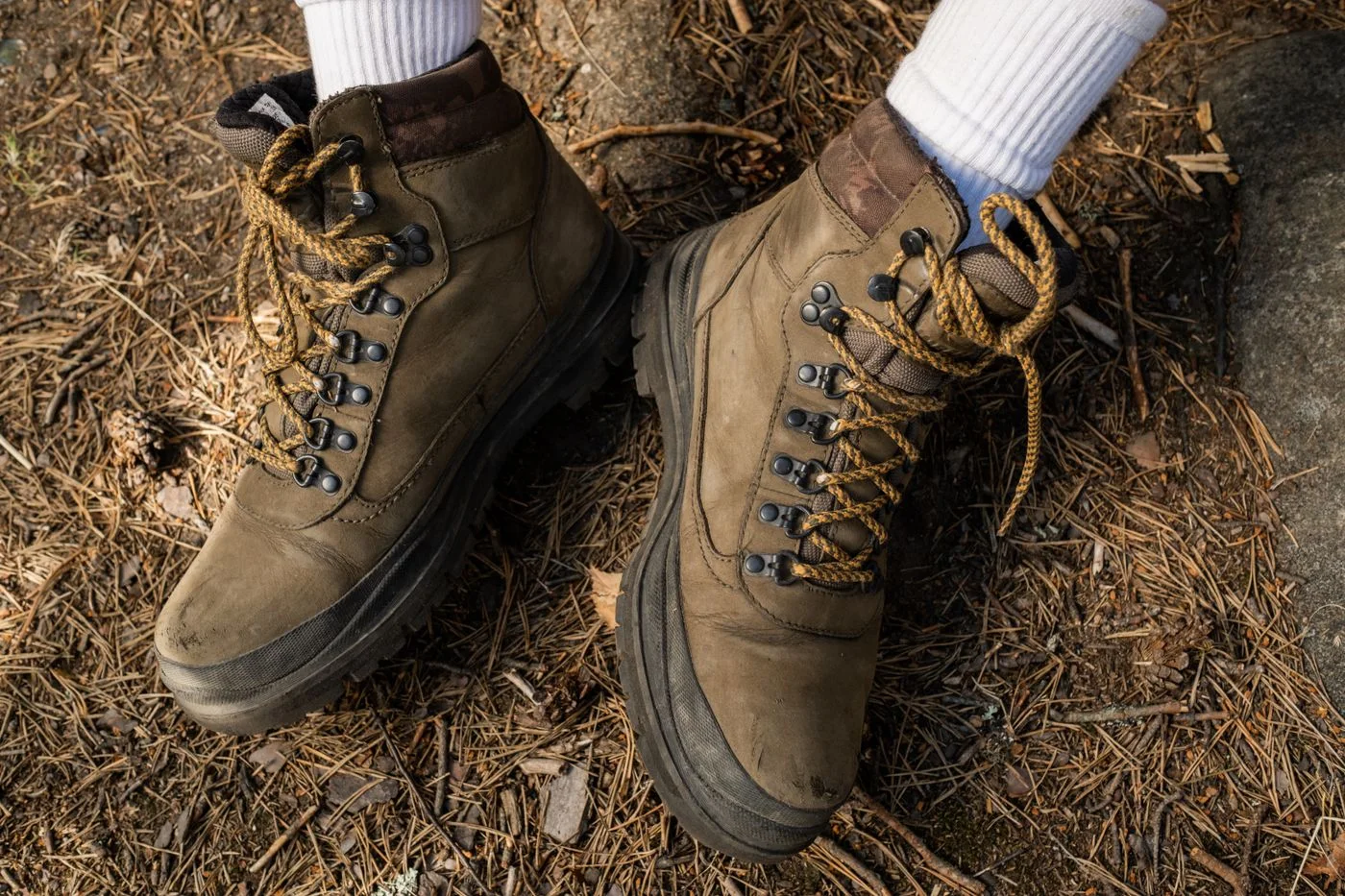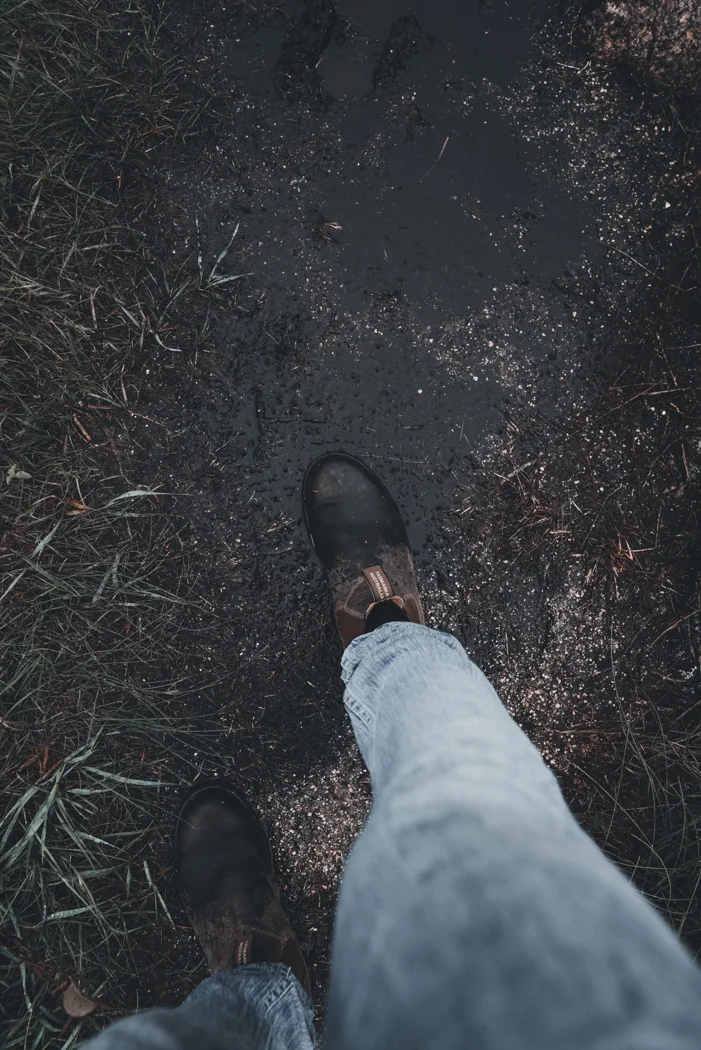
On a narrow meadow path, grass brushes the shoe with every step. Moisture can reach the upper even under a blue sky. If you regularly follow these paths, consider more than the chance of rain when choosing footwear. Think about the usual grass height and whether the section has an alternative that stays on permitted paths.
A waterproof construction still has an opening
Waterproof footwear still needs an entry opening. GORE-TEX points out that water can enter around the ankle when footwear is submerged far enough. On a grass path, this means looking beyond the closed shoe surface to the point where the sock and trouser leg meet the collar.
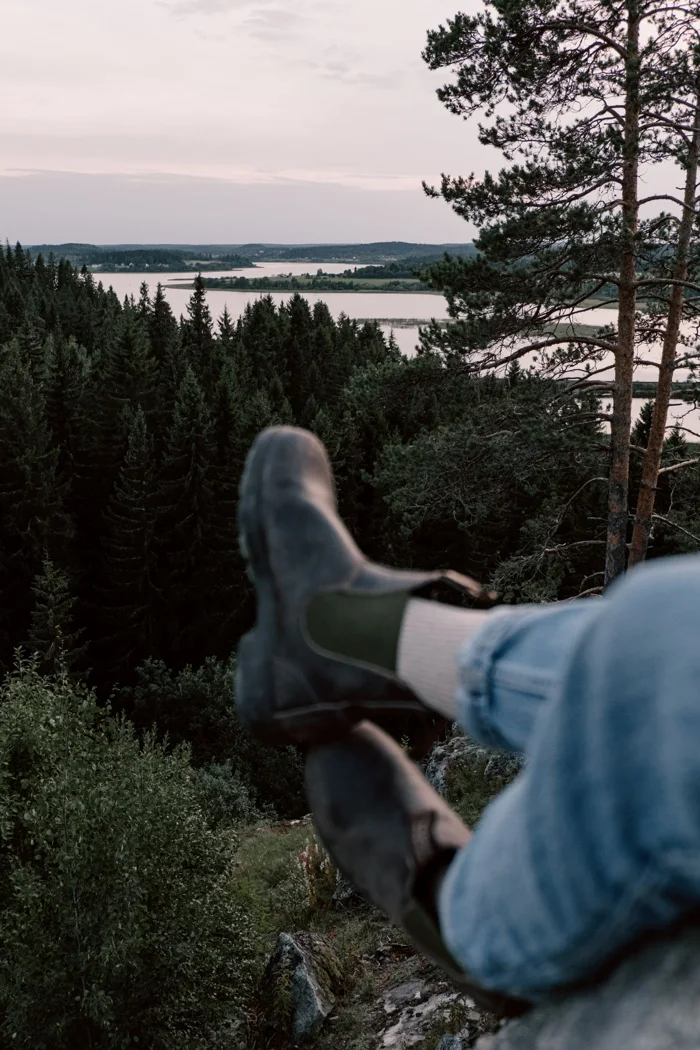
A low shoe leaves more of that area exposed than a higher model. That does not mean a higher boot stays dry in every situation. Check whether the trouser hem lies usefully over the shoe or might instead guide water toward the opening. You can observe the arrangement when dressing; there is no need to step deliberately into a stream or deep puddle.
If a shop recommends gaiters for the combination, the size needs to suit both shoe and leg. A fabric covering is not automatically waterproof. Attachments and intended applications vary too. The additional item should address a particular gap rather than appear simply because it belongs on a generic equipment list.
Think about the actual path
A wide surfaced circuit may involve little contact with vegetation. A short link through a tall meadow might create the greatest moisture exposure of the entire route. Read route descriptions with those transitions in mind and consult current local information when appropriate.
Keep dry spare socks apart from clothing that is already damp. They may be welcome on the journey home, but they do not repair a leaking shoe. If a pair repeatedly becomes wet inside, record when and where this occurs: after tall grass, directly around the opening, or regardless of either. Those observations give a retailer more to work with than a general report that the footwear became wet.
Do not turn a label into a guarantee
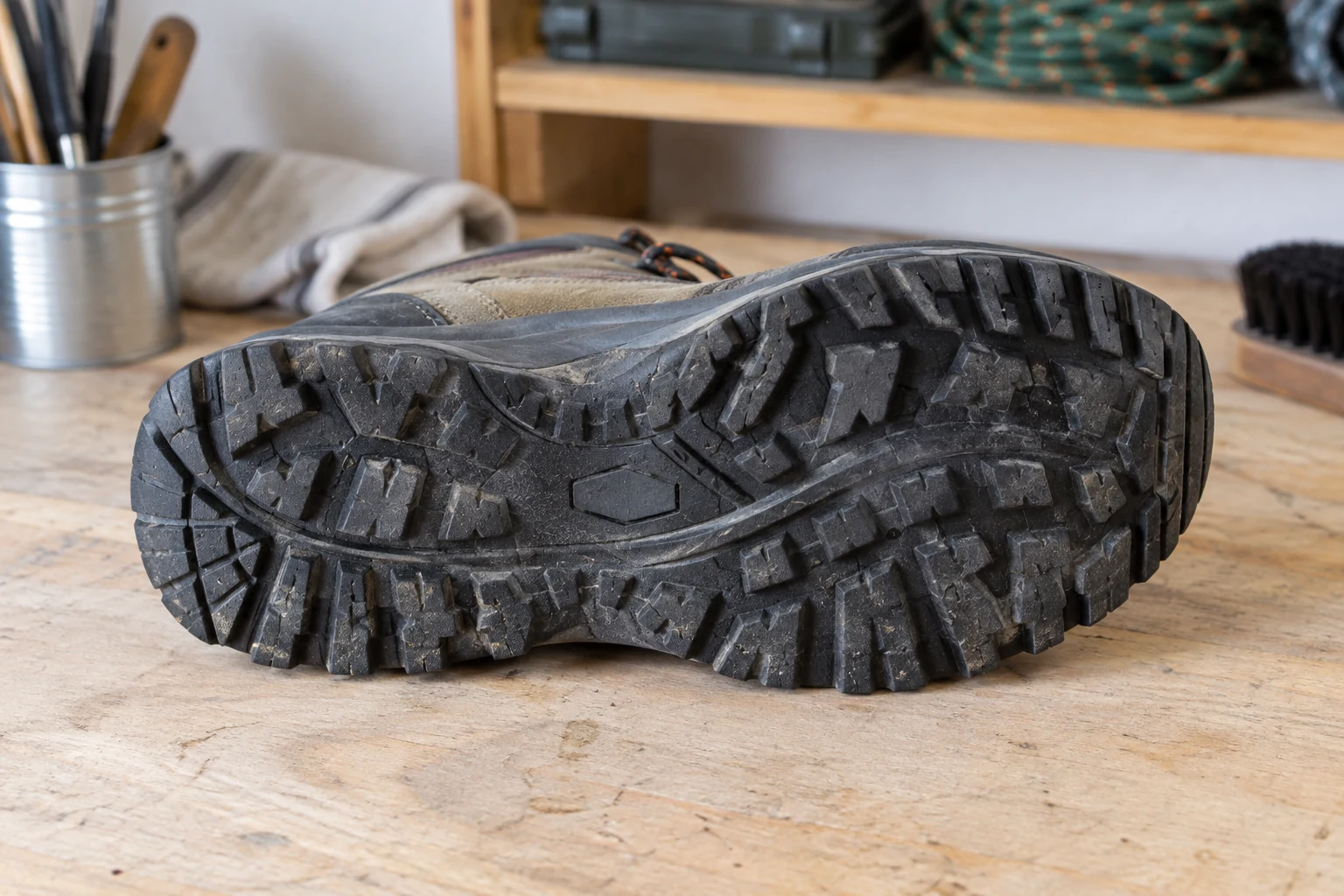
Waterproof shoes are one option for these routes, rather than a reason to ignore the conditions. Follow the particular model's care instructions and inspect visible damage before walking. A water-repellent treatment and a waterproof internal construction are also different things; ask for clarification when product wording is unclear.
Base the final choice on your regular walks. If wet grass occupies only a short avoidable section, another permitted route may make more sense than changing footwear. If it is a frequent feature, make that specific exposure part of the buying conversation.