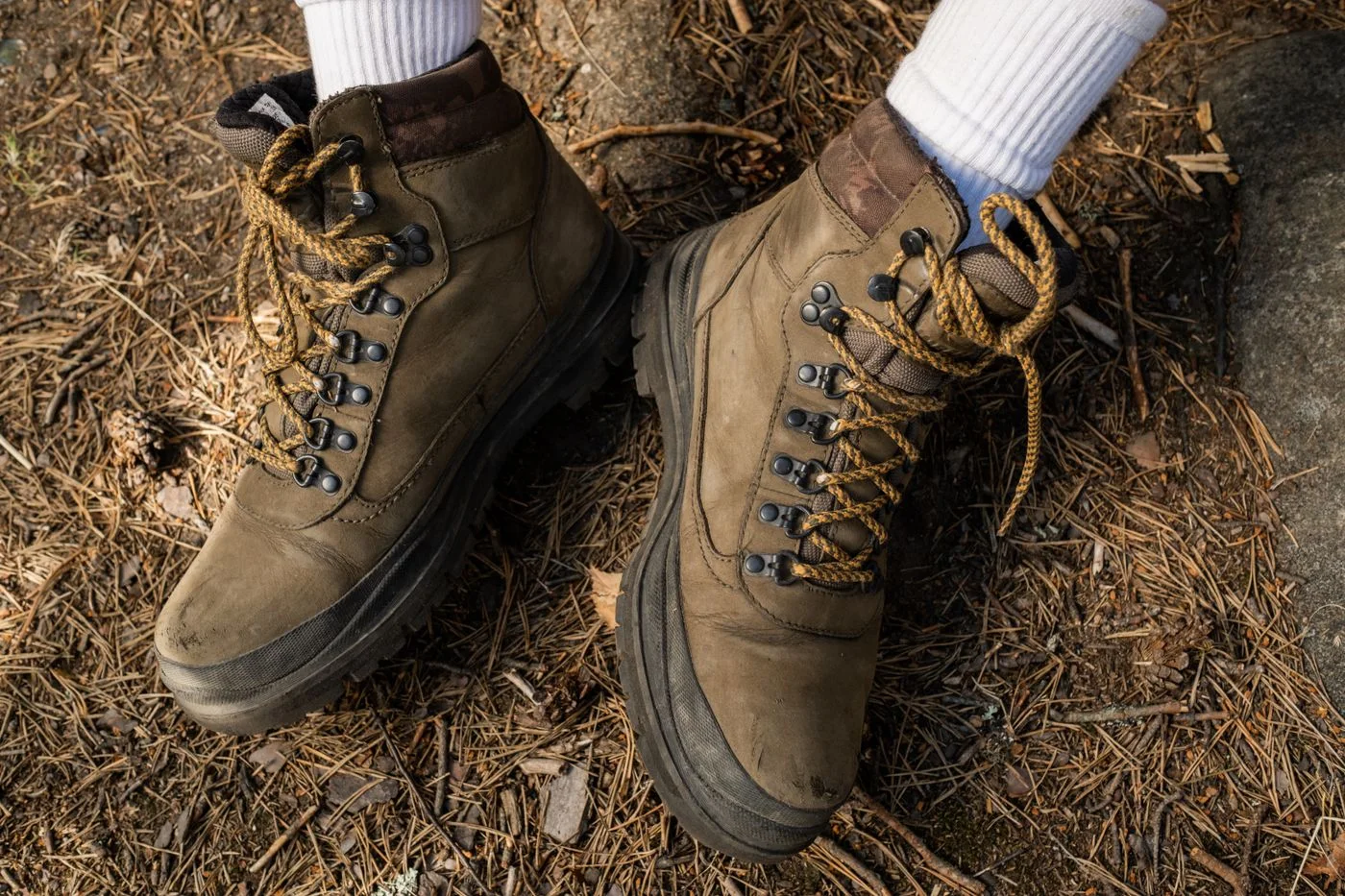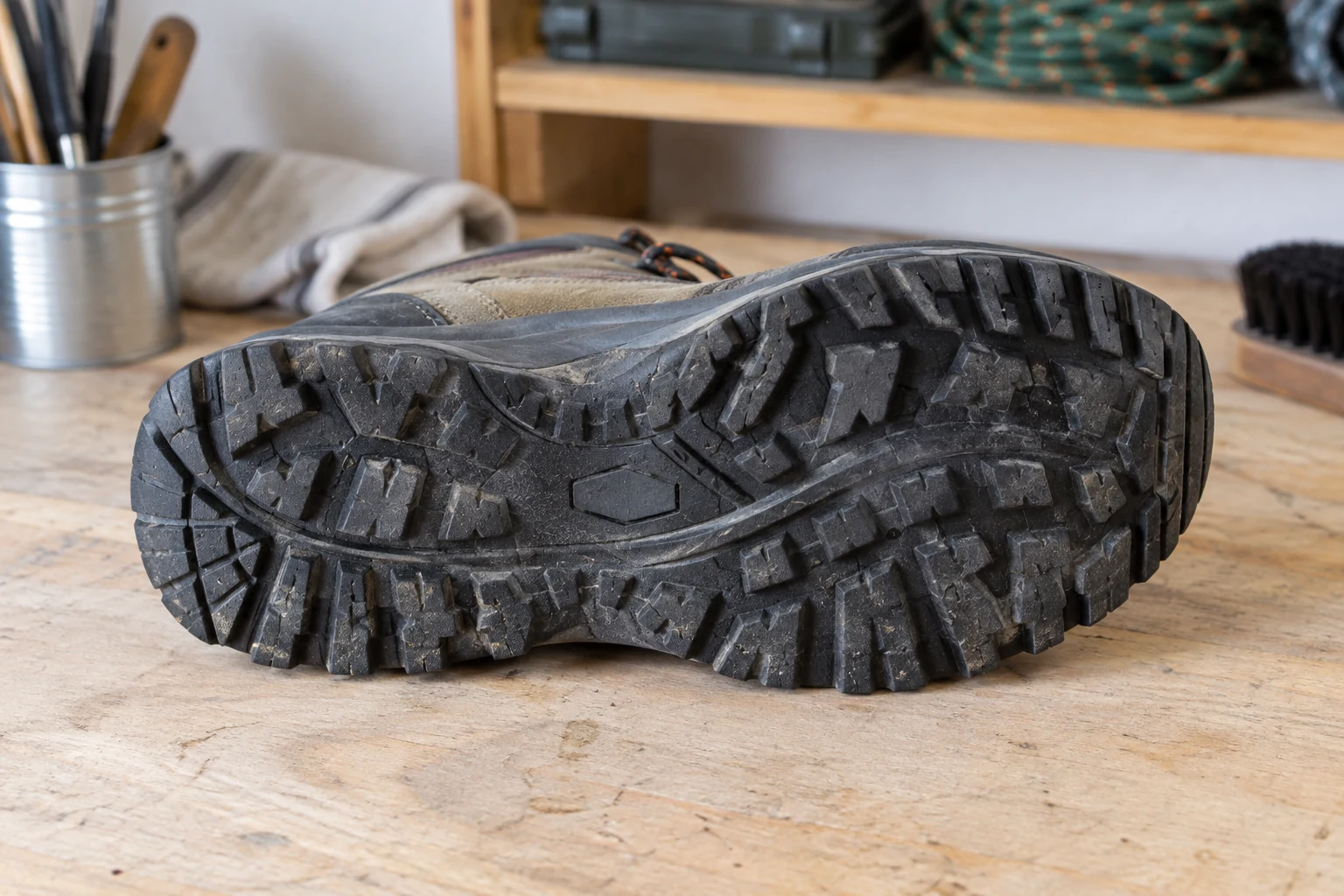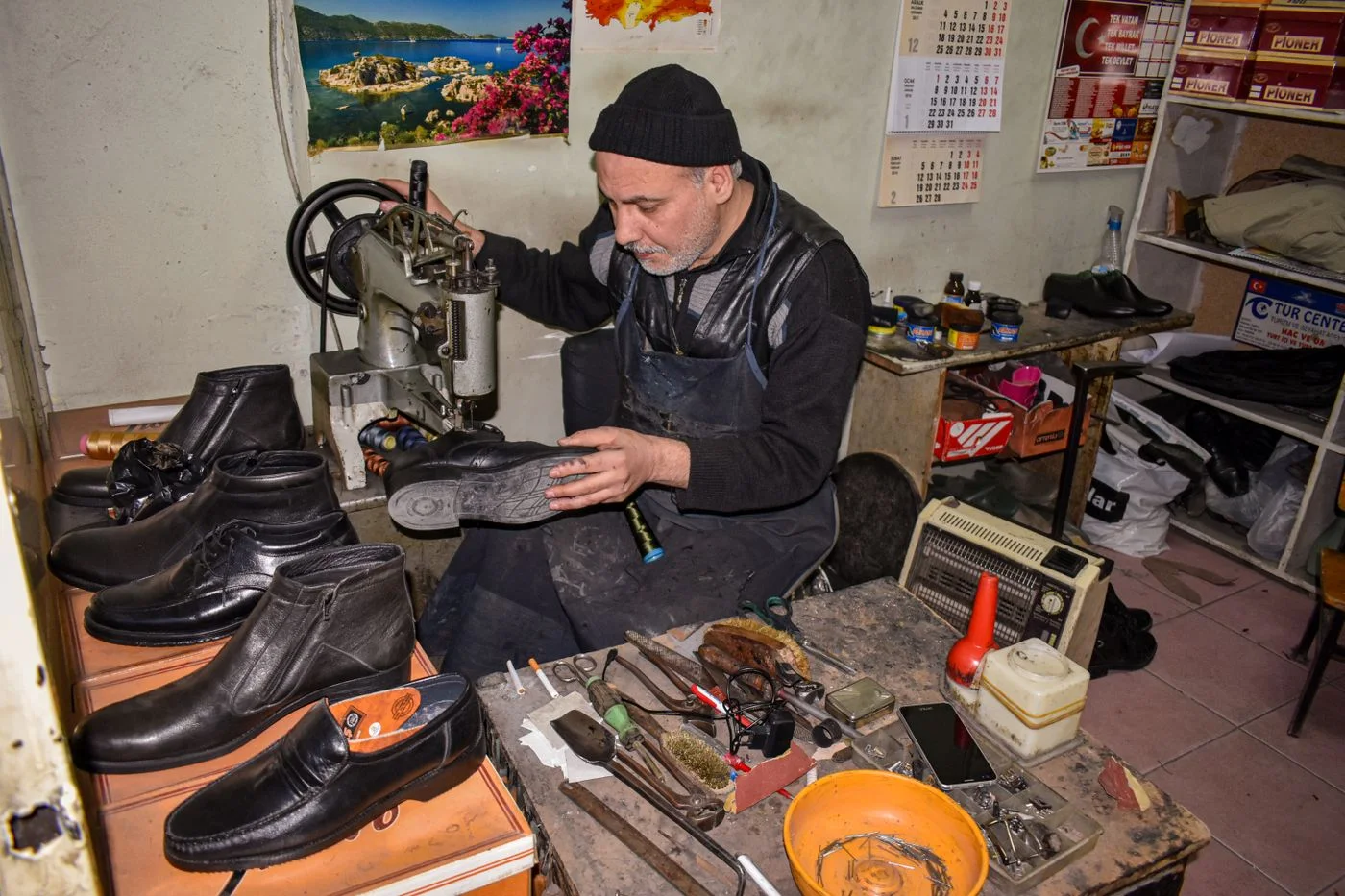
The familiar pair fits well, but its soles are worn. Resoling may offer a way to keep using it. The service is not universal across all walking and leisure footwear, though. Establish whether the exact model is repairable first. A brand name cannot settle that because one collection may contain different constructions.
Establish construction before comparing costs
LOWA describes resoling for its relevant cemented constructions. HANWAG also refers to the individual shoe's construction and recommends asking when uncertain. Find the model name and, where available, its article number on the label. Photographs of the sides, underside and unusual areas help identify the pair.
Ask which components the proposed work replaces. Does the offer cover only the outsole, additional sole layers, or a protective rand too? Terms such as sole service may group different tasks. A clear offer describes the scope rather than saying simply that the shoe will be like new.
Assess the rest of the boot honestly
A new underside does not automatically address worn lining, damaged lace hooks or a shape that no longer fits. Inspect the whole pair and disclose known issues in the enquiry. A pressure point you have ignored for years will not disappear merely because new rubber is fitted.
Consider whether the original use still suits your walking. Perhaps the boot was chosen for longer trekking routes while you now mainly take surfaced day walks. Repair and replacement then represent more than two prices: they are different equipment decisions. Keeping the pair makes sense only if you actually intend to wear it afterwards.
Where several issues exist, ask for a combined assessment. Separate small repairs may amount to more work than expected. Establish which questions can be answered only after a workshop inspection. A photographic estimate is not a final condition assessment.
Consider what may change after repair
LOWA notes that resoling can slightly alter fit and that a suitable alternative sole may be used when the original component is unavailable. Ask about the proposed specification beforehand. Name any particular characteristic you want to preserve.
Leave time before the next important hike. When the pair returns, repeat the fitting and take a short appropriate walk. Repair does not justify making the longest planned route the first post-work check.
Keep the description of completed work. It tells you later what was renewed and what remains original. A resole decision is easiest to understand when construction, remaining condition, intended use and service scope all align.