Look at exposed sections first
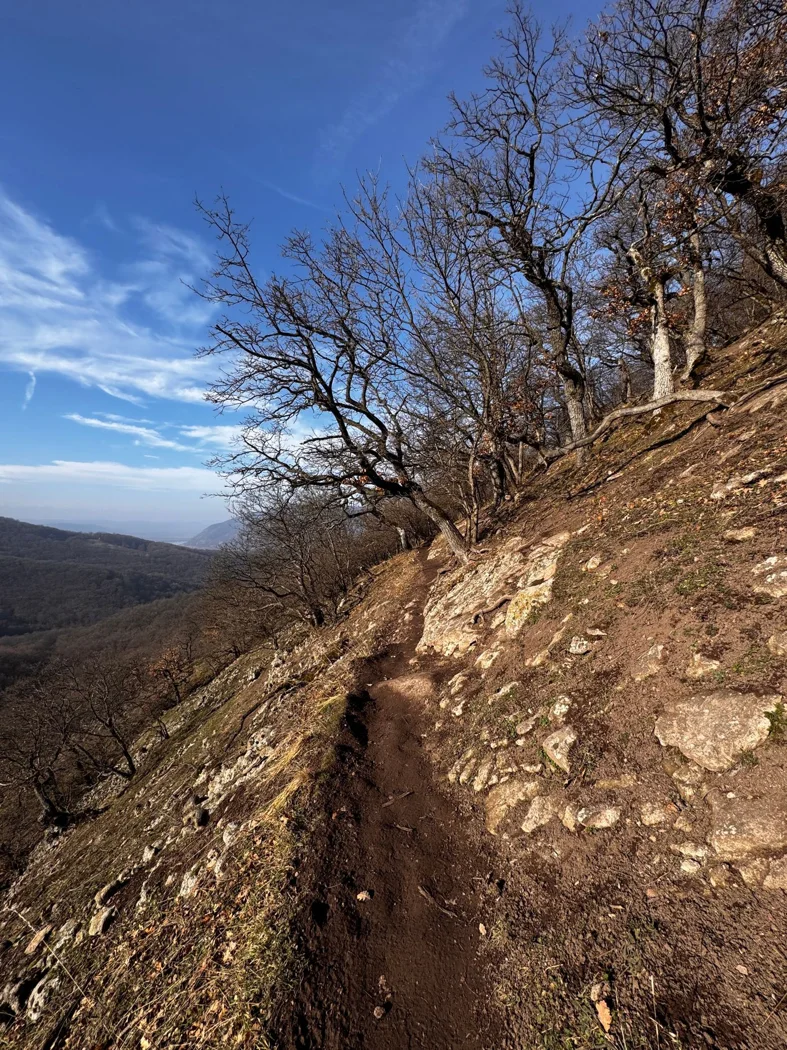
A field path, promenade, or open rise can feel different in wind from the same place on a previous visit. Read the forecast and relevant warnings for the planned period. Then identify long exposed sections and the simpler alternatives you could reach. A general route label such as valley loop does not explain these details.
For an ordinary day outing, a shorter route with a straightforward return is often easier to adjust. A large circuit should not remain fixed just because its first section feels pleasant. Ask where the open part can still be omitted without choosing an unfamiliar path.
Woodland is not a general storm alternative
It is tempting to answer wind by heading beneath trees. That is an inappropriate shortcut during storms and where storm damage is present. The German Alpine Club notes that damaged trees and fallen timber can remain problematic after an event. Read current notices and closures rather than assuming a calm-looking entrance establishes conditions throughout the wood.
Climbing over fallen trunks does not restore a closed path to the planned route. Return to a known junction and use a confirmed alternative. If suitable information is unavailable, the outing can finish earlier or move to another day.
A promenade or a broad road is not automatically a suitable replacement during unfavourable weather either. The alternative must fit actual conditions. Sometimes the appropriate adjustment is to avoid a longer outdoor outing that day, rather than search for a route that preserves the original distance.
Plan stops as well as movement
A viewpoint may be appealing for a brief look but unsuitable for a long pause. Choose a suitable publicly usable stopping place, checking opening information if the plan depends on a building. A shelter symbol on a map is not a promise that refreshments or indoor access will be available.
Agree which sections remain optional when walking with others. Someone who enjoys open landscapes may experience the conditions differently from a person expecting an unhurried photography walk. A concrete alternative makes agreement easier: a short town loop instead of the exposed field circuit, for example.
Keep the decision focused on the outing's purpose. If the main reason is spending time together, an easier local route can preserve that purpose better than insisting on the original viewpoint. The replacement does not need to reproduce every feature of the first plan.
Afterwards, note which sections were exposed during that visit. Describe the observation and its conditions rather than permanently labelling the route sheltered. The next forecast and current local information will still be the starting point for a future choice.