Identify the intended attachment
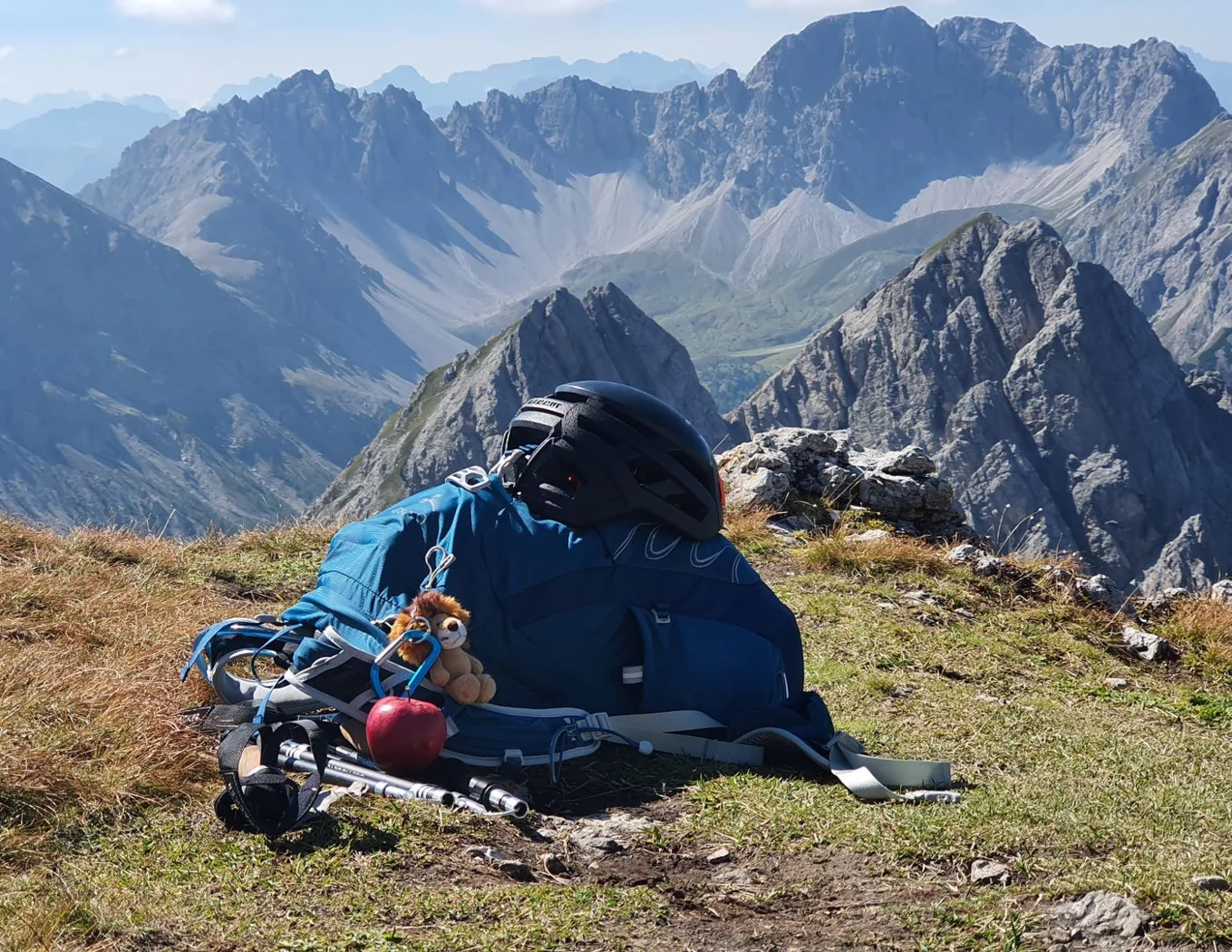
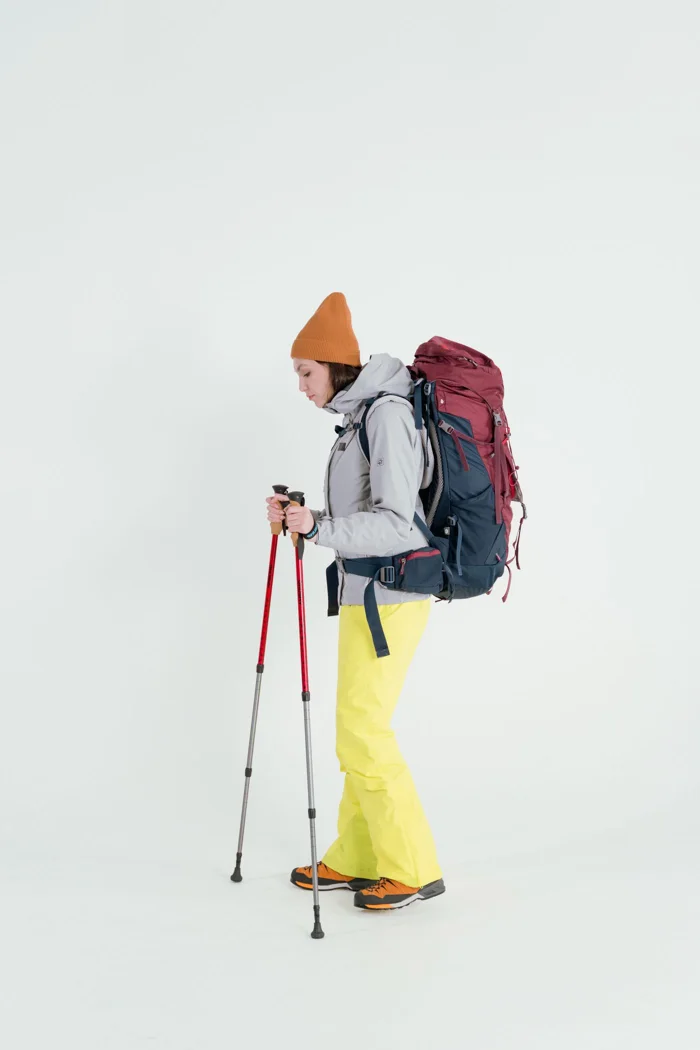
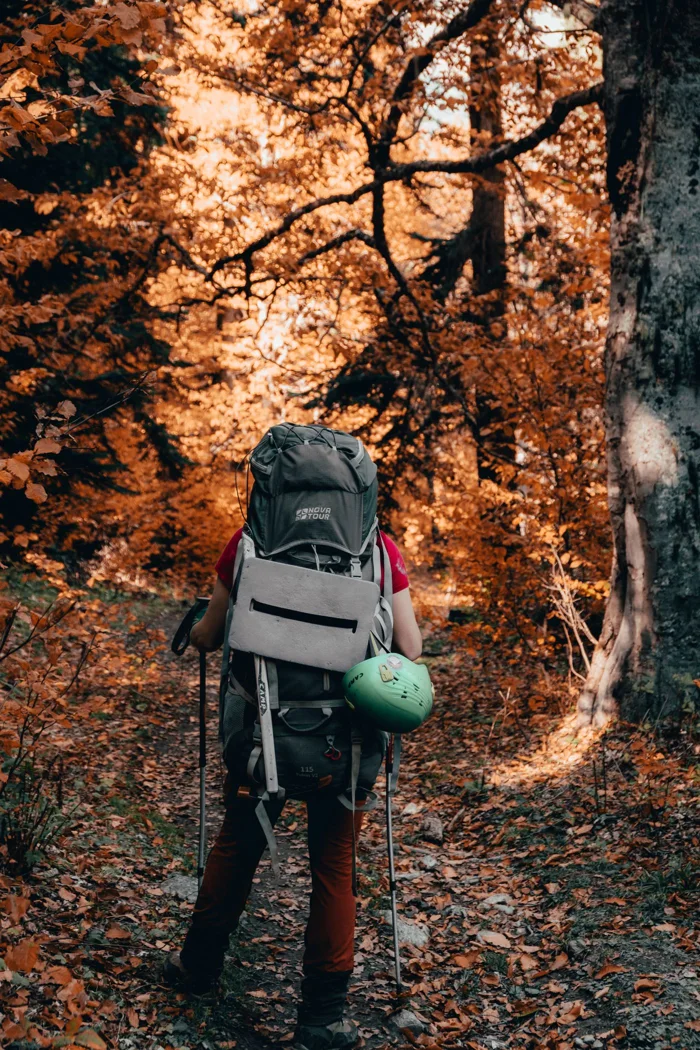
Look for the pole-carry arrangement in your pack's instructions. A lower loop, side bungee, and shoulder-harness fitting can perform different tasks. Not every visible loop is meant for trekking poles. A tool loop may look similar while requiring another shape and retention method.
Osprey's Stow-on-the-Go system, for example, uses a lower elastic loop and a second fitting on the harness. That is a specific procedure for compatible models, not a universal method. Follow your own model's diagram rather than imitating those attachment positions.
Prepare the poles appropriately
Collapse or fold the poles only as their mechanism permits. A short folding bundle differs from a long telescopic pole. Handles, straps, and baskets can catch while being inserted. Align them first and avoid leaving a loose section supported only by its connecting cord.
Consider the tips. They must not puncture a rain cover, thin bag, or clothing. Designated rubber tips or a suitable sleeve may help for transport. Check that the accessory stays attached. A loose cover that falls off as soon as the pack is put down does not provide dependable separation.
Use the fittings and try movement
Where the system specifies two retention points, use both. One tightly pulled strap can still leave a long object swinging. Assess tension without crushing the shaft or forcing soft pack components. Use intended closures rather than an improvised knot at an unsuitable location.
Put on the loaded bag, walk briefly, and bend carefully. The poles should not contact your head or arms, nor support the whole pack on their tips when it is put down. Consider other people and narrow passages. A projecting bundle changes the space your luggage requires.
External does not mean forgotten
Recheck after the first short stretch and after every time you repack the poles. A rain cover or changed side-pocket contents can alter their position. Inside storage or an appropriate sleeve may be more manageable on public transport where your luggage permits. The objective is a controlled carrying arrangement, rather than simply having your hands free while moving.