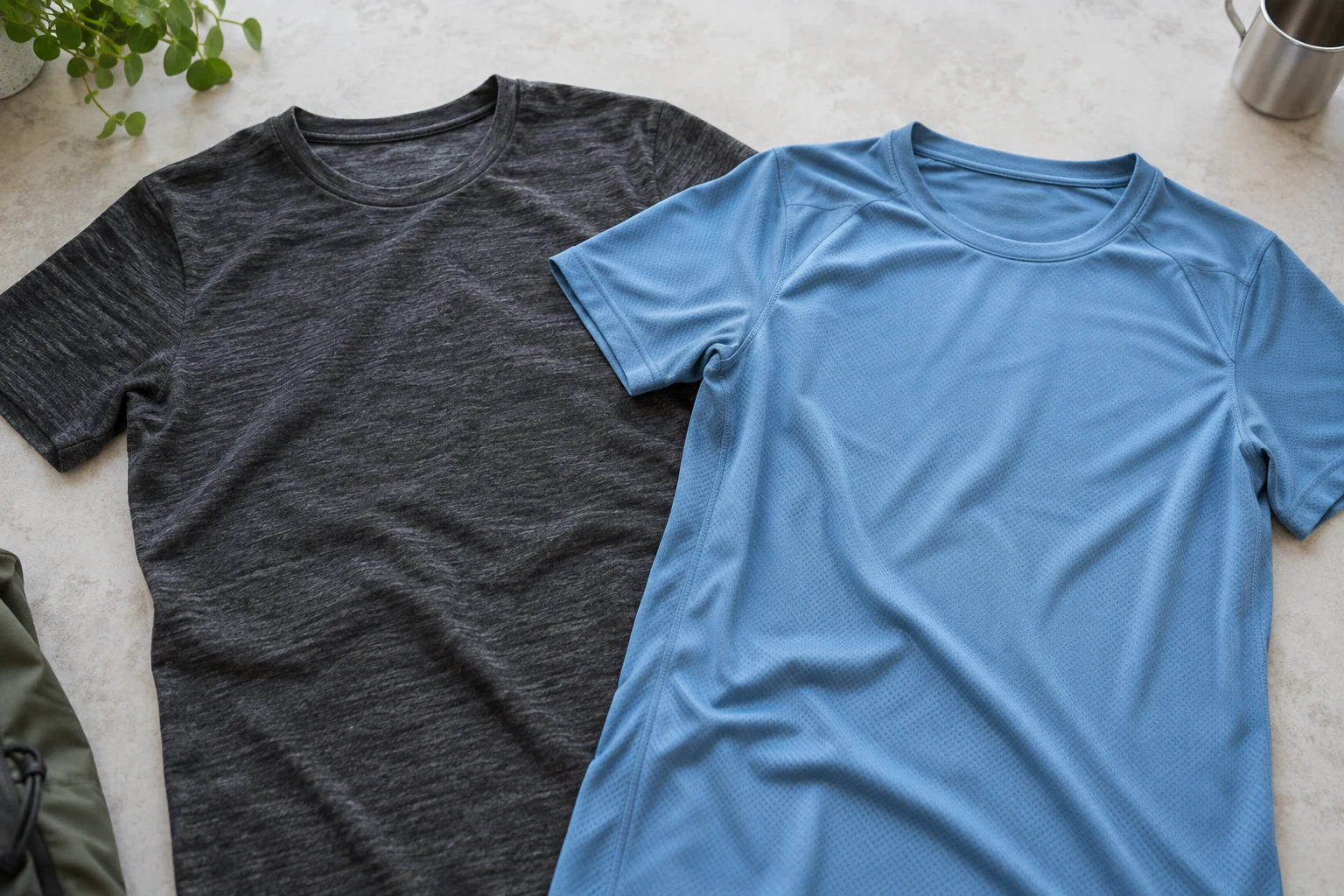
A base layer looks tidy in the mirror, then its hem disappears beneath the shirt when you reach upward. Movement matters more than one standing impression when choosing the first layer. Try it with the garments intended to sit over it. Only that combination shows whether the length and shape work as planned.
Start with the garment in position
Put the top on smoothly and arrange shoulders and sleeves. Notice pulling beneath the arms or gathered fabric at the neck. A manufacturer may intend a close or relaxed cut; assess size within that design. Choosing a larger size does not transform every shape into another model.
Lift your arms, reach forward and sit down. Observe the hem afterwards without immediately pulling it back into place. If every movement requires adjustment, that matters for use. A tucked shirt can behave differently from an untucked one, so test the intended arrangement.
Compare two lengths with your walking trousers if uncertain. A very long hem may bunch beneath a belt. Extra length is not automatically better, just as a very short cut is not automatically easier to manage.
Move with the walking shirt over it
Put the intended shirt on and repeat several movements. Notice whether the base-layer sleeves ride up as you add it. Smooth them once, then see whether they remain positioned while walking. Avoid buying on the assumption that you will continually rearrange both layers outdoors.
Fasten the walking shirt as you intend to wear it and examine the collar area. Two closures can overlap awkwardly despite each garment feeling comfortable alone. With a zipped base layer, check whether that zip remains accessible beneath the shirt.
Roll the outer sleeves only if that belongs to your intended use, then check the fabric beneath. A combination may work with full sleeves yet become crowded when rolled. That concerns the arrangement rather than necessarily the quality of either item.
Finish with the daypack
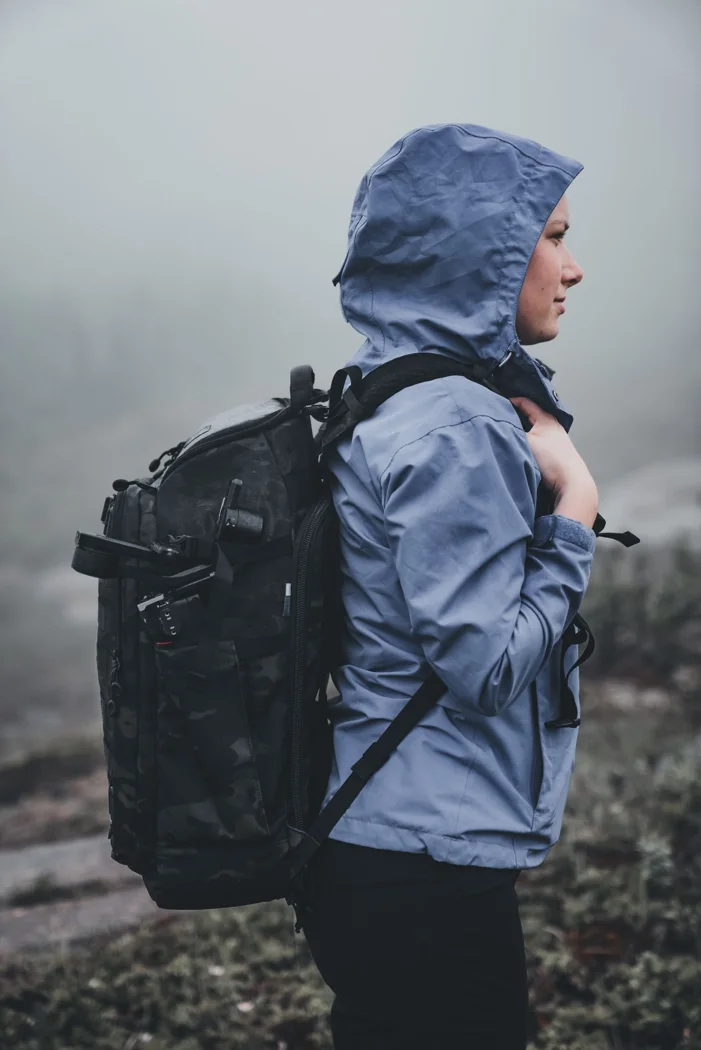
Put on the appropriately loaded pack and fasten its relevant straps. Check the shoulders, chest and waist for overlapping fabric edges. A button or bulky seam may become noticeable only beneath a strap. Change one clothing detail and reassess rather than simultaneously changing every pack adjustment.
The German Alpine Club describes the first layer as part of a coordinated clothing system. In a fitting, that means assessing the real combination. Material names and cut descriptions cannot replace this check. Keep an arrangement that allows movement and handling without making one item suitable at another's expense.
After a short first outing, care for the top according to the label and try it again. This shows whether the chosen size and handling still work in ordinary use. Consider buying several identical examples only after understanding the first one.