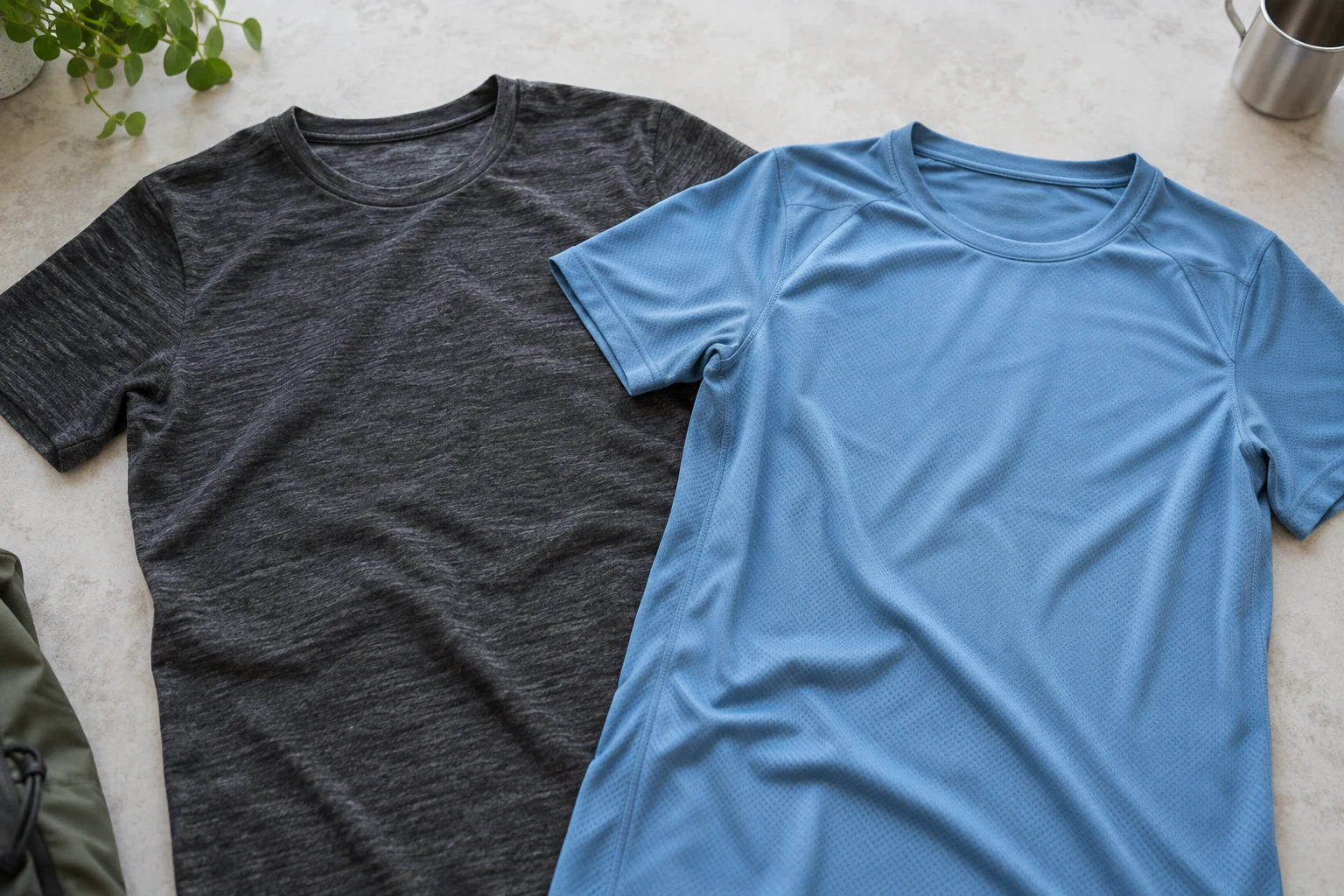
Choosing merino or synthetic fabric appears simpler on a label than in a shop. Many garments use blends, and two tops with similar compositions can feel different. A day walk does not require declaring one universally superior fiber. It requires a shirt whose shape, handling and care suit your use.
Read the actual composition first
Find the percentages rather than concentrating only on the product name. A merino top may contain other fibers. Patagonia describes synthetic content in its merino blends for characteristics including durability and stretch. Another garment's composition belongs on its own label.
For two candidates, note both composition and fabric feel. Is one smooth and the other visibly textured? Do they feel equally substantial in your hand? These observations help avoid assigning every difference to fiber alone. Material quantity, knitted structure and cut also contribute to the finished garment.
If a retailer promotes a property, ask which specific model the claim concerns. Information about an entire material family does not precisely compare two different shirts. Absolute statements such as always drier or suitable for every temperature deserve further questions.
Reproduce the circumstances of your day walk
Consider how you use the top. Is it only for walking, or also for a long journey beforehand? Will there be an extended stop, a steep climb or frequent transitions between indoors and outside? This identifies useful handling features and whether a dry shirt for the return deserves a place in the pack.
A straightforward day route often lets you bring clothing home that evening. That differs from several days without care facilities. Avoid buying primarily for an argument relevant to extended travel if it rarely matters on your own walks.
Use a successful existing top as a reference. Identify what you want to improve: collar, sleeves, next-to-skin feel or care. A clear aim narrows the comparison more effectively than seeking a generally better material.
Assess feel and movement yourself
Try both tops when possible. Feeling the fabric by hand does not establish how collars and seams sit when worn. Raise your arms, sit and put the intended outer layer over each. The material becomes part of a real combination.
If a fabric feels unpleasant during the fitting, broad praise of its material should not overrule that experience. You do not need a diagnosis. For this selection, noticing that you do not want to wear that particular garment is enough.
Examine the areas beneath pack straps too. Shirts made from different fibers may behave similarly there because of seam placement. Cut can be a more immediate question than composition.
Consider care before buying
Read the care label and decide whether you can follow it routinely. Patagonia likewise puts garment-specific instructions first in its merino-care guidance. Do not transfer a washing temperature from an existing wool sweater or another technical shirt to the new item.
Consider drying and storage after a walk too. A garment requiring particular conditions needs an appropriate place at home. Care is a real part of using the item rather than a minor detail to discover after purchase.
One carefully chosen top initially gives you a better basis than several unseen purchases from the same material category. After a suitable outing and correct care, decide whether that particular model deserves another purchase. The choice then grows from the garment and your routine, rather than a general contest between fibers.