A label describes a construction
Backpacks are often described as women's, men's, or unisex designs. These may have different torso ranges, shoulder spacing, and hipbelt shapes. The description is useful, but it cannot assign every person reliably. People of equal height can have different proportions. Examine the measurements and shapes the actual model offers.
Osprey's fitting guidance separates torso length, hipbelt coverage, and shoulder harness. That distinction is useful across brands too. A suitable belt circumference does not establish that the shoulder padding follows the body properly. Good shoulder contact does not prove that the back section has an appropriate length.
Check the proportions separately
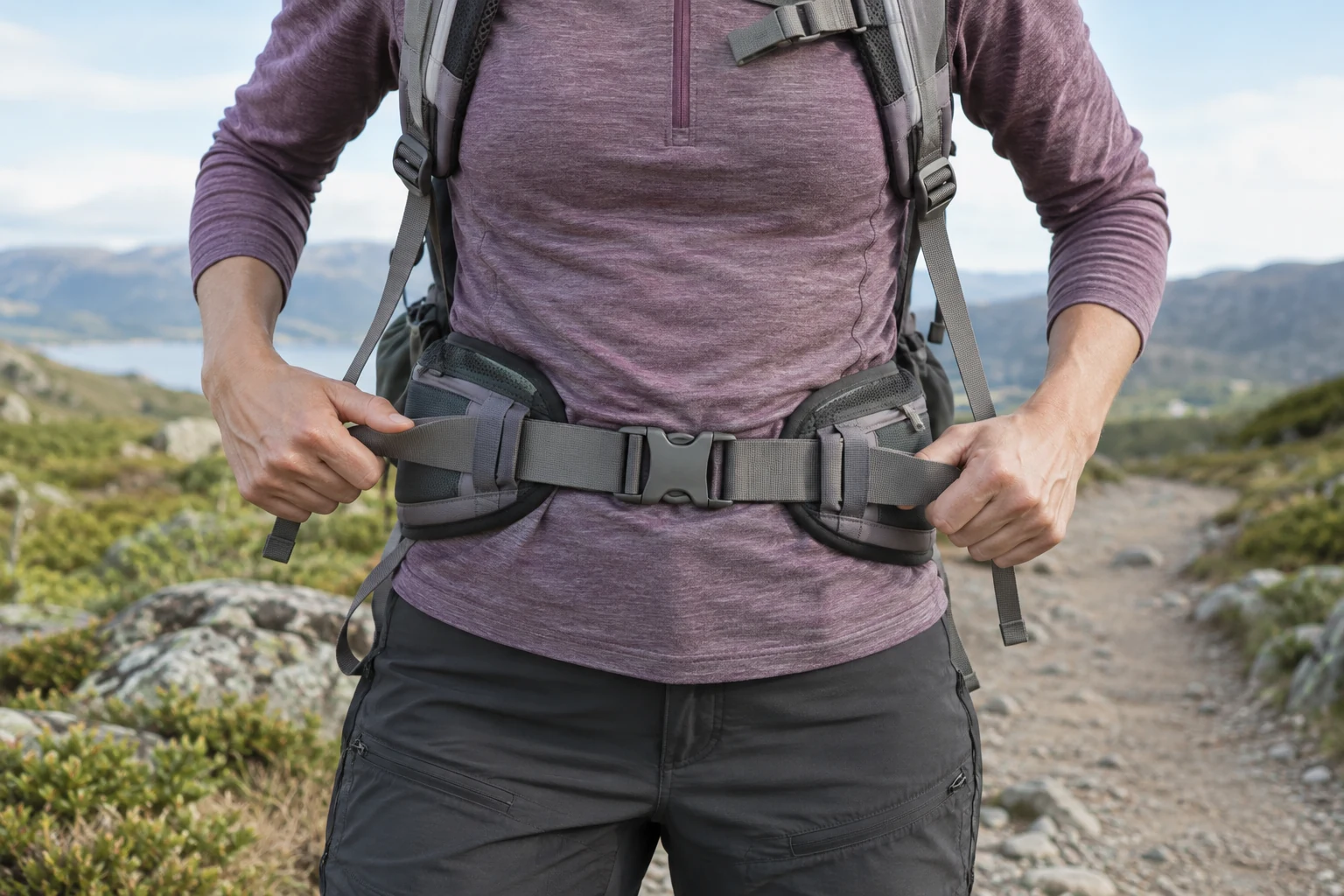
Begin with torso length and the intended hipbelt position. Then assess how far its padding wraps around you and whether the fastening retains useful adjustment. If padded sections already meet or the buckle reaches the end of its travel, the shape may be unsuitable. A long loose strap alone says little about padding coverage.
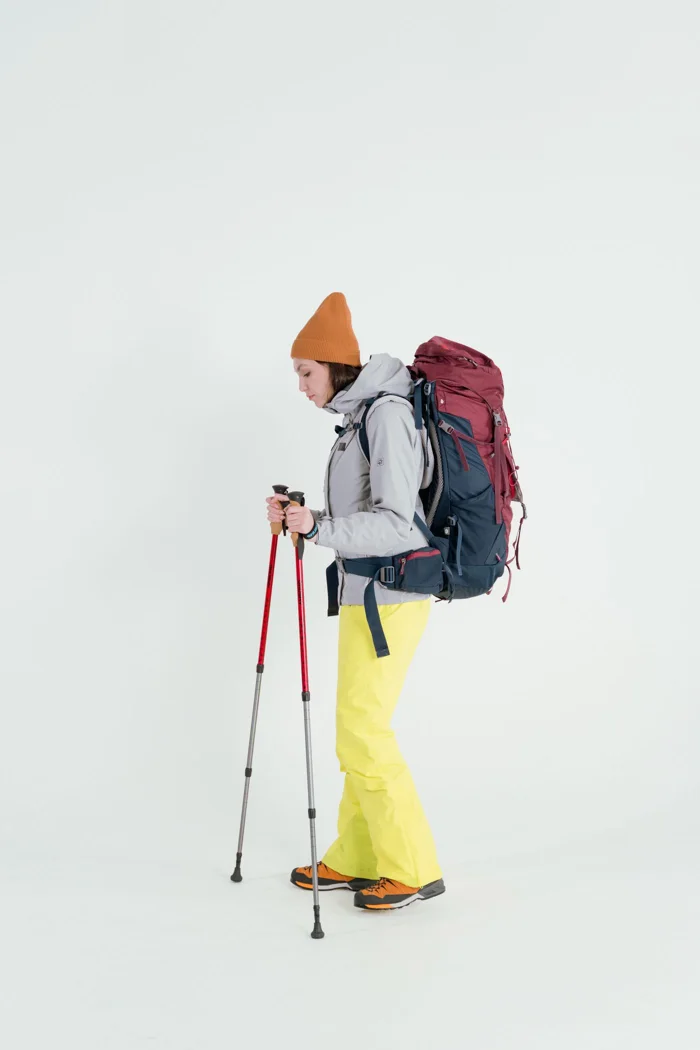
Next, examine the shoulder straps. They should make useful contact rather than rest only along a narrow edge. Notice their spacing and route across the front of the body. A sternum strap can stabilize that position; it should not need excessive tightening to force the harness into an approximately workable shape.
Include the relevant clothing
A fitting in a thin T-shirt only establishes that combination. Include the jacket or additional layer you normally wear with the pack. Changed thickness and smooth surfaces may alter the experience. Move your arms and walk for a few minutes rather than relying on a mirror.
Add a representative selection of your belongings. An empty bag can seem comfortable while its harness behaves differently under load. Arrange the contents sensibly first, then adjust the straps in stages. Otherwise, you may judge poor packing as a body-fit problem or confuse unsuitable fit with a misplaced rigid object.
Compare alternatives without assumptions
If a unisex model does not fit, another harness shape may help. If a gender-labelled design works despite differing from your initial search, there is no technical contradiction. Useful dimensions and behaviour under your load matter more than the retail category.
With extended sizing, check what has actually changed. Greater circumference may accompany longer padding or repositioned pockets, but not always. Read the model description and assess whether pockets and buckles remain accessible. Additional strap length is not necessarily the same fit made larger.
Recognize the limits of adjustment
Some problems disappear after changing torso length or reducing tension slightly. Others concern the underlying shape. If every strap must be tightened fully, one side continually needs different tension, or padding contacts only when you adopt an unnatural posture, compare another model.
Record more than the size after a successful fitting: note the load, clothing, and adjustment too. That makes the next comparison more concrete without promising that one setting works indefinitely. Fit is a relationship between body, clothing, contents, and suspension. A label is only one way of describing a design within that relationship.