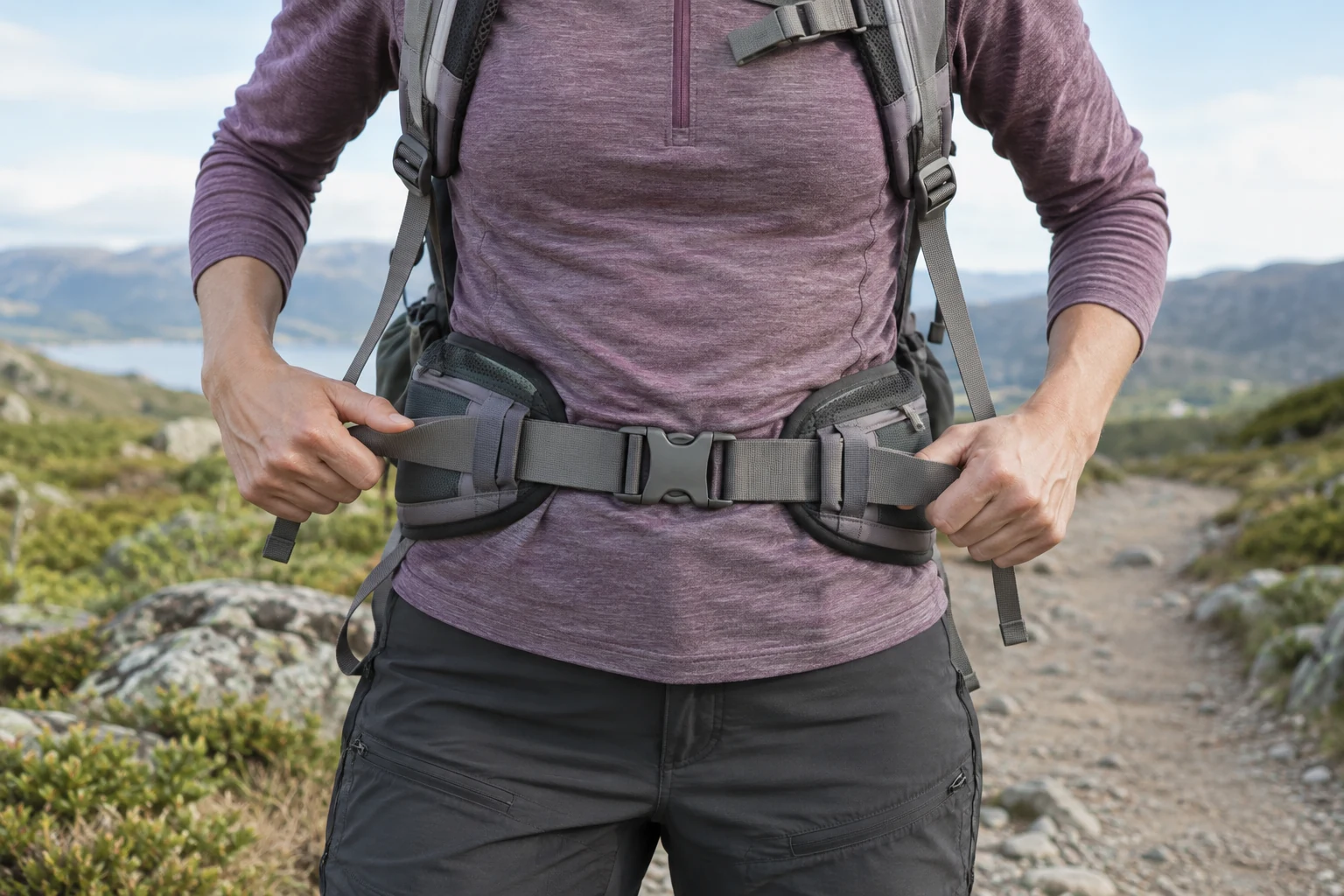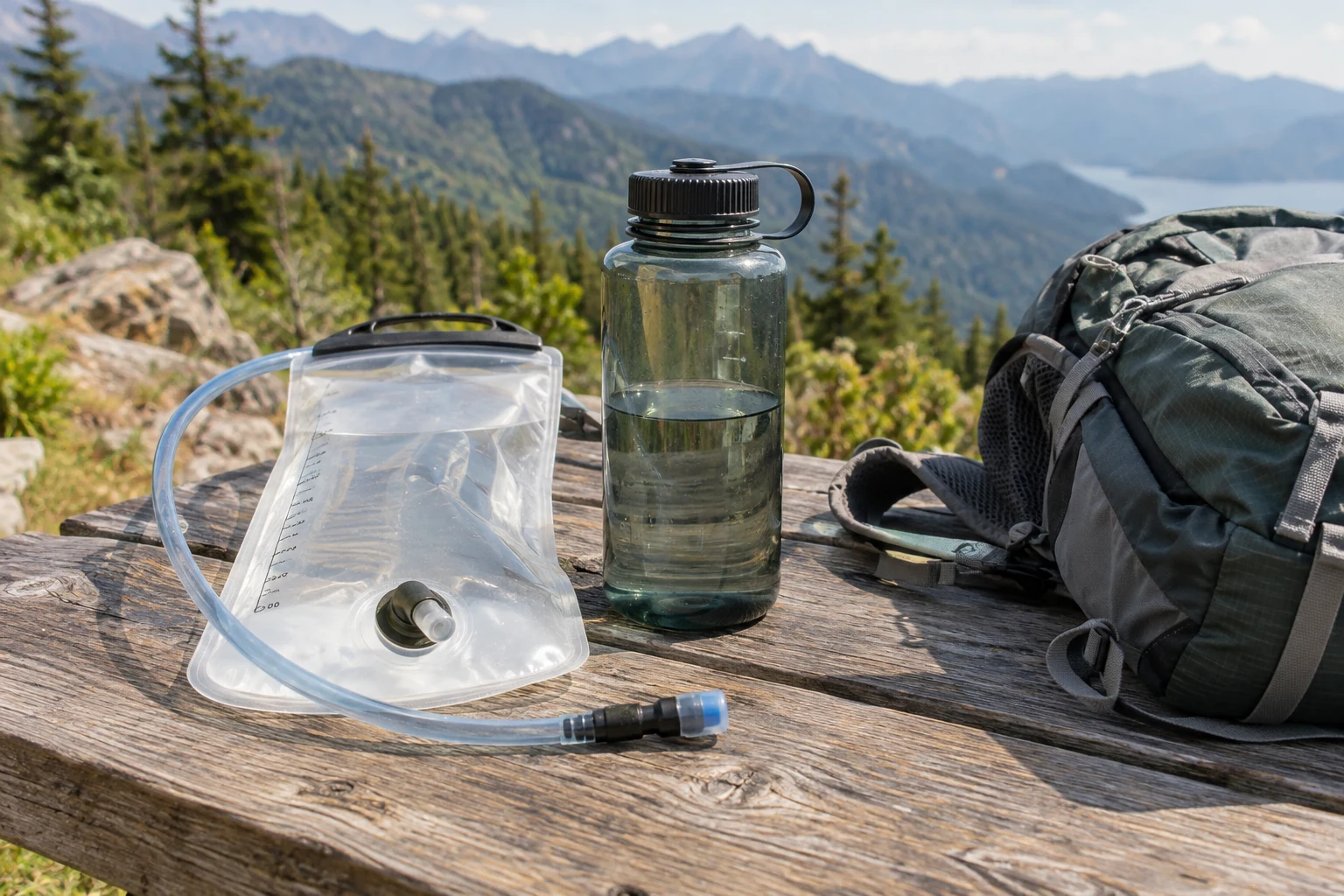
The pack belongs to the system
A reservoir needs a suitable sleeve, tube route, and accessible retention point on the harness. Check these on your pack. A tube opening alone does not establish that the filled bladder fits properly. With curved backpanels especially, the available space may differ from what the flat empty container suggests.
Insert the filled reservoir before tightly packing the compartment. Check that its closure and connection remain unobstructed. Do not correct a bent or trapped tube by pulling harder. Rearrange the contents and route it through the intended fittings. A reservoir belongs to a particular combination rather than functioning as a universally interchangeable bag.
Access during the walk
A tube allows drinking without retrieving a bottle each time. That may suit your routine, but it also makes the level and closure less directly visible. Decide when you will stop to check remaining contents. The feel of the pack cannot provide a reliable precise quantity.
A bottle is easier to pass to another person and usually straightforward to inspect. It still needs an accessible location. If the side pocket requires removing the pack, include that stop in your routine. There is no need to force an awkward movement while walking merely because a pocket is advertised as accessible.
Refilling without emptying everything
During a loaded packing trial, open and retrieve the reservoir. Can it be removed and returned? Can an existing quick connector be separated according to its instructions? Some designs simplify the process, but that is not a universal feature. Do not assume different brands' connections are compatible.
A bottle comes out separately. Assess its mouth, cap, and any additional equipment needed for filling. The actual combination matters here too. A wide bottle may be easy to clean while fitting poorly in a side pocket. Choose through the routine rather than material alone.
Cleaning belongs in the decision
A reservoir involves cleaning and fully drying the container, tube, and valve. HydraPak and CamelBak provide model-specific procedures. Some bodies reverse or tolerate a dishwasher; other components need different treatment. Do not transfer that permission to an unidentified reservoir.
A bottle may have fewer long internal passages but a complicated cap with seals. Examine how it comes apart. If you are unwilling to perform the maintenance regularly, a simpler closure may suit you better. The comparison does not end with the final drink outdoors.
A combination can be reasonable
You do not have to use one construction exclusively for every outing. An additional small bottle can offer another type of access, but also requires room and adds weight. Give each container a clear purpose. This is a comparison of carrying, checking, refilling, and cleaning equipment, rather than a prescription for drinking quantities or a promise about health. Needs and conditions differ beyond what the container can establish.