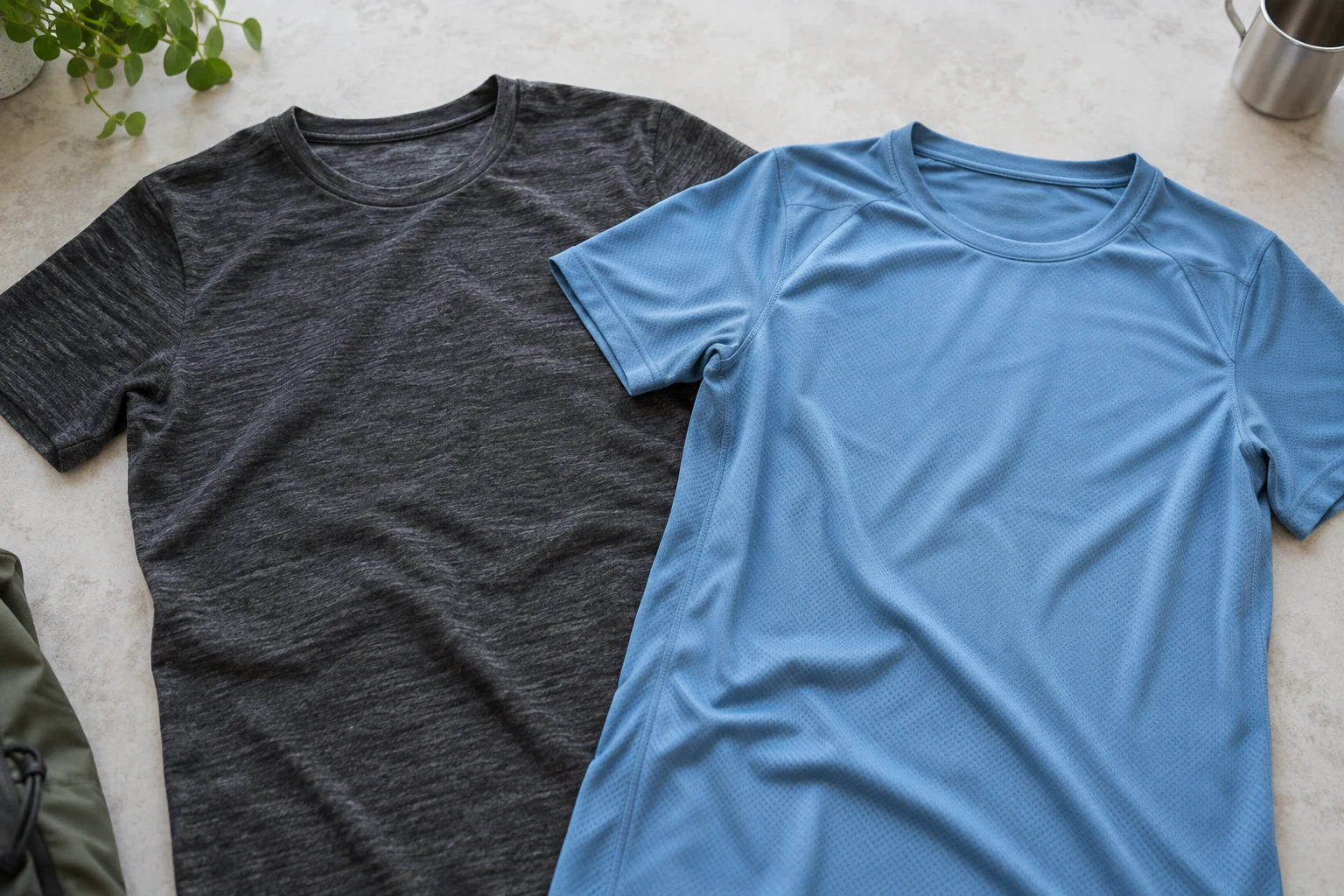
A top feels pleasant without luggage. With the pack on, a seam lies beneath a shoulder strap while a pocket item presses under the hip belt. This does not necessarily make the clothing generally unsuitable. First inspect the contact areas between the two items.
Adjust the pack appropriately first
Load the compartment approximately as for the route and follow the pack's adjustment instructions. Deuter recommends realistic loading and coordinated strap positioning. An empty pack can give another impression. Avoid assessing clothing beneath luggage that happens to be poorly adjusted.
Remember the starting arrangement: clothing, pack and contents. This need not be a detailed table. A brief note prevents a later comparison accidentally using a completely different setup.
Then identify shoulder-strap, chest-strap and any hip-belt positions. Do not tighten everything merely because fabric gathers somewhere. Extra tension changes the whole arrangement without explaining the cause.
Make the contact point visible
Remove the pack and examine the garment. Is there a seam, button, pocket or displaced hem? Smooth a fold once and put the pack on again. Immediate recurrence differs from a layer that was simply arranged badly once.
With several layers, inspect each. The visible jacket may sit correctly while a sleeve beneath has ridden upward. Looking only at the exterior misses that. Reposition one layer and repeat the movement.
Empty the pockets completely for comparison. If the sensation disappears, the fabric was not necessarily responsible. Consider another intended storage place. A pocket beneath a load-bearing strap need not be used simply because it exists.
Compare everyday movements
Walk, raise your arms and turn your upper body gently. Reach an accessible pack pocket and sit down. Contact may appear only with a particular action. Identify the movement as well as the location to assist a later comparison with other clothing or luggage.
Avoid testing several unfamiliar items simultaneously. A new shirt, new jacket and different pack create many possible causes. Start with a known arrangement and replace one item. The resulting change is easier to understand.
Keep the same load when comparing garments. A lighter pack can change the impression enough that you mistakenly credit another cut. The fitting should represent intended use rather than unusually pleasant test conditions.
Choose a targeted change
Sometimes another place for a small object is sufficient. Sometimes the shirt seam sits exactly where the strap always lies. Seam placement then becomes a specific question for the next purchase. Another cut may help more than additional adjusters.
If the pack itself cannot be adjusted suitably, seek advice about it separately. Clothing should not compensate for every luggage problem. Equally, correct pack adjustment does not make every fabric arrangement beneath it appropriate.
On a short first outing with a changed setup, observe the area early. If it becomes clearly uncomfortable, adjust at a suitable stop and shorten the attempt when necessary. This is an observation walk, not a task to finish regardless of findings.
Keep track of the successful arrangement
Record what actually helped. Model names or a photograph often suffice. When adding warmer clothing later, you can return to that baseline.
Inspect clothing for visible changes after wearing and follow its care label. Investigate unusual material or seam changes. A manageable arrangement develops from suitable pieces and observed transitions between them, rather than the maximum number of straps or pockets.