A rain poncho initially looks like one simple large covering. A jacket offers familiar sleeves and a closer shape. Suitability for a day route depends on more than fabric. Include the pack, path width, weather and required actions in the same comparison.
Assess coverage with luggage
Some ponchos are explicitly intended to cover backpacks. VAUDE offers a model with an extendable rear section, for example. That does not mean every poncho fits every pack. Check the intended luggage accommodation and try the actual combination.
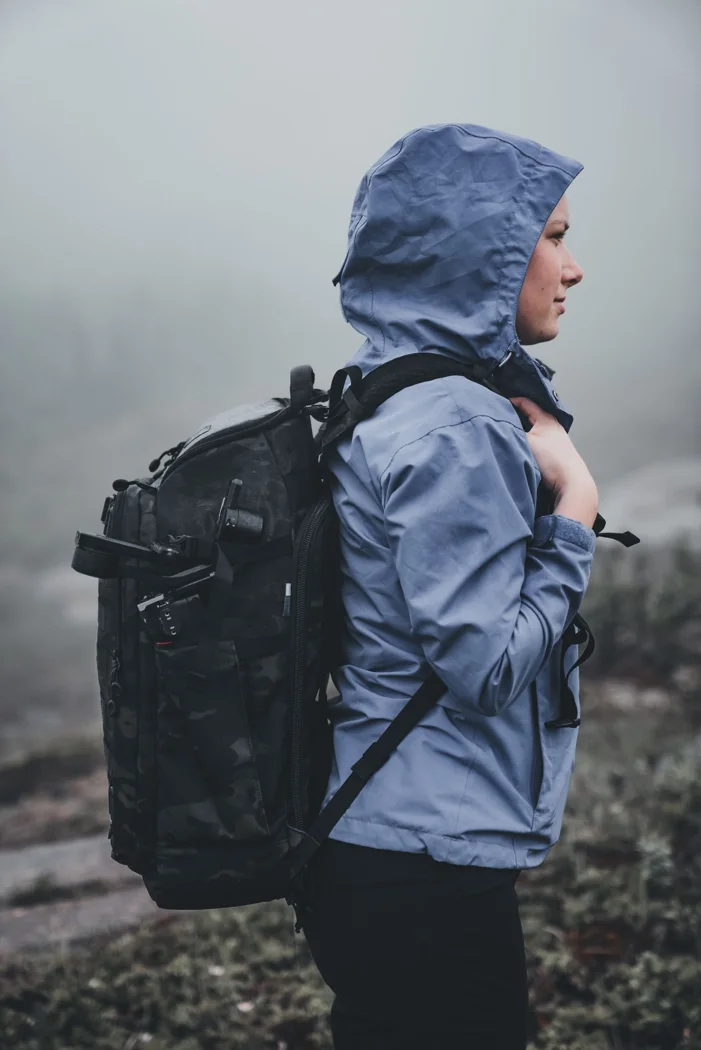
Load and position the pack realistically before putting the poncho over it. Then check front and rear coverage. A large pack can change how the fabric hangs. A fitting without luggage cannot show that difference.
With a jacket, the pack remains outside. Consider its own protection and internal packaging separately. The comparison is not simply one item versus two; it concerns the complete arrangement meeting your requirements.
Include movement
Walk, turn and use a suitable low step. Notice where the poncho edges sit and whether intended retainers work correctly. Some designs provide length adjustment or securing features; use only the functions intended for that model.
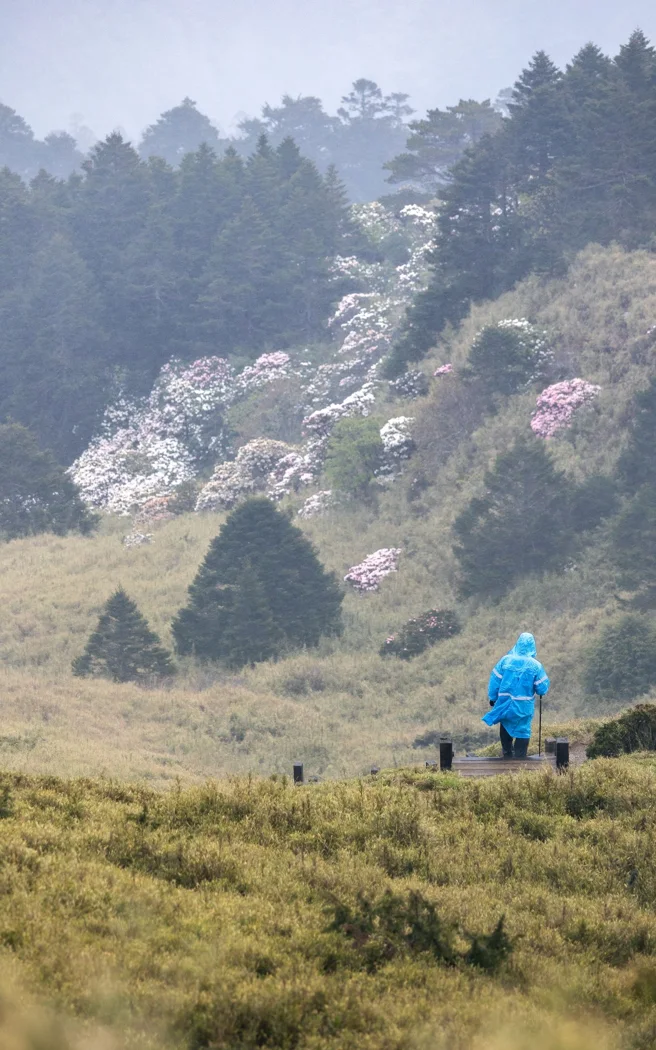
A loose covering moves differently from a closer jacket. Assess handling for your paths, especially where narrow or uneven sections occur. Continually holding fabric with one hand is a restriction that belongs in the decision.
For a jacket, assess shoulder and sleeve movement instead. Wear the intended layers and pack straps. A tight garment is not automatically more manageable merely because it has less material. Both options need an appropriate size and construction.
Compare changing and access
Practice in a dry place. With a poncho, the covering needs to reach its position over head and luggage; the exact sequence depends on the model. A jacket normally requires another sequence with the pack. Establish what you can manage alone.
Check hood fit and visibility while turning your head. Then perform regularly needed actions: reaching a pack pocket, retrieving a map or operating a closure. The covering needs to do more than look right while stationary.
Consider removing the wet garment too. Gathering a large poncho differs from handling a jacket. Avoid spreading it over dry clothing just because the next train leaves soon. A separate planned storage place simplifies either arrangement.
Name the limits
A long covering does not automatically answer protection for legs and shoes. Examine actual coverage and the intended overall arrangement. The same question remains below a jacket hem. Include the lower body when preparing for expected rain.
Do not turn a manufacturer's feature claim into a weather limit for arbitrary routes. An item can serve a useful role yet remain unsuitable for a particular exposed or difficult section. Assess route and conditions independently of rainwear already in the cupboard.
Wide easy paths can involve different handling from frequent narrow tracks. Describe that distinction during advice. An absolute answer favoring either poncho or jacket overlooks the context that matters to your choice.
Choose a complete arrangement
Finally, compare weight and volume for the whole planned system rather than only two product figures. Include existing equipment. Another purchase needs a clearly unresolved task.
Begin with a short appropriate outing when trying a new arrangement. Afterwards, record coverage, handling and packing separately. This supports precise changes rather than extending one awkward action into a verdict on all ponchos or every rain jacket.