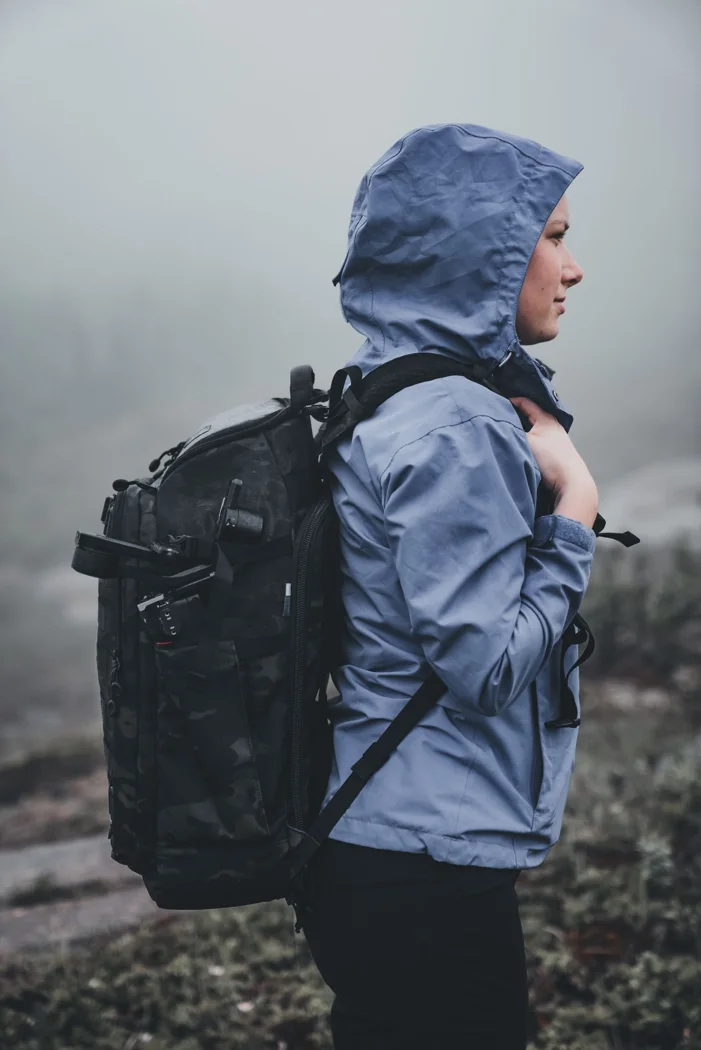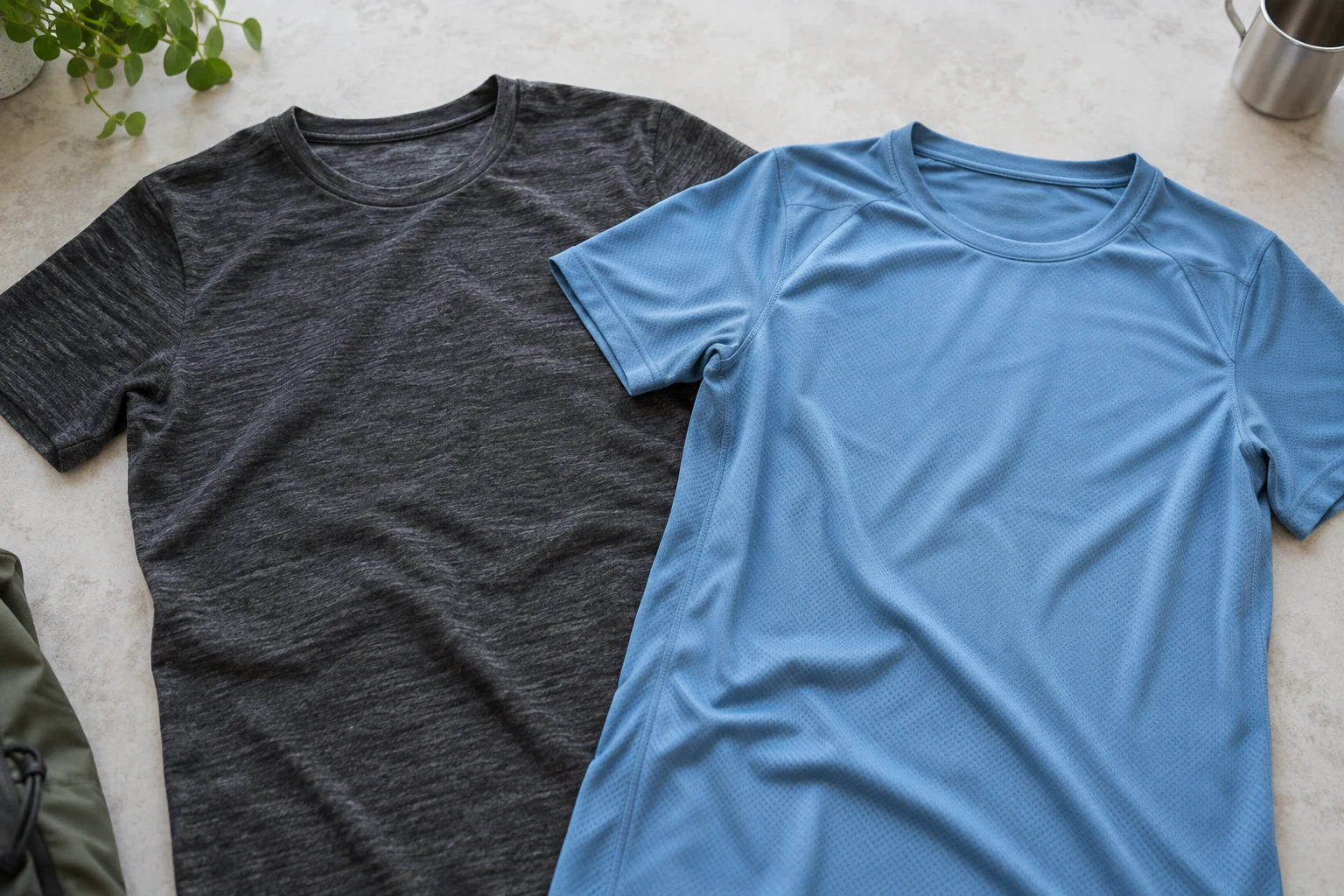
The closed jacket feels pleasant at the start, but clothing underneath becomes increasingly damp during the first climb. Waiting until the whole arrangement feels uncomfortable does not simplify the decision. Consider adjustments early, according to the conditions. A jacket described as breathable cannot manage itself.
Find the intended openings before walking
Some jackets have underarm ventilation zips; others use front openings or different model-specific arrangements. Rab describes a ventilation arrangement at the front of certain Downpour jackets, for example. Establish what your model actually provides rather than treating an arbitrary pocket as a vent.
Practice with your daypack. A shoulder strap may sit unexpectedly and restrict access. Operate closures calmly and notice whether fabric catches in a slider. This is better discovered before a shower.
Decide where the shell goes when removed too. An accessible packing position makes taking it off during a dry sheltered stretch straightforward. If storage is difficult, you may keep wearing it merely for convenience.
Consider rain and movement together
In dry conditions, opening a vent or removing a layer may be possible. In rain, an opening changes exterior protection too. Consider the weather's direction and strength alongside the instructions rather than treating one zip position as universally correct.
Stop somewhere appropriate when an adjustment requires it. A brief prepared stop is more manageable than fighting several inaccessible closures while walking. Keep belongings organized so a dry layer does not become wet accidentally.
Examine clothing underneath the shell as well. A warm layer needed at the start may still be there. The German Alpine Club recommends adjusting warm clothing early during activity. Opening the outer jacket is not the only available change.
If you want to learn from the adjustment, avoid changing everything simultaneously. Open one intended area or remove one suitable layer, then observe the result. No rigid minute-by-minute interval is necessary; conditions and your own perception guide the decision.
Reset after a stop
An opening comfortable during movement may be unsuitable for a long pause. Close or supplement clothing according to the actual conditions. Reassess when starting again. The arrangement remains adjustable rather than being settled once for the entire day.
If the interior repeatedly appears very wet, distinguish that observation from an assumed cause. Note activity, weather and layers. A wet interior alone establishes neither a fault nor a particular material property. If leakage is suspected, assessment is more useful than continually enlarging openings.
Afterwards, consider which actions were simple or awkward. A workable change may be another packing order or a more deliberate midlayer choice. It need not automatically require buying a jacket with additional zips.